Episode 39
Teaching Kindness To Kids: What To Do When Your Students Are Mean
Looking for practical ways to focus on teaching kindness to kids in your first grade classroom? These kindness lessons and activities are perfect for kindergarten and first grade teachers who want to build a positive classroom community while also strengthening classroom management.
If you’ve ever felt frustrated by mean behavior and kids struggling to be a friend to one another, you’re not alone. Many teachers are trying to teach academics, manage behavior, and somehow build empathy and respect at the same time. That’s why I believe teaching kindness isn’t just an SEL add-on. It’s classroom management.
When you intentionally teach kids how to show kindness and treat others with respect, you create a calmer, more connected classroom.
Why Teaching Kindness Matters in Kindergarten and First Grade
Kindergarten and first grade students are still learning how to manage emotions, solve problems, and be nice to others. They don’t automatically know how to be kind. They have to see it, hear it, and practice it.
Teaching kindness to kids means helping them:
- Learn to use kind words
- Show kindness through actions
- Practice empathy
- Learn how to be a friend
- Understand what respect looks like
- Choose to be kind even when it’s hard
When we make kindness part of our daily routine instead of a one-time lesson, it starts to stick.
Getting Started With Kindness Lessons
I always begin by having real conversations about what it means to be kind.
We talk about:
- What does it mean to be kind?
- What does it look like?
- What does it sound like?
- How does it feel?
We create an anchor chart with examples of kind words and actions. Students help generate ideas like:
- “Can I help you?”
- “You can play with us.”
- “Are you okay?”
- “That looks great!”
- “I’m sorry.”
This simple activity gives students language they can actually use.
Using Books to Teach Kids to Be Kind
Picture books about kindness are one of the easiest ways to teach empathy and kindness.
When you read stories that show characters learning to be kind, students see real examples of how to treat others. After reading, we discuss:
- Was the character being kind?
- How did their actions affect others?
- What could they have done differently?
- How can we show kindness like that in our classroom?
Books open the door for deeper conversations about respect, friendship, and empathy in a way that feels safe and natural.
Role Play and Kindness Games
Kids learn best by doing. That’s why I love using these simple slides to help the students use role play to reinforce kindness lessons.
One easy activity is to act out real classroom situations. For example:
- Someone won’t let another child play.
- A student says something unkind.
- A friend falls down at recess.
Pause and ask, “How could we show kindness here?”
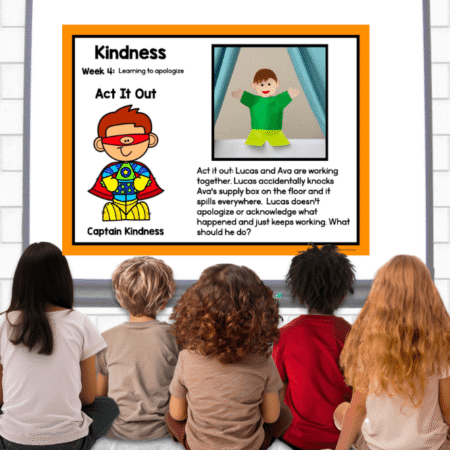
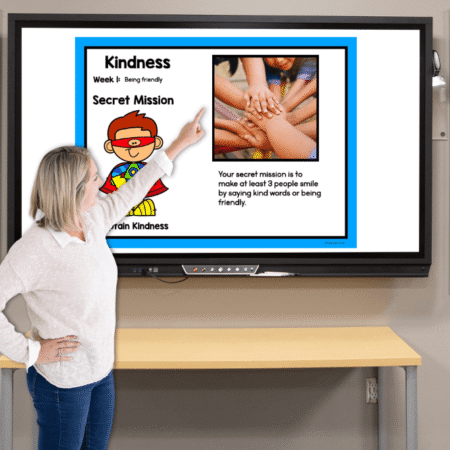
You can also create a “Secret Kindness Mission” game. Each student gets a small task for the day, like:
- Give someone a compliment.
- Invite someone new to play.
- Help clean up without being asked.
At the end of the day, students share how they showed kindness. This simple game makes practicing kindness exciting and intentional.
Teaching Empathy Through Everyday Moments
Teaching kids to be empathetic doesn’t require a special curriculum. It happens in daily conversations.
When a student is being unkind, instead of immediately correcting the behavior, try asking:
- “Are you being kind right now?”
- “How do you think that made your friend feel?”
- “What could you say instead?”
These questions help children slow down and think. Over time, they begin to internalize what it means to be kind.
The “Gifts” Strategy: Helping Kids See Value in Each Other
One of my favorite classroom strategies was teaching students that everyone brings a gift to our classroom.
Not a gift like a birthday present, but rather a strength.
Some students are great readers. Some are artists. Some are helpers. Some make others laugh. Some are wonderful at organizing or cleaning up.
When students begin to see value in themselves and others, they naturally become kinder. They learn to respect differences and appreciate what each person contributes.
This strategy builds empathy, respect, and a stronger classroom community.
Why Kindness Is Classroom Management
Teaching kindness to kids improves:
- Peer relationships
- Student confidence
- Classroom behavior
- Overall classroom climate
Instead of constantly reacting to unkind behavior, you’re proactively teaching students how to be nice, how to show kindness, and how to be a friend.
And that saves time in the long run.
When students understand expectations around kind words and respectful behavior, your classroom runs more smoothly.

In This Episode, You’ll Learn:
✔️ How to begin teaching kindness to kids in kindergarten and first grade
✔️ Simple kindness lessons that don’t add more to your day
✔️ Activities and games that help students practice empathy
✔️ How to use books and discussions to teach kids to be kind
✔️ Ways to reinforce kind words during discipline
✔️ A classroom strategy that helps students see and respect each other’s strengths
Resources Mentioned In This Episode
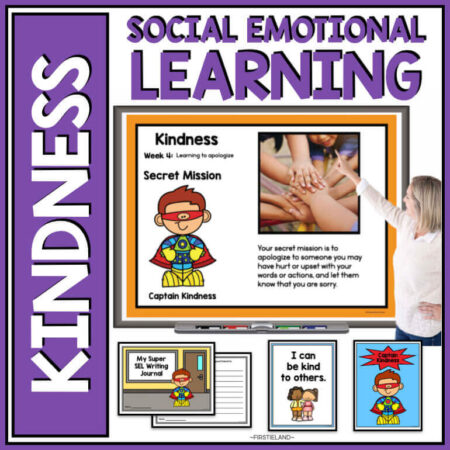
Kindness Unit – with slides and writing activities
Related Blog Posts / Podcast Episodes
Blog Post – 30 Amazing Books About Kindness For Elementary Kids
Blog Post – 30 Fun & Easy Kindness Activities For Elementary
Podcast – Episode 21 – Best Picture Books and Read Alouds for Teaching Gratitude
Connect With Molly
Follow on Instagram: @firstieland
Follow on Facebook: Firstieland
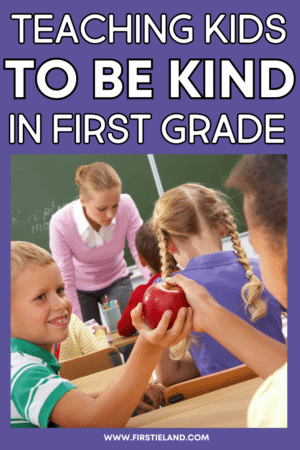
Save This Podcast For Later!
Take a minute to save these ideas to your favorite Pinterest board so you can remember them later!
More About The Firstieland Podcast
Hosted by Molly Schwab, a retired K-1 teacher with over 30 years of classroom experience, The Firstieland Podcast For Early Elementary Teachers gives kindergarten and first grade teachers practical, real-world tips to make teaching easier and more fun. From classroom management to picture book ideas, each episode is designed to help you teach smarter, not harder.
Each week, Molly shares practical tips, strategies, and ideas to help kindergarten and first grade teachers feel confident, organized, and ready to create a joyful classroom where learning feels like play.
Tune in on your favorite podcast platform: Apple, Amazon, Spotify, and more! If you’re loving the podcast, please rate, review, and follow!