Earth Day lessons and activities for first grade

Click Play to Listen

Episode 45

Earth Day Lessons & Activities For 1st Grade

If you’ve ever asked your first grade students how they can help the Earth and gotten a few blank stares, you’re not alone. Concepts like the environment, recycling, and taking care of our planet can feel abstract for kindergarten and first grade students unless we make it simple and hands-on.

In this episode of the Firstieland Podcast, I’m sharing some of my favorite Earth Day activities that I used year after year. These ideas are simple and help kids understand how they can take care of planet Earth in a way that actually makes sense to them.

Start With What They Know

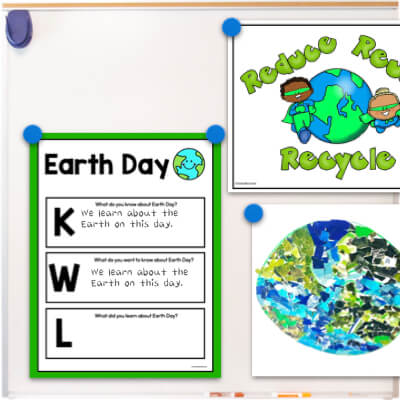
One of the best ways to begin your Earth Day unit is with a simple KWL chart.

Ask your students:

  • What do you know about Earth Day?
  • What do you want to know?
  • What did you learn?

This gives you a quick picture of what they already understand about the environment and helps guide your lessons for the week.
Use Read Alouds to Build Understanding

Before jumping into activities, I always liked to start with a good picture book. Books help take big ideas like protecting the planet and turn them into something kids can understand. You can use read alouds to introduce topics like recycling, caring for nature, and why Earth Day even exists.

Some of my favorite picture books about Earth Day include:

It’s Earth Day by Mercer Mayer

The Earth Book by Todd Parr


The Adventures of a Plastic Bottle by Alison Inches

Teaching Kids To Reduce, Reuse, and Recycle

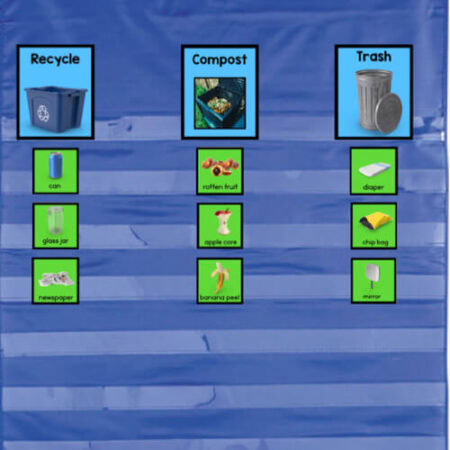
One of my favorite classroom activities was bringing in a pile of everyday items, things like bottles, paper, food scraps, and wrappers.

We would sort them into:

  • Trash
  • Recycling
  • Compost

This simple activity helps kids see that not everything has to be thrown away, and that recycled materials can be used again in different ways.

It also naturally leads to great discussions about waste, the environment, and how we can take better care of our planet.

Add Hands-On Earth Day Projects

Kids learn best by doing, so adding simple projects makes a big difference.

Here are a few easy Earth Day activities for kids that always worked well in my classroom:

Recycled Earth Craft

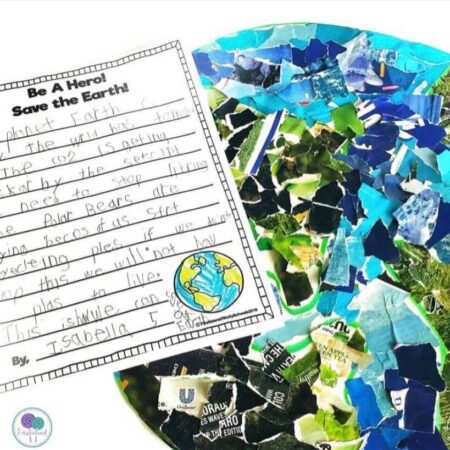
Give students old magazines and have them tear out blue and green pieces to create their own planet Earth. This is a simple art activity using recycled materials, and it turns into a great hallway display.
Planting Activity

Let students plant flowers or seeds in small containers. They can care for them each day and watch them grow. It’s a great way to connect Earth Day to nature and responsibility.

Bird Feeders

Use simple materials like pinecones, peanut butter, and birdseed to make bird feeders. This is always a favorite and helps kids think about caring for animals and their environment.

Earth Day Games

Adding games is an easy way to reinforce what students are learning.

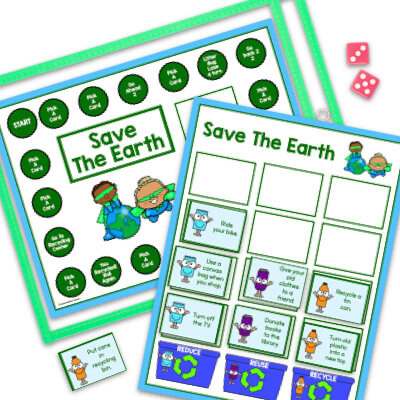
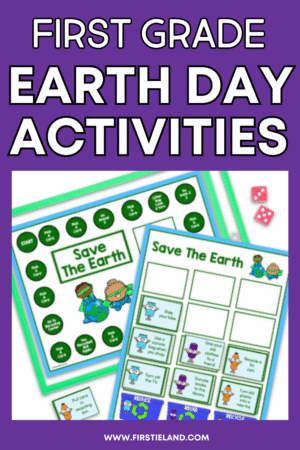
You can create simple sorting games like this one where students decide if an action helps the Earth by reducing waste, reusing items, or recycling.
Earth Day Science Activities

If you want to bring in a little science, try a hands-on experiment.

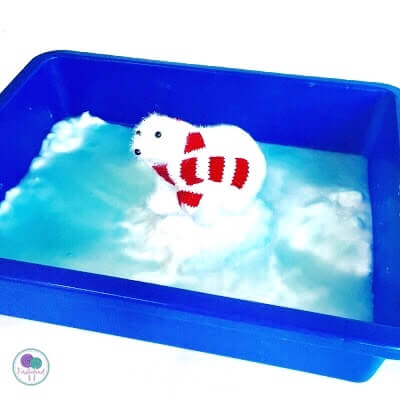
One of my favorite activities was showing how ice melts in the Arctic. Using simple materials like cornstarch, water and citric acid, you can demonstrate how animals are affected when their environment changes.

This easy experiment is a powerful way to help students understand why taking care of the Earth matters.
Earth Day Writing Activities

Earth Day is the perfect time to bring in writing activities that connect to real life.

Some simple ideas:

Earth Day doesn’t have to be complicated.

The goal is to help students understand that even small actions, like turning off the lights, picking up trash, or recycling, can make a difference.
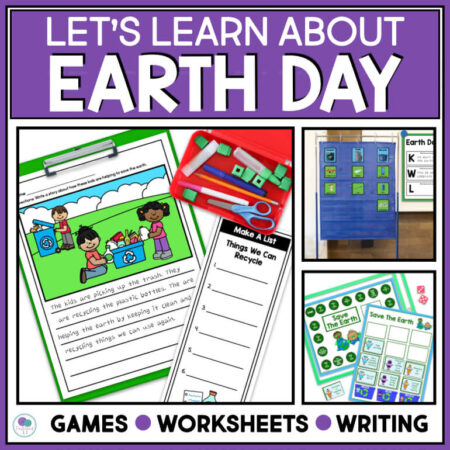
If you want to try some of these activities in your classroom, head over here to check out my complete Earth Day unit. This resource includes lesson plans, worksheets, writing activities, crafts, science experiments and more.
WATCH THE YOUTUBE VIDEO HERE

Earth Day activities for first grade

In this episode, you’ll learn:

✔️Easy prep Earth Day Ideas for K-2
✔️ How to teach reduce, reuse, and recycle in a way kids understand
✔️ Hands-on science ideas to show students how to help the Earth
✔️ Easy writing and craft activities that connect to your Earth Day lessons

By the end of this episode, you’ll have a collection of easy Earth Day classroom activities you can use right away that keep your students engaged while still covering important science and writing standards.

Resources Mentioned In This Episode

Earth Day Unit https://firstieland.com/earthday

Related Blog Posts / Podcast Episodes

Blog Post – Fun Printable Earth Day Activities For First Grade Kids

Connect With Molly

Follow on Instagram: @firstieland
Follow on Facebook: Firstieland

Save This Podcast For Later!

Take a minute to save these ideas to your favorite Pinterest board so you can remember them later!
More About The Firstieland Podcast

Hosted by Molly Schwab, a retired K-1 teacher with over 30 years of classroom experience, The Firstieland Podcast For Early Elementary Teachers gives kindergarten and first grade teachers practical, real-world tips to make teaching easier and more fun. From classroom management to picture book ideas, each episode is designed to help you teach smarter, not harder.

Each week, Molly shares practical tips, strategies, and ideas to help kindergarten and first grade teachers feel confident, organized, and ready to create a joyful classroom where learning feels like play.

Tune in on your favorite podcast platform: Apple, Amazon, Spotify, and more! If you’re loving the podcast, please rate, review, and follow!

Click to View Transcript

[00:00:00] Hey friends. Welcome back to the Firstieland podcast. Did you know that over a billion people in more than 193 countries celebrate Earth Day every year? I was doing some research for the podcast, and I was pretty amazed by that statistic. Honestly, I was really glad to hear it too, because that tells me that people really do care about our planet and want to make a difference.

I found out that Earth Day was established by a U.S. Senator in 1970 as a way to bring awareness to our environment and how we treat nature, and now it’s celebrated every year on April 22nd.

I remember when I was a kid, my teacher would take us outside to pick up trash on Earth Day, and I think I remember one time we all went outside and planted a tree on the playground. So today, I thought I’d bring you some ideas on how you can celebrate Earth Day in your classroom and cover a few of your science standards at the same time.

So let’s get started.

I wonder what [00:01:00] your students would say if you asked them how they can help the Earth. They’ve probably never really thought about it that much, but there are probably some kids in your room who’ve heard things like “don’t litter,” or maybe their family has a recycling bin, so they may know that type of thing.

In my classroom, I’d start my Earth Day activities with a KWL chart, and it had three sections. The K stood for “What do you know about Earth Day?” The W stood for “What do you want to know about Earth Day?” And the L stood for “What did you learn?”

We’d fill out the first section together just to kind of give me an idea of what they already knew about Earth Day, and that would help guide my lessons for the week. Then I’d usually read them a story to introduce them to Earth Day.

There are quite a few books on the market, but I think my favorite was called It’s Earth Day by Mercer Mayer.

If you’re familiar with Mercer Mayer and the Little Critter books, you know that kids love them and can really relate to the characters. So in this book, Little Critter is at school, and they’re learning about Earth Day, and they watch a movie.

In the movie, they learn that the Earth is getting hotter, and because of that, the ice at the North Pole is melting, and soon there’s going to be no place for the polar bears to live. So Little Critter goes home, and he’s all concerned and wants to know what he can do to stop the ice from melting.

So he and his dad do a little research, and they learn that some of the things that we do every day are making the planet heat up, things like driving cars, using electricity, and wasting water.

So the book goes through and shows Little Critter doing all the things to try to help. He doesn’t let the water run when he is brushing his teeth. He collects bottles and newspapers with his buddies, and they take them to the recycling center. They plant trees in the park, all sorts of things like that.

So it’s really a great book that kids can relate to and shows them some of the things that they can do to help the planet.

There are lots of other great books about Earth Day too. There’s one written by Todd Parr called The Earth Book, and there’s another one called The Adventures of a Plastic Bottle by Alison Inches.

It shows kids what happens when you recycle a plastic bottle. So I’ll put the link in the show notes to all of those books, and you can take a closer look at them to see if there’s one that you might want to read to your class.

So one of the things that you can do to help kids understand what they can actually do to help the Earth is to teach them the three R’s, reduce, reuse, and recycle.

You can teach them about recycling and that they don’t always have to throw things in the trash, which just fills up our landfills, and that some things can be used again.

So what I did with my kids was bring in a pile of trash. I’d have things like a pop can, a yogurt container, a glass bottle, maybe a banana peel or an apple core, a diaper, candy wrappers, and maybe some snack bags.

Then I’d have three boxes labeled compost, trash, and recycle. We’d sort the items into the three boxes.

[00:04:00] Then we’d talk about why they could or couldn’t be recycled or reused. So this is definitely an activity that kids can relate to, and they can see how easy it would be for them to recycle, which would ultimately help the Earth.

You could also set up a recycling station in your classroom where kids could throw paper and other items to be recycled, so this can become an ongoing project in your classroom.

Another thing you could do would be to organize a school-wide cleanup where you could pair up with older kids and walk around the school grounds outside and pick up trash.

Another activity that I did in my classroom was to show the kids how the ice is melting in the Arctic. We actually watched a short YouTube video about how global warming is affecting wildlife. I think it was about 10 minutes long, and it showed how the ice is melting and how this is affecting animals like penguins and polar bears.

So after we watched the video, we did an experiment. I mixed some baking soda with water and spread it out in a big tray. It actually looks a lot like ice when you do that, and I could mold it into little icebergs.

[00:05:00] Then I had a little toy polar bear and put it on the ice to show the kids that that’s where it lives. Then I had a small squirt bottle filled with water and citric acid, and I added some blue food coloring to make it look like the ocean.

For the experiment, I squirted it all around on the ice, and it actually made it melt. It showed how the ice is melting and that soon there’s not going to be any place for the polar bears to live.

So after we did the experiment, we made a big anchor chart called “How Can We Save the Polar Bears?” Then we brainstormed different ways that we can reduce our use of electricity, which is causing the Earth to warm up.

We wrote things like:
Turn off the TV and lights when you leave the room
Ride your bike or walk instead of driving
Open the windows instead of using the air conditioner
Plant trees

[00:06:00] That’s what we wrote on the anchor chart. It was a really good way to show kids how they can help save the planet just by doing these little things.

We played a little game that I made called Save the Earth, and basically the kids collected cards as they moved around the game board that showed how to recycle, reuse, or reduce energy.

Another fun thing you can have kids do is plant flowers in small pots. They can plant their own flower and then take care of it by watering it and keeping it in a warm, sunny place.

You could create a little “green corner” with these plants to improve the air quality in your classroom.

A great school-wide event is to plant a tree on the school grounds. That would be a great activity for your school booster club to sponsor every year.

Another really simple activity that we used to do was to make an Earth craft using recycled magazines. I’d give each student a magazine, and they would tear out pages with lots of blue or green on them and tear them into small pieces.

[00:07:00] Then I’d have the kids work in groups and give them a large circle of construction paper. They would glue the blue and green pieces onto the circle to make it look like the Earth. They actually turned out really cute.

I’m going to show all of this on my YouTube channel, so if you want to see these activities, you can go check it out. You’ll be able to see what these Earth crafts look like because they were really adorable.

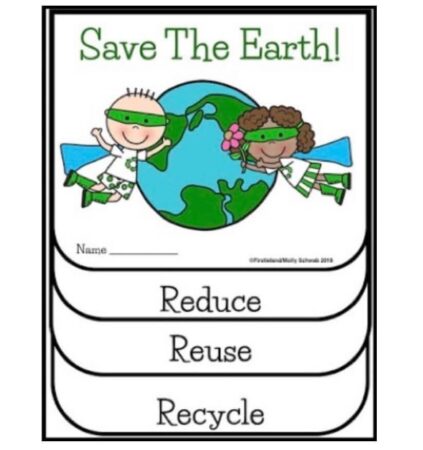
Finally, we always did some kind of writing activity. I had the kids make a flip book that showed what they learned. It had three sections labeled reduce, reuse, and recycle.

They had to draw and write what they learned about each one and how they could help the planet Earth.

So all of these activities are in my Earth Day unit, which is on TPT, and you can take a closer look at that at firstieland.com/earthday, or I’ll put the link in the show notes.

[00:08:00] So there you have it, a few easy ideas you can use to celebrate Earth Day and bring awareness to the importance of taking care of our planet.

If you enjoyed this episode, I really hope you’ll take a minute to leave a review. It would mean the world to me.

Alright, friends, until next week, remember to make learning feel like play, and I’ll talk to you soon.

Thanks so much for tuning in. I hope you’re walking away with some great tips you can use right away. Be sure to hit the follow or subscribe button so you never miss an episode.

If you’re enjoying the podcast, I’d love it if you’d leave a review.

You can find the show notes and links for everything mentioned in this episode at firstieland.com.

I’ll see you next week in Firstieland.

Related Podcasts

All search results