Tips for struggling writers in first grade

Click Play to Listen

Episode 46

6 Tips For Struggling Writers In First Grade

As the end of the school year gets closer, many teachers begin to worry about their struggling writers. If you've ever looked at your students’ writing and wondered how to help them improve before summer break, you are definitely not alone.

The good news is that there’s still plenty of time to strengthen writing skills. With the right strategies, consistent practice, and a little encouragement, even beginning writers can make great progress.

1. Have Students Write Every Day

One of the best ways to support struggling writers in first grade is to provide daily opportunities to write. When students practice consistently it helps them become more confident and comfortable with the writing process.

But it doesn’t always have to be a formal lesson. Simple journal prompts and quick writing activities are easy ways to incorporate writing into your daily routine. Over time, daily practice will help strengthen your students writing skills.

2. Use Word Walls to Support Writing

Word walls are powerful tools that give struggling writers in first grade the support they need to become successful writers. Sight word walls are great but you might also want to consider adding seasonal and thematic word walls to help spark ideas and support spelling.

You can make large word walls to hang in the classroom or make mini word walls. These can be put at student tables or in your writing center. Kids can have easy access and help reduce frustration, allowing students to focus on expressing their ideas with confidence.

3. Create Anchor Charts for Each Writing Genre

Creating anchor charts for narrative writing, opinion writing, informational writing, and letter writing gives struggling writers in first grade a visual reminder of what to include in their work. One tips is to make these charts together with your students. They'll be more invested and more likely to use them during independent writing time.

4. Model What Good Writing Looks Like

Never underestimate the power of modeling. Struggling writers in first grade need to see and hear what strong writing looks like.

As you demonstrate writing, talk through your thinking. Point out capital letters, spacing, punctuation, and neat handwriting. Explain how you organize your ideas and follow the writing process. These simple reminders help students understand expectations and improve their writing skills over time.

5. Provide Writing Prompts to Spark Ideas

Sometimes, for kids, the hardest part of writing is simply getting started. many times kids struggle because they just don't know what to write about.

Giving kids writing prompts can help give them a starting point to begin their writing.

6. Use Differentiated Templates and Worksheets

Struggling writers in first grade might need even more structure so using differentiated writing templates can help. Using templates that have prompts on them to remind kids what to include in their writing can be very helpful to students. For instance, using a letter writing template with words to guide them like Date, Greeting, Body, Closing and Signature can help kids remember what to include when writing a letter to a friend.

WATCH ON YOUTUBE

Tips for struggling writers in first grade

In this episode, you’ll learn:

✔️ Why daily writing practice is essential for helping struggling writers in first grade
✔️ How to use word walls and anchor charts to support young learners
✔️ Simple strategies to help struggling writers generate and expand their ideas
✔️ The importance of modeling and teaching what good writing looks like
✔️ How differentiated writing templates can guide students to success

By the end of this episode, you’ll have practical and effective strategies to help your struggling writers in first grade improve their writing skills and feel confident as they move on to the next grade level.

Resources Mentioned In This Episode

Differentiated Writing Templates – https://firstieland.com/rubric
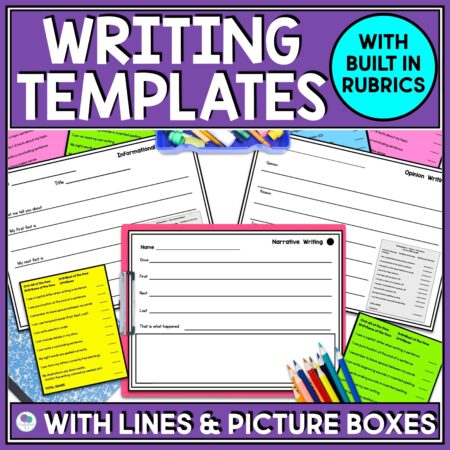
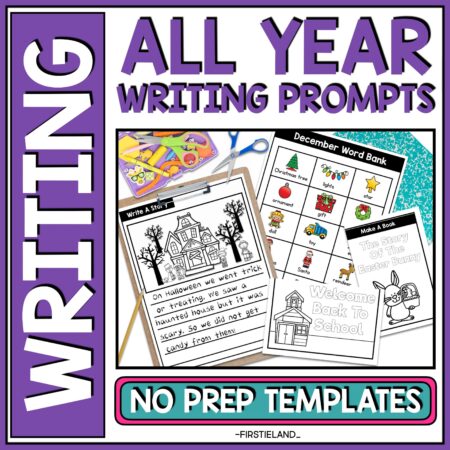
First grade writing templates

Monthly Writing Templates – https://firstieland.com/writingprompts
First grade writing templates

Related Blog Posts / Podcast Episodes

Blog Post – 15 Easy Tips For Teaching First Grade & Kindergarten Writing

Blog Post – 11 Best Ways To Help Struggling Writers In First Grade

Podcast Episode 12 – How To Teach Sentence Writing In An Elementary Classroom

Podcast Episode 10 – Teaching Elementary Writing – Picture Labeling 101

Connect With Molly

Follow on Instagram: @firstieland
Follow on Facebook: Firstieland

Save This Podcast For Later!

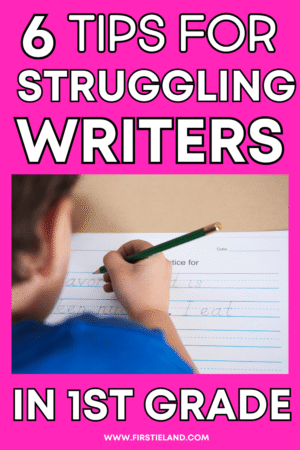
Take a minute to save these ideas to your favorite Pinterest board so you can remember them later!
Tips for struggling writers in first grade

More About The Firstieland Podcast

Hosted by Molly Schwab, a retired K-1 teacher with over 30 years of classroom experience, The Firstieland Podcast For Early Elementary Teachers gives kindergarten and first grade teachers practical, real-world tips to make teaching easier and more fun. From classroom management to picture book ideas, each episode is designed to help you teach smarter, not harder.

Each week, Molly shares practical tips, strategies, and ideas to help kindergarten and first grade teachers feel confident, organized, and ready to create a joyful classroom where learning feels like play.

Tune in on your favorite podcast platform: Apple, Amazon, Spotify, and more! If you’re loving the podcast, please rate, review, and follow!

Click to View Transcript

[00:00:00]
Hey friends! Welcome back to the Firstieland Podcast. At the time of this recording, it’s almost mid-April, and you may be thinking, “Oh my gosh, it’s almost the end of the year and my kids still can’t write. What am I going to do?” Well, first off, if you’re thinking that, just know that you are not the only one.
I can’t tell you how many years I had classes like that. I mean, I wasn’t usually concerned about every child in my room, but there were always those few who were behind, and I worried about them. So you may be feeling exactly the same way. That’s what today’s podcast is about, helping you figure out ways to get those struggling students to a place where you feel comfortable sending them on to the next grade level with their writing abilities.
So let’s get started.
So it’s mid-April right now when I’m recording this podcast, and your students should really be at a certain point in their writing at this time of year. Hopefully, you’ve introduced all the different genres of writing to them. They should have been introduced to how-to writing, narrative writing, informational writing, and opinion writing.

[00:01:00]
They may be doing better in some of those areas than others, depending on how much time you’ve spent on each genre. But you want to send them on to the next grade level feeling confident in their writing. After all, there’s the summer slump. No matter what anybody says, it happens, and students are going to forget some of what they’ve learned.
You want them to have a strong foundation so that when they return in the fall, they can pick things up quickly. Honestly, writing is probably one of the last things parents practice with their children during the summer. They might go to the library to get books, read with their children, or practice math facts. But it’s pretty uncommon for parents to spend a lot of time practicing writing. At least, that was my experience as a teacher.
So how can you get your students to a place where they feel confident in their writing when they leave you and move on to the next grade level? I believe there are several things you can do to help them improve. Today, I’m going to share a few tips that may help.

[00:02:00] – Tip #1: Have Students Write Every Day
Tip number one is to have students write every single day. I know that writing tends to take longer than some other subjects, but it’s essential that students practice consistently. It doesn’t always have to be a formal writing lesson, although ideally, that should happen regularly.
If time is limited, you can incorporate writing into their day in several ways. For example, you can give students journals to write in each morning as they enter the classroom. Place a simple writing prompt on the board and have them respond in their journals.
Before you begin the day, take a quick walk around the room and glance at their writing. You don’t have to grade journals daily, but you can quickly identify students who are struggling. Ask them to place their journals on your desk as a reminder. Later, when you have a few extra minutes, you can review their work with them. Sometimes, just a few minutes of support makes a big difference.
Another way to encourage daily writing is through your writing center. Provide templates for how-to writing, opinion writing, greeting cards, postcards, and letters. These tools give students opportunities to practice various genres.
Having students write every day is incredibly important, especially at this point in the year. It doesn’t have to be a 30-minute lesson. Simple, consistent practice makes a difference because practice makes progress.

[00:03:00] – Tip #2: Use Word Walls
Tip number two is to use word walls. It’s beneficial to have word walls throughout your classroom, and I’m not just referring to a traditional sight word wall. I’m talking about thematic word walls that inspire students and support their writing.
For example, since this podcast is being recorded in April, you might include word walls related to spring, insects, gardening, planting flowers, or Easter. Seasonal word walls help students generate ideas and spell unfamiliar words correctly. Without support, students may become frustrated and shut down.
Word walls can be large displays or mini versions students keep at their desks or tables. I used to seat my students at tables of four and provide a binder filled with mini word walls in plastic sleeves. Each table had its own binder, allowing students to reference vocabulary as needed.
When I taught kindergarten, we created a new word wall each month during shared writing. These often aligned with seasons or holidays. For example, a fall word wall might include words like leaves, pumpkin, scarecrow, and acorn. Students helped write the words on sentence strips, cut them apart, and add them to the wall with illustrations.
Because they helped create the word walls, students were more invested and remembered the words. After creating the large display, I made smaller versions for the binders. These tools were invaluable for supporting struggling writers.

[00:06:00] – Tip #3: Create Anchor Charts
Tip number three is to create anchor charts for each genre of writing. For example, an opinion writing anchor chart should show that students state their opinion, provide two or three reasons, and conclude by restating their opinion. Include a model with arrows labeling each part.
Create anchor charts for opinion, informational, narrative, and procedural writing. Keep them in the same location so students always know where to look. Consistency ensures they will use them.
I’m a big believer in anchor charts. The students in my classroom used them frequently because we created them together. Whenever possible, involve students in making charts and word walls. They’ll be more invested and more likely to use them than store-bought posters.

[00:08:00] – Tip #4: Teach Students What Good Writing Looks Like
Tip number four is to talk to students about what good writing looks like. We sometimes assume they already know, but they need explicit instruction.
During every writing lesson, model your thinking. Point out capital letters at the beginning of sentences, spaces between words, punctuation at the end, proper letter formation, and neat handwriting. Even if it feels repetitive, students benefit from hearing these reminders.
There’s always a child who needs to hear it again. By modeling and explaining your thinking, students are more likely to apply these skills to their own writing.

[00:09:00] – Tip #5: Provide Writing Prompts
Tip number five is to provide writing prompts. While not every student needs them, struggling writers often benefit from additional support. Sometimes, they simply don’t know what to write about.
Offer multiple prompts on the board and allow students to choose. Providing options increases engagement and confidence.
You can also support students by asking guiding questions. If a student writes one sentence and stops, ask, “What happened next?” This simple question often encourages them to continue.
For example:
“I was riding my bike.”
“What happened next?”
“I went to the park.”
“Great! Write that down.”
This scaffolding helps students expand their ideas and build complete stories.

[00:11:00] – Tip #6: Use Writing Templates
Tip number six is to use writing templates. Templates provide structure, especially for informational, opinion, and letter writing.
For instance, a letter-writing template might include labeled sections for the greeting, body, closing, and signature. These supports help students remember what to include.
Differentiated templates are particularly effective. Struggling writers benefit from more guidance, while advanced writers may need fewer supports. Templates can help students reach grade-level expectations before the end of the year.

[00:12:00] – Recap
To recap:
Have students write every day.
Use word walls and anchor charts.
Teach students what good writing looks like.
Provide writing prompts.
Use differentiated writing templates.
If you’d like to see the writing templates and word walls I used, I’ll include a link in the show notes so you can take a closer look.

[00:13:00] – Closing
All right, friends, that’s it for today. Hang in there. You’re on the downward slide now, and the end of the school year is near.
Until next time, remember to make learning feel like play. I’ll talk to you soon!

Related Podcasts

All search results