Click Play to Listen

Episode 14

Teaching Kindergarten And First Grade Grammar: Nouns

Teaching grammar in the elementary classroom can feel like a challenge, especially when your students are just learning to write complete sentences. But starting with nouns is one of the best ways to build a strong foundation for both reading and writing. Nouns are the building blocks of language, and helping students understand how to name people, places, animals, and things sets them up for success in all areas of literacy.

In this episode of The Firstieland Podcast for Elementary Teachers, I’m sharing how I introduced nouns in my own classroom and why they’re the perfect starting point for grammar instruction. We’ll talk about how to keep it simple, fun, and hands-on using books, anchor charts, games, and movement-based activities that young learners will actually enjoy.

Whether you’re teaching kindergarten students just learning to speak in complete thoughts or first grade students working toward sentence writing, noun lessons help bridge that gap. When students can identify nouns in reading and use them in their writing, they begin to write clearer, more detailed, and more meaningful sentences.

In this episode, I’ll walk you through how to introduce nouns with a picture book, create interactive anchor charts, and keep your lessons focused on one category at a time—like people, places, animals, and things. I’ll also share ideas for engaging games like scavenger hunts, I Spy, and noun board games that make learning grammar way more fun for kids.

You’ll also hear how to use pocket chart sorts and center activities to reinforce these concepts, and how to bring grammar into your reading and writing blocks so it doesn’t feel like “one more thing.” The best part? These ideas are low-prep, kid-friendly, and can be used all year long to help support your young writers.

By the end of this episode, you’ll have a clear plan for teaching nouns in your K–1 classroom in a way that’s simple to prep, easy to implement, and actually works.

In this episode, you’ll learn:

✔️ Why nouns are the perfect first grammar skill to teach
✔️ Picture book recommendations that explain nouns in a fun way
✔️ How to build interactive anchor charts that stay up all year
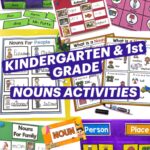
✔️ Easy games like I Spy, Roll a Noun, and scavenger hunts
✔️ How to reinforce noun skills through pocket chart sorting and centers
✔️ Tips for weaving noun practice into reading groups and writing prompts
✔️ Why movement and hands-on activities help grammar stick
✔️ How to keep your grammar lessons simple, fun, and effective

Resources Mentioned

Related Episodes/Blog Posts

Blog post: 7 Easy Tips For Teaching Noun Activities In First Grade

Connect with Molly:

Follow on Instagram: @firstieland
Follow on Facebook: Firstieland

Save This Podcast For Later!

Take a minute to save these ideas to your favorite Pinterest board so you can remember them later!
More About The Firstieland Podcast

Hosted by Molly Schwab, a retired K-1 teacher with over 30 years of classroom experience, The Firstieland Podcast For Early Elementary Teachers gives kindergarten and first grade teachers practical, real-world tips to make teaching easier and more fun. From classroom management to picture book ideas, each episode is designed to help you teach smarter, not harder.

Each week, Molly shares practical tips, strategies, and ideas to help kindergarten and first grade teachers feel confident, organized, and ready to create a joyful classroom where learning feels like play.

Tune in on your favorite podcast platform: Apple, Amazon, Spotify, and more! If you’re loving the podcast, please rate, review, and follow!

Click to View Transcript

[00:00:00]
Hey friends, welcome back to The Firstieland Podcast. I’m your host, Molly Schwab, and today we’re diving into one of the building blocks of language skills—grammar.

Now, I honestly can’t think of a single kid who has ever said, “I just loved learning about grammar in school!” But nevertheless, it has to be taught. Because without it, kids wouldn’t have the tools they need to comprehend what they’re reading or write clear and interesting sentences.

So in this episode, we’re starting with the basics and talking all about nouns—what they are, how to teach them in a fun and simple way, and why they’re the perfect place to begin your grammar instruction. Let’s get started.

[00:01:00]
Hey there, I’m Molly from Firstieland—a former elementary teacher with over 30 years of experience in kindergarten and first grade. I’m here to help make teaching a little easier and a lot more fun. Whether you’re looking for the perfect read-aloud, fresh writing ideas, or simple classroom tips, I’ve got quick, practical strategies you can use right away.

New teacher or experienced educator, there’s something for everyone in Firstieland. So grab your coffee and teacher bag—let’s get started.

I realize nobody ever said that learning grammar was going to be super fun, but if you know me, you know I’ve got to find a way to get kids interested in whatever we’re learning—and that includes grammar. So today, we’re going to break it down into the very first grammar lesson you should teach, which is all about nouns.

So, what are nouns and why do kids need to know about them in kindergarten and first grade? Nouns are words that represent people, places, animals, and things. And the reason kids need to know about nouns is because they are essential for language and communication.

[00:02:00]
Oftentimes, nouns are the first words that kids learn. Think about it—what are the first words that kids say? “Doggy,” “water,” “book”—those are all nouns. At a very young age, kids learn to name objects and people, and that’s how they begin to communicate.

As kids get older and begin school, this knowledge of nouns expands into helping them with reading comprehension and writing. When they can identify the noun in a sentence, it helps them understand the subject of the sentence and better comprehend what they’re reading. In writing, understanding nouns helps kids write better, more interesting, and more complex sentences.

So, where do you begin when teaching kids about nouns? I like to use picture books as often as possible, and there are some great books for this. One is If You Were a Noun by Michael Dahl. It shows kids the difference between common and proper nouns in a kid-friendly way. Another good one is A Mink, A Fink, A Skating Rink by Brian Cleary. It’s full of noun examples and written in rhyme, which kids really enjoy.

[00:03:00]
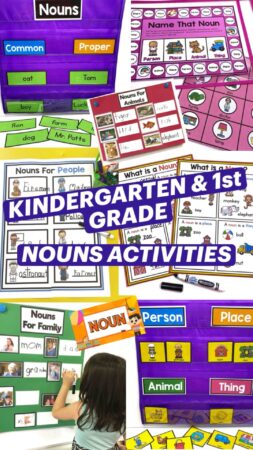
Whenever I was teaching nouns, I created a very simple anchor chart to introduce the concept. At the top, it said, “What is a noun?” and below that were four boxes. The first said, “A noun is a person,” the second said, “A noun is a place,” the third said, “A noun is an animal,” and the fourth said, “A noun is a thing.”

Inside each box, we added pictures of people, places, animals, and things. While teaching, I would name different nouns like mom, dad, boy, firefighter—explaining that these are all people and therefore nouns.

[00:04:00]
We did the same for animals. I’d include pictures of a dog, monkey, and bird, and we’d talk about how those words are also nouns. We usually labeled these pictures through interactive writing, calling on different kids to come up and help write the words. It helped reinforce the concept while making it engaging.

We’d start with that main chart and then spend time digging deeper into each type of noun. One day for people, another day for places, another for animals, and another for things. We created a separate anchor chart for each, and each chart included new images that represented that category. Students helped label each picture, and we displayed all of the charts in our classroom as a writing reference for the rest of the year.

Another fun way to teach nouns is with games. One of the games we played was super simple. I bought oversized dice from Dollar Tree and wrote the four noun types on the sides—person, place, animal, and thing. The other two sides said “Roll again” and “Lose a turn.”

[00:05:00]
In small groups, kids would take turns rolling the die and naming a noun that matched the category they landed on—like “boy” for person or “zoo” for place. It was quick, easy, and great practice.

We also did a noun scavenger hunt. Each student got a recording sheet divided into 12 squares labeled person, place, animal, and thing. They walked around the room and found objects to write in each box. They loved this one because it involved movement—and when kids move, they’re more likely to remember what they’re learning because it connects physical activity to the concept.

[00:06:00]
We also played “I Spy” where students described something in the room, and classmates had to guess what it was and what kind of noun it represented. That was always a hit!

Another game was called Name That Noun, a simple board game I made. Kids rolled a die, moved around the board, and had to name a noun from the category they landed on. Again—so simple, but kids love games, and it really helps the concepts stick.

We also did sorting activities using pocket charts. I created headers for person, place, animal, and thing, and gave kids picture cards with words to sort. Later, we extended this into sorting common and proper nouns too. After doing these together during whole group lessons, I moved them into our word work center so kids could keep practicing independently.

[00:07:00]
Of course, we used worksheets for extra practice and assessment, and I found a few helpful videos on YouTube that made great review tools.

Once students have a solid grasp on nouns, you can start weaving that into other parts of your day. In small group reading, ask them to find nouns on the page. In writing, ask them to include a specific kind of noun in their sentence—like writing about an animal they’d want as a pet, using your “Nouns for Animals” anchor chart to help.

[00:08:00]
So there you have it—some fun, easy ways to introduce nouns to your class and make grammar feel a little less boring and a whole lot more engaging for kids. Everything I talked about in today’s episode—including the books, games, and activities—can be found in the show notes.

And if you want to save yourself some time, I’ve got a complete noun unit in my TPT store that includes all of these activities ready to go.

Alright friends, thanks for listening—and until next time, remember to make learning feel like play. See you next week!

[00:09:00]
Thanks so much for tuning in! I hope you’re walking away with some great tips you can use right away. Be sure to hit the follow or subscribe button so you never miss an episode. And if you’re enjoying the podcast, I’d love it if you’d leave a review.

You can find the show notes and links for everything mentioned in this episode at Firstieland.com. I’ll see you next week in Firstieland.

Related Podcasts

All search results