Classroom morning meeting activities and ideas for kindergarten and first grade

Click Play to Listen

Episode 11

Classroom Morning Meeting Activities And Ideas

If your mornings ever feel chaotic or rushed before the school day even begins, you’re not alone. In this episode of The Firstieland Podcast, we’re talking about one of the most impactful routines you can add to your day which is morning meeting.

Whether you’re just starting your teaching journey or you’ve been doing this for years, a consistent morning meeting routine is a great way to set a positive tone, build a strong classroom community, and sneak in all kinds of essential academic skills without kids even realizing they’re learning. You don’t need fancy materials or a Pinterest-worthy bulletin board, just a few minutes, a plan, and your students gathered at the carpet.

We’ll cover classroom morning meeting activities that include the basic components of the responsive classroom approach to morning meeting: greeting, sharing, a group activity, and the morning message. I’ll walk you through what each part looks like in a real elementary classroom, how I used morning meetings to connect with students and teach routines, and why this time became my favorite part of the day.

And yes, morning meetings aren’t just for the beginning of the year! They’re an engaging way to keep your class connected all year long and build that strong sense of community that makes your classroom feel like home. Let's take a closer look at these classroom morning meeting activities and ideas:

The Four Components of Morning Meeting

A responsive classroom morning meeting typically lasts about 20–30 minutes, but it can be shortened or adjusted to fit your schedule. The structure stays the same: greeting, sharing, group activity, and morning message.

Let’s break down each component:

1. Morning Greeting

Greeting each child by name is the foundation of connection. A simple “good morning” can go a long way, but why not make it fun?

In my classroom, we rotated through different greetings throughout the week. Sometimes it was a fist bump, other days an elbow bump or a pinky handshake. We even practiced saying good morning in another language. But the key was always saying each student’s name out loud. This routine helps kids feel recognized, valued, and part of the group from the moment the day starts.

It reminds me of that old preschool show Romper Room. Do you remember how the teacher would hold up a magic mirror and call out names? Even though she never said “Molly,” I always listened closely, just hoping to hear my name. That’s the power of being seen.

This small act sets the tone for a respectful, caring classroom climate and is a great addition to your classroom morning meeting activities,

2. Sharing

The next part of your classroom morning meeting activities is sharing time. It might sound simple, but this is where the magic really happens. Giving students the space to express themselves helps develop communication skills, builds empathy, and lets us check in on how everyone is doing emotionally.

Sharing can be structured or informal. One of my go-tos was a “question of the day.” I’d ask something fun or seasonal like, “What’s your favorite fall activity?” or “What’s your favorite holiday treat?” Then I’d draw a few names and let those kids answer.

Not only does this build social skills like listening and speaking, but it’s also a great time to practice positive self-talk, especially when the question encourages personal reflection. And when a student shares something exciting, or even a little tough, it gives classmates a chance to support them, building that classroom community even more.

3. Group Activity

A daily group activity is where the fun really kicks in. This part of your classroom morning meeting activities is all about movement, collaboration, and joy. From simple partner games to class-wide challenges, this time lets kids interact with each other in a safe, structured way.

In my classroom, our group activities included brain breaks, movement songs, or team games. One day we might do a simple puzzle challenge together, another day we might sing a song or play a get-to-know-you game.

Group activities are not just fluff. They teach essential character traits like patience, leadership, and perseverance. Plus, they’re a great way to sneak in academic skills like counting, sorting, or identifying patterns.

This part of the meeting helps establish a strong sense of community and gives kids a chance to practice working together in an engaging way.

4. Morning Message

We always wrapped up our meeting with the morning message. Whether written on the board, chart paper, or a digital slide, the morning message was how I introduced our plans for the day and modeled important literacy skills.

My favorite features of the morning message were the interactive elements. I’d include one or two intentional errors. Maybe I’d forget to capitalize a word or spell a sight word incorrectly, and we’d fix them together. It turned into a little mini lesson in spelling, grammar, and writing conventions.

But more than that, the morning message helped kids feel prepared for the day. It was calming, predictable, and informative. It reinforced our routines and helped students transition from meeting time to independent work or our first subject of the day.

Even something as simple as “Good morning friends. Today we’ll be going to gym and starting a new science experiment!” gave kids a sense of purpose and excitement for our day ahead.

Why Morning Meeting Matters

Morning meeting isn’t just a nice to have – it’s essential to building a thriving classroom community. When kids know what to expect, feel seen and heard, and get to interact with their peers in a fun way, they’re more likely to feel calm, focused, and ready to learn.

A consistent morning meeting routine strengthens your classroom community, builds relationships, and gives kids valuable practice with social skills, academic skills, and communication skills, all in just 20–30 minutes a day.

And best of all? It starts your day on a positive note.

If you’ve been wanting to build a better daily routine or you’re just looking for more meaningful ways to begin your day, this episode will give you the inspiration and ideas to make it happen in this episode of The Firstieland Podcast.

In this episode you’ll learn:

✔️ What a responsive classroom morning meeting really looks like in K–1
✔️ Why using a student’s name each day builds connection and boosts confidence
✔️ Ideas for morning greetings that are fun, meaningful, and developmentally appropriate
✔️ How to make group activities simple, quick, and purposeful
✔️ Ways to incorporate academic content and communication skills without extra planning
✔️ Why your morning message is more powerful than you might think

Resources Mentioned

Related Episodes/Blog Posts

Episode 3: 40 Routines To Start The Year Off Right

Blog Post: Responsive Classroom Morning Meeting

Blog Post: 7 Key Components Of Classroom Morning Meeting

Connect with Molly:

Follow on Instagram: @firstieland
Follow on Facebook: Firstieland

Save This Podcast For Later!

Take a minute to save these ideas to your favorite Pinterest board so you can remember them later!
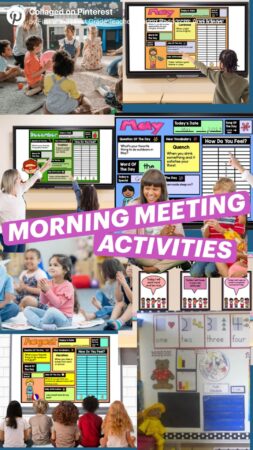
Classroom morning meeting activities and ideas for kindergarten and first grade

More About The Firstieland Podcast

Hosted by Molly Schwab, a retired K-1 teacher with over 30 years of classroom experience, The Firstieland Podcast For Early Elementary Teachers gives kindergarten and first grade teachers practical, real-world tips to make teaching easier and more fun. From classroom management to picture book ideas, each episode is designed to help you teach smarter, not harder.

Each week, Molly shares practical tips, strategies, and ideas to help kindergarten and first grade teachers feel confident, organized, and ready to create a joyful classroom where learning feels like play.

Tune in on your favorite podcast platform: Apple, Amazon, Spotify, and more! If you’re loving the podcast, please rate, review, and follow!

Click to View Transcript

[00:00:00] Hey friends. Welcome back to the Firstieland podcast. I’m your host, Molly Schwab. Have you ever had one of those mornings where the day feels off before it even really starts? The kids are wild. Somebody’s complaining that they feel sick, another one’s crying, and you’re already counting down to your lunch break before 8:30..

I’ve been there too more times than I can count, but there’s one thing that always helped us get our day started on track. And that was our morning meeting. So today we’re gonna talk about how you can use your morning meeting to create a calm and consistent routine that’ll set the tone for your entire day.

Let’s get started.

Hey there, I’m Molly from Firstieland, a former elementary teacher with over 30 years of experience in kindergarten and first grade. I’m here to help make teaching a little easier and a lot more fun. Whether you’re looking for the perfect read aloud, fresh writing ideas or [00:01:00] simple classroom tips, I’ve got quick practical strategies you can use right away.

New teacher or experienced educator, there’s something for everyone in Firstieland, so grab your coffee and teacher bag. Let’s get started.

Before I had my first formal teaching job, I worked as a teacher’s aide in a first grade classroom. And every day that teacher that I worked with would take the time to speak to every student in the classroom. They’d line up at her desk when they first got to school and tell her whatever story they had on their mind, and she told me that the reason she did this.was to put eyes on every child first thing in the morning, and that really stuck with me. The importance of making sure that every child was okay when they entered the classroom. So in my room, I did this through our morning meeting. After everybody arrived, we’d meet at the carpet for about. 20 to [00:02:00] 25 minutes and we had a routine of what we did.

We started with our Good Morning song and it was a little song that I found on YouTube and it went like this. Good, good, good morning. Have a Hap Hap Happy day. And it had a few more lines and we’d sing that together each day, and then we’d greet each other. We did this in lots of different ways. Sometimes we’d fist bump our neighbor or give them an elbow bump.

Other times they’d do a little pinky handshake or we’d say, good morning in another language like Bonjour Layla or whatever the kid’s name was. But we’d always use each other’s names when we said our greeting. I remember when I was a kid, there was a show called Romper Room, and it was like a little show for preschool kids, and the teacher on the show was named Miss Nancy.

At the end of the show, she had this magic mirror that she’d hold up and she’d say, romper, Stomper, bump, or boo. Tell me, tell me, tell me, do Magic Mirror tell me today. Did all my friends have fun at play? And then [00:03:00] she’d start naming some people that she saw in her magic mirror and she’d say things like, I see Mary and Billy and I see Sally and Jamal, or whatever the names were, and it seemed so magical, and I would always wait and wait for her to say, Molly.

I don’t think she ever did actually. But the reason that I mention this is because when you start the day by greeting the kids with their names. It makes them feel like they belong and you care about them. So morning greetings are a great way to start the day. Then after our greetings, we’d usually do our morning meeting slide.

We had a new slide every day, and it had all sorts of things on it. There was always a question of the day, and so I’d ask the question and I’d let a few kids answer. We didn’t have time for everybody to answer every day, so I had a little cup with Popsicle sticks in it that had the kids’ names on them.

And so I’d pick two or three sticks and I’d let those kids answer the question and they were simple questions. What’s your favorite thing to play during [00:04:00] recess, or what’s your favorite TV show? Sometimes the questions would relate to a holiday that was coming up, like, what’s your favorite Halloween candy?

Or something like that. Simple and quick. And then I’d make sure to call on different kids every day. And so then when we got through everyone over the course of a week or so, I’d put all the sticks back in the cup and we’d start over again the next week. And so also on the slides we had a little feelings graph where kids could mark how they were feeling that day.

And that was good because you could kind of have a little check-in to see if there was anybody upset about anything. There was always a new vocabulary word of the day, and then there was the joke of the day, which the kids absolutely loved. Those were always cute little knock, knock jokes or something like that.

It took us maybe 10 minutes to do the slide, and so we could cover quite a few little skills in a short amount of time. It was very fast paced and the kids enjoyed it, and then from there we always did our calendar. I think having a [00:05:00] calendar time is important in kindergarten or first grade. It gives you a chance to do a little spiral review of the skills that you’re working on in math and you get a lot of bang for your buck.

You don’t have to do calendar time during your morning meeting. I’ve also done calendar time when I was teaching math, to sort of like open up my math lesson so you could do it then too, but we would do it in the morning, but. I thought we got a lot out of it. So I loved using my calendar.

When I taught kindergarten, I had a huge bulletin board at the front of my classroom, and that’s where I had my calendar set up. And it had so many things on it. I wish I could show you a picture. There was of course the calendar and we’d add the date to that every day. And every month the calendar dates were in a pattern, and the patterns would get more and more complex as the year went on.

It might be like a color pattern at the beginning of the year, like maybe red, blue, red, blue, or maybe like an object pattern, like pumpkin acorn, pumpkin [00:06:00] acorn. And the dates of the calendar would be written on those little pictures. And so we’d start the year with a simple like A B, A B pattern,

And then we’d get into more complex patterns as the year went on, like A-A-B-A-A-B, or a A B, B, A, A, B, B patterns. And because we did it every single day, the kids got really good at recognizing patterns. And then we’d count how many days we’d been in school, and we’d use straws to make the number in tens and ones.

For instance, if we’d been in school for 24 days, we’d have two bundles of 10 straws and four single straws. So we’d practice place value and 10 frames. We also had a little bear that we dressed for the weather and one person got to be the meteorologist each day and check the thermometer that was hanging outside our window.

They loved that and they got to tell us the temperature and then they got to dress the weather bear for the weather. So we did so many things in our calendar and the kids really learned from it and they enjoyed [00:07:00] it, and it was a great routine to start our day. When I moved from kindergarten to first grade, I didn’t have a big bulletin board like that in my new classroom, and I really wanted to continue doing calendar time because I knew how much the kids learned from it.

But what I did have in my new room was a smart board, so I decided I’d make a digital calendar. And that I could set it up to have all the same components, and I didn’t need to have that giant bulletin board space. So my digital calendar had all the same stuff on it, and the kids could just move the pieces around on the board, and then when we were done with calendar time each morning, I could just shut it off until the next day.

, I’ll link that calendar that we used in the show notes so you can see what I’m talking about. And then finally we’d end our morning meeting with our morning message. Sometimes I’d write the message on a big piece of chart paper, or sometimes I’d just write it directly on the board. Our digital calendar had a slide that was specifically for morning message, so [00:08:00] sometimes I would write it there, and the morning message was very simple.

It was usually some kind of greeting and telling the kids what we had planned for the day. It might say something like. Good morning friends. Today is Wednesday. We have Jim and we’ll be getting our pictures taken. Smile pretty love Ms. Schwab. And you know, the message would change every single day. The thing about morning message that makes it such an important part of the day is how it’s written.

I would purposely misspell some sight words. Or maybe forget to write a capital letter or punctuation at the end of the sentence. And so the kids would help me find the mistakes and we’d fix them. So again, we’d get a little mini grammar or spelling lesson or something through our morning message. So we’d start our morning meeting at eight 30 and then finish about eight 50 to 8 55. One morning announcements would come on from the office.

It was a great way to begin our day. We covered a ton of [00:09:00] skills and it really set the tone for the day and reminded the kids that we were in school and ready to learn. So that’s how I ran my morning meeting. Now you can decide what you think is important for your classroom, but the key to morning meeting is making it consistent.

And doing it every single day, you can definitely change things up and you wanna do that so kids don’t get bored with the same thing every single day, but. I do think it’s important to include certain things in your morning meeting. You definitely wanna have some kind of greeting that you do. You can have a song or maybe a class pledge that will signal to your class that the day has begun.

You also wanna have some sort of activity, a game, a sharing activity of some sort. We used our morning meeting slides to guide us, but you could choose whatever you wanted, but you wanna have some sort of activity that all the kids can participate in. I think calendar time is really important in kindergarten and first grade because the kids can learn so much from it.

In such a short amount of [00:10:00] time, and it’s a consistent spiral review of the math skills that you’re teaching every day. You can choose what skills you wanna do, and you can also choose what parts of the calendar you wanna do each day. For instance, maybe on Monday you have a shape of the day, and then maybe Tuesday you do the weather,

so maybe Wednesday you review time or money, you know, and so on. You don’t have to do every skill every day because there’d never be time for that, but you can set it up in whatever way works best for you and what you have time for. And then finally. Having some sort of morning message is a great way to end your meeting because it tells the kids what to expect for the day in your classroom.

You can choose to make it interactive by making those purposeful mistakes and having kids help you find it, but you don’t have to do that every day if you don’t have to for it. Maybe you just do that once or twice a week, but a daily morning message is important and when you finish that, it signals to the kids that their school day is about [00:11:00] to begin.

So, morning meeting is really about coming together at your carpet and starting your day together, saying hello, maybe having a couple of laughs and planning what you’re gonna do that day. It’s a time to connect and share your thoughts, and it gives you that chance to put eyes on every child to see who’s feeling happy, upset, or maybe even sick.

So if your mornings have been feeling a little hectic, or even if they’re going fine, but you’re looking for more connection and structure, morning meeting just might be the thing that changes everything. It doesn’t have to be fancy. Just show up, be consistent, and make it a time that feels special for you and your students.

Over time, you might find that it becomes one of your most meaningful parts of your day. I know for me morning meeting was one of my favorite times of the day. Except also read alouds ’cause you know I love me. A good read aloud.

All right friends, thanks for hanging out with me today. If you’re looking for morning meeting [00:12:00] slides, I do have those in my TPT store and I’ll put the link to that and everything else I talked about in the show notes. Have a great week and remember to make learning feel like play.

See you next time.

Thanks so much for tuning in. I hope you’re walking away with some great tips that you can use right away. Be sure to hit the follow or subscribe button so you never miss an episode. And if you’re enjoying the podcast, I’d love it if you’d leave a review. You can find the show notes and links for everything mentioned in this episode at firstieland.com.

I’ll see you next week in Firstieand.

Related Podcasts

All search results