teaching kindness to kids in first grade

Click Play to Listen

Episode 39

Teaching Kindness To Kids: What To Do When Your Students Are Mean

Looking for practical ways to focus on teaching kindness to kids in your first grade classroom? These kindness lessons and activities are perfect for kindergarten and first grade teachers who want to build a positive classroom community while also strengthening classroom management.

If you’ve ever felt frustrated by mean behavior and kids struggling to be a friend to one another, you’re not alone. Many teachers are trying to teach academics, manage behavior, and somehow build empathy and respect at the same time. That’s why I believe teaching kindness isn’t just an SEL add-on. It’s classroom management.

When you intentionally teach kids how to show kindness and treat others with respect, you create a calmer, more connected classroom.

Why Teaching Kindness Matters in Kindergarten and First Grade

Kindergarten and first grade students are still learning how to manage emotions, solve problems, and be nice to others. They don’t automatically know how to be kind. They have to see it, hear it, and practice it.

Teaching kindness to kids means helping them:

  • Learn to use kind words
  • Show kindness through actions
  • Practice empathy
  • Learn how to be a friend
  • Understand what respect looks like
  • Choose to be kind even when it’s hard

When we make kindness part of our daily routine instead of a one-time lesson, it starts to stick.

Getting Started With Kindness Lessons

I always begin by having real conversations about what it means to be kind.

We talk about:

  • What does it mean to be kind?
  • What does it look like?
  • What does it sound like?
  • How does it feel?

We create an anchor chart with examples of kind words and actions. Students help generate ideas like:

  • “Can I help you?”
  • “You can play with us.”
  • “Are you okay?”
  • “That looks great!”
  • “I’m sorry.”

This simple activity gives students language they can actually use.

Using Books to Teach Kids to Be Kind

Picture books about kindness are one of the easiest ways to teach empathy and kindness.

When you read stories that show characters learning to be kind, students see real examples of how to treat others. After reading, we discuss:

  • Was the character being kind?
  • How did their actions affect others?
  • What could they have done differently?
  • How can we show kindness like that in our classroom?

Books open the door for deeper conversations about respect, friendship, and empathy in a way that feels safe and natural.

Role Play and Kindness Games

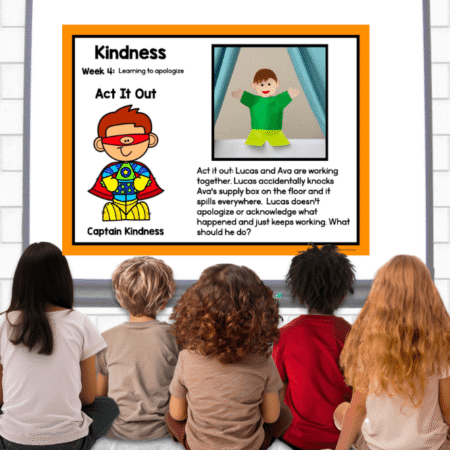
Kids learn best by doing. That’s why I love using these simple slides to help the students use role play to reinforce kindness lessons.

One easy activity is to act out real classroom situations. For example:

  • Someone won’t let another child play.
  • A student says something unkind.
  • A friend falls down at recess.

Pause and ask, “How could we show kindness here?”
Teaching kindness to kids in first grade

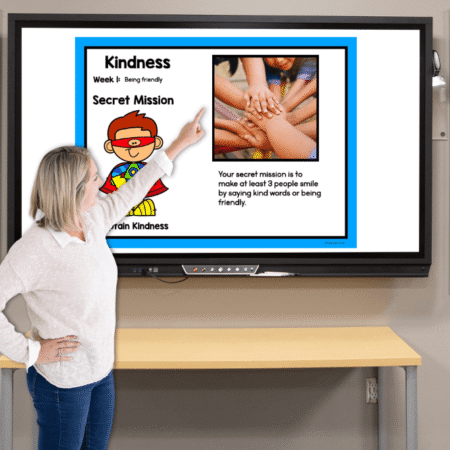
You can also create a “Secret Kindness Mission” game. Each student gets a small task for the day, like:

  • Give someone a compliment.
  • Invite someone new to play.
  • Help clean up without being asked.

At the end of the day, students share how they showed kindness. This simple game makes practicing kindness exciting and intentional.
Teaching kindness to kids in first grade

Teaching Empathy Through Everyday Moments

Teaching kids to be empathetic doesn’t require a special curriculum. It happens in daily conversations.

When a student is being unkind, instead of immediately correcting the behavior, try asking:

  • “Are you being kind right now?”
  • “How do you think that made your friend feel?”
  • “What could you say instead?”

These questions help children slow down and think. Over time, they begin to internalize what it means to be kind.

The “Gifts” Strategy: Helping Kids See Value in Each Other

One of my favorite classroom strategies was teaching students that everyone brings a gift to our classroom.

Not a gift like a birthday present, but rather a strength.

Some students are great readers. Some are artists. Some are helpers. Some make others laugh. Some are wonderful at organizing or cleaning up.

When students begin to see value in themselves and others, they naturally become kinder. They learn to respect differences and appreciate what each person contributes.

This strategy builds empathy, respect, and a stronger classroom community.

Why Kindness Is Classroom Management

Teaching kindness to kids improves:

  • Peer relationships
  • Student confidence
  • Classroom behavior
  • Overall classroom climate

Instead of constantly reacting to unkind behavior, you’re proactively teaching students how to be nice, how to show kindness, and how to be a friend.

And that saves time in the long run.

When students understand expectations around kind words and respectful behavior, your classroom runs more smoothly.

WATCH ON YOUTUBE

how to teach kindness in first grade

In This Episode, You’ll Learn:

✔️ How to begin teaching kindness to kids in kindergarten and first grade
✔️ Simple kindness lessons that don’t add more to your day
✔️ Activities and games that help students practice empathy
✔️ How to use books and discussions to teach kids to be kind
✔️ Ways to reinforce kind words during discipline
✔️ A classroom strategy that helps students see and respect each other’s strengths

Resources Mentioned In This Episode

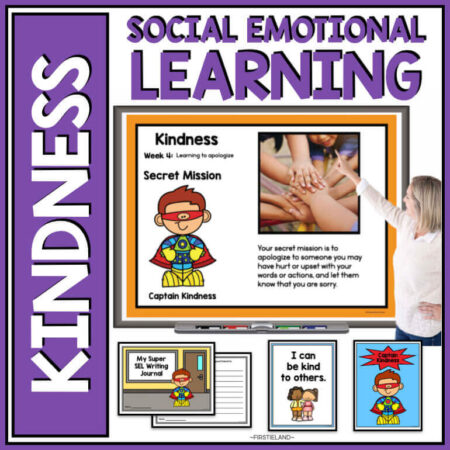
Kindness Unit – with slides and writing activities

Related Blog Posts / Podcast Episodes

Blog Post – 30 Amazing Books About Kindness For Elementary Kids

Blog Post – 30 Fun & Easy Kindness Activities For Elementary

Podcast – Episode 21 – Best Picture Books and Read Alouds for Teaching Gratitude

Connect With Molly

Follow on Instagram: @firstieland
Follow on Facebook: Firstieland

Save This Podcast For Later!

Take a minute to save these ideas to your favorite Pinterest board so you can remember them later!
teaching kindness to kids in first grade

More About The Firstieland Podcast

Hosted by Molly Schwab, a retired K-1 teacher with over 30 years of classroom experience, The Firstieland Podcast For Early Elementary Teachers gives kindergarten and first grade teachers practical, real-world tips to make teaching easier and more fun. From classroom management to picture book ideas, each episode is designed to help you teach smarter, not harder.

Each week, Molly shares practical tips, strategies, and ideas to help kindergarten and first grade teachers feel confident, organized, and ready to create a joyful classroom where learning feels like play.

Tune in on your favorite podcast platform: Apple, Amazon, Spotify, and more! If you’re loving the podcast, please rate, review, and follow!

Click to View Transcript

[00:00:00]
Hey friends. Welcome back to the Firstieland podcast. I’m your host, Molly Schwab.
The other day I took my grandkids to a little indoor play area where they have a small town set up. There were all kinds of tiny buildings around the edge of the room that represented different places like the grocery store, the school, and the veterinarian’s office.
It was really cute. In the center of all the buildings was a little park with slides and climbing structures.
While the kids were playing, my youngest granddaughter fell. Before I could get over to her, another little girl stopped to help her up. She asked if she was okay and was just so sweet to her. It got me thinking about why some kids are naturally quick to show kindness while others aren’t quite there yet.
That little girl didn’t hesitate. No adult prompted her. No one told her what to do. She simply noticed someone was hurt and stepped in to help. That doesn’t happen by accident. Kids learn that kind of response from the environments they’re in and the adults [00:01:00] they’re watching.
Somewhere along the way, someone modeled for that little girl what it looks like to notice others, to care, and to act kindly.
She had seen it enough times that it became instinct. It was such a good reminder for me, especially as a teacher, that kindness isn’t just something we tell kids about. It’s something they absorb from what they see day after day.
That little moment probably felt very small to her. She probably doesn’t even remember it. But to my granddaughter, and to me watching it happen, it mattered. It reinforced exactly why modeling kindness in our homes and classrooms is so incredibly important.
So that’s our topic today, teaching kids to be kind. Let’s get started.
Hey there, I’m Molly from Firstieland, a former elementary teacher with over 30 years of experience in kindergarten and first grade. I’m here to help make teaching a little easier and a lot more fun. Whether you’re looking for the perfect read aloud, fresh writing ideas, or simple classroom tips, I’ve got quick, practical strategies you can use right away.
New teacher or experienced educator, there’s something for everyone in Firstieland. So grab your coffee and teacher bag. Let’s get started.
[00:02:00]
When I think about teaching children to be kind, I really believe it starts with the adults they’re surrounded by. Kids learn kindness from what they see. They learn it from the way people talk to each other, how they handle frustration, how they solve problems, and how they treat others.
The hard truth is that not every child comes to school from a home where kindness is modeled consistently. Some kids come from homes with lots of yelling, sarcasm, hitting, or unkind words. And kids model what they see.
So when those behaviors show up in the classroom, it’s not necessarily because a child is bad. Often, it’s simply because that’s what they’ve learned.
As teachers, we have kids coming into our classrooms from all different environments, and that can make teaching things like kindness really challenging.
When kindness becomes a problem in your classroom, when kids are being mean, excluding others, or speaking harshly, you have to become the adult who models kindness every single day.
That doesn’t mean you can’t be strict. You absolutely can. But being strict doesn’t mean being unkind.
Children watch us the same way they watch the adults in their homes. They notice our tone. They notice our words. They notice how we react when we’re frustrated. And they’re going to model exactly what they see from us.
[00:04:00]
That’s why I don’t think kindness can just be something you write into your lesson plans and check off like, “Okay, this week in social emotional learning we’re going to learn about kindness.”
Yes, you should build lessons about kindness into your plans. But it also has to be part of your everyday classroom life.
Discipline is a really good example. There are lots of ways to discipline a child. And sometimes, if we’re honest, teachers don’t always show kindness when they’re upset. We’re human. Sometimes we yell. Sometimes we snap.
Having a bad day or losing your cool once in a while doesn’t make you a bad teacher. But if yelling, sarcasm, or harsh reactions are happening every day, that’s when it’s worth doing some self reflection.
We have to ask ourselves, what am I teaching kids when I respond like this?
So let’s talk about some practical ways to intentionally teach kindness.
One of the easiest places to start is with books. There are so many great picture books that open the door to conversations about kindness.
One of my absolute favorites is I Walk with Vanessa.
[00:05:00]
It’s a wordless picture book. Through the illustrations, it shows a little girl who’s being bullied by her classmates. Another child notices this on her way home from school. The next day, she stops at Vanessa’s house and offers to walk with her.
That simple act of kindness changes everything. Suddenly, Vanessa isn’t alone anymore. It’s such a powerful example of how one small act of kindness can mean the world to someone.
Another favorite is The Invisible Boy by Trudy Ludwig.
In this book, there’s a little boy named Brian who’s quiet and shy. He feels invisible. He never gets asked to play. He doesn’t get invited to birthday parties. He feels left out.
One day, a new boy named Justin joins the class. Brian is the only one who makes him feel welcome. He smiles at him. And when Justin gets made fun of for what he’s eating for lunch, Brian leaves him a little note telling him it looks good.
Justin remembers that. Later, when they’re allowed to work in groups, Justin invites Brian to join his group. That changes everything for Brian. The other kids begin including him, and he doesn’t feel invisible anymore.
There are so many wonderful books about kindness. I actually wrote a blog post with 30 different titles, and I’ll link that in the show notes if you want more ideas.
[00:07:00]
Beyond books, there are other ways to teach kindness.
In my classroom, we spent a few minutes each day during morning meeting focusing on social emotional learning topics like respect, friendship, gratitude, and of course, kindness.
We would actually spend about a month focusing on kindness. I used daily slides and different activities to help kids understand what kindness really looks like.
One day we might role play. I’d have a couple of students act out a situation where someone was being unkind, maybe excluding someone or refusing to share. Then we’d stop and talk about how it could be handled differently. What would be the kind choice?
Role playing is powerful because it helps kids see what kindness looks like in real life situations they deal with every day.
Another day, we might write about it. I’d give them a scenario and ask them to draw or write about how they could respond in a kind way.
And Fridays were my favorite. We had what I called a secret mission.
[00:08:00]
I’d give them a small act of kindness to complete that day, maybe asking a new friend to play, sitting with someone at lunch, or giving someone a compliment.
At the end of the day, we’d come back together and talk about how they completed their mission. They’d share their experiences and earn a small sticker for their notebook.
When you spend an entire month focusing on one topic, it starts to stick. Kids begin to understand not just what kindness is, but how to practice it.
I have a full kindness unit in my TPT store with the slides and writing prompts. You can take a closer look at firstieland.com/kindness, and I’ll also link it in the show notes.
[00:09:00]
Beyond structured lessons, kindness needs to show up in your everyday language.
If you see a child being hurtful, instead of just sending them to time out, talk to them. Ask, “Are you being kind right now? Are you using kind words?”
Use that word, kind. It helps them reflect.
If they just stare at you or nod, follow up with, “What could you do instead? How could you show kindness right now?”
Sometimes that small shift makes a big difference.
And honestly, we have to keep ourselves in check too.
I was a fairly strict teacher. I wasn’t mean, but I was structured. And yes, there were kids who pushed my buttons.
[00:10:00]
On days when I was tired or overwhelmed, I might say something like, “Knock it off.”
And I had to stop and ask myself, are those kind words?
We have to be willing to reflect and ask what we’re modeling.
Think about a child who won’t stop talking during carpet time. There’s a big difference between saying, “Get off the carpet,” and saying, “I’ve asked you several times to stop talking. You’re choosing not to listen, so now you need to go to your seat.”
The consequence is the same. The tone is different.
Students notice.
Nobody’s perfect. But if harshness becomes the norm, it’s time to reflect.
[00:11:00]
One of my favorite things I did was talk about what I called our gifts.
I told my students that everyone brings a gift to our classroom. Not a birthday present, but something special that makes our classroom better.
Some kids had the gift of reading. Some were amazing artists. Some were helpers. Some made us laugh. Some were great at tying shoes.
Every child brought something valuable.
When I noticed a strength, I pointed it out. I’d say, “Billy, you’re an amazing artist.” Or, “Susie, you’re so patient when helping others.”
Even something as simple as sharpening pencils without breaking the lead could be a gift.
[00:13:00]
When I did that, kids started seeing each other differently. They saw each other as capable and important.
Even the kids who struggled socially had gifts.
When students see themselves and others that way, kindness grows naturally. Helping becomes normal. Valuing each other becomes normal.
That’s how you build classroom community. Not with one lesson. Not with one book. But with daily choices, intentional language, and consistent modeling.
Because in the end, kindness isn’t just something we teach. It’s something we show.
[00:14:00]
Alright, friends. I hope you got some helpful ideas today on teaching kindness.
I’ll link everything I mentioned in the show notes. And if you’re enjoying the podcast, I’d love it if you’d leave a review. That’s what helps the show grow and reach other teachers.
Until next time, remember to make learning feel like play. I’ll talk to you next week.
Thanks so much for tuning in. Be sure to hit follow or subscribe so you never miss an episode. You can find the show notes and links at firstieland.com.
I’ll see you next week in Firstieland.

Related Podcasts

All search results