Hey friends, welcome back to the Firstieland Podcast. I’m your host, Molly Schwab. I’m wondering if any of this sounds familiar to you: “I have a great class… they just won’t stop talking.” “We could get a lot more accomplished if my kids would just stop talking.” “My class is so noisy—they talk all the time.” Does any of that sound like you? If student talking is a problem in your classroom, you are not alone. In fact, this is one of the most common classroom management struggles teachers face—especially in kindergarten and first grade. It can be frustrating, exhausting, and honestly, it can make you feel like you’re not in control of your own classroom. But don’t worry. In today’s episode, we’re going to talk about why kids talk so much, and more importantly, what you can do about it. I’ll share some simple strategies that you can start using right away to help you create a quieter, more focused classroom. Let’s get started.
[00:01:00] Hey there, I’m Molly from Firstieland—a former elementary teacher with over 30 years of experience in kindergarten and first grade. I’m here to help make teaching a little easier and a lot more fun. Whether you’re looking for the perfect read-aloud, fresh writing ideas, or simple classroom tips, I’ve got quick, practical strategies you can use right away. New teacher or experienced educator, there’s something for everyone in Firstieland. So grab your coffee and teacher bag—let’s get started.
[00:01:30] When I first started teaching, I struggled with student talking every year. I would give my kids directions for an activity and send them back to their seats. There would be about a minute of silence, and then the rumbles would start. First, it was one or two kids—a whisper here or there. Then the whispers became louder, and eventually, more and more kids would start to talk. So I’d tell them to stop talking and get back to work, or I’d give them a “shhh,” and it would get quiet. For about a minute. And then it would start again. I’d tell the class to get quiet—this time in a louder voice. And so it would go, over and over, until I finally lost it and yelled at the entire class, handed out punishments left and right, and basically felt like I was going to lose my mind over the constant student talking.
[00:02:30] Have you been there? Does it sound familiar? If it does, you’re not alone. One of the biggest complaints I hear from teachers all the time is about the nonstop student talking in their classrooms. Here are a few things I’ve learned over the years. Kids need to talk. People need to talk. We talk all the time—it’s one of the ways kids learn. They talk to us and learn from us. They talk to each other and learn from each other. So we need to give kids the opportunity to talk to one another during the day. But that being said, they don’t need to talk nonstop all day long.
[00:03:00] Since we know kids need to talk, designate specific times of the day as “talking times.” What could that look like in your classroom? How about when they first come into the room in the morning? I always liked to give my kids a “soft start” to the day. After they completed their morning chores—handing in their folder, signing in, and so on—they could choose a math tub or something from the fast finisher shelf to play with. They could chat with their friends, and it was a nice way to start the day. They got all that chattiness out of their system in those first 20 minutes, and then when we moved to the carpet for our first lesson, they were ready to listen and learn.
[00:04:00] Think about it: as an adult, what’s the first thing you do when you get to school? You probably stop in your teacher bestie’s room to talk about a show you watched the night before, or maybe some juicy gossip. You want to talk to people, right? Kids are no different. If you expect them to come into the classroom silently and get right to work, you might be setting yourself up for failure. They may have something they’ve been dying to tell their buddy all night, and if they’re not allowed to talk, that’s all they’ll be thinking about. By giving kids that opportunity to talk first thing in the morning, they can get it out of their system and be ready to learn. Think about where else you can fit “talking time” into your day—mid-morning, after recess, or at the end of the day. Just short breaks to chat can make a big difference.
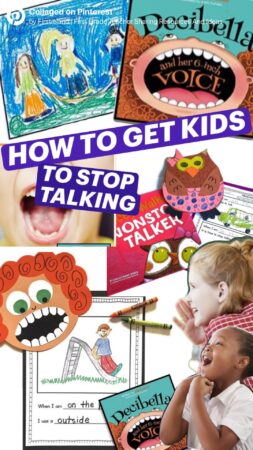
[00:05:00] Kids don’t automatically know what “no talking” means. It’s not something they’re used to at home. At home, they can talk whenever they want, and nobody’s saying “no talking.” So just like every other classroom routine, you have to teach it. At the beginning of the year, we spent time learning when we can and can’t talk in school. We had specific lessons on voice levels—what they are and what they sound like. I love reading the book Decibella and Her Six-Inch Voice by Julia Cook to introduce this concept. In the story, a little girl named Isabella talks so loudly that she earns the nickname “Decibella.” Her teacher helps her learn different voice levels for different situations.
[00:06:00] After reading the book, I introduced a voice level chart with five levels: whisper voice, six-inch voice (normal conversation volume), table talk voice (group discussion), strong speaker voice (presenting to the class), and outside voice (playground). We used this chart all year long. I had a clothespin I could move up and down the chart to signal which voice level was expected. It helped kids understand the difference between “quiet” and “silent,” and gave them clear expectations. We also did a pocket chart activity where students matched voice levels to different school settings—like the hallway, cafeteria, or playground. It really helped kids understand how each space should sound.
[00:07:00] Another great book is Lacey Walker, Nonstop Talker by Christianne Jones. In the story, Lacey talks constantly and ends up missing out on important things. But one day, she loses her voice and finally learns to listen to others. It’s a great story to help students realize that listening is just as important as talking. We used this book for another sorting activity—“times we can talk” vs. “times we need to listen.” Again, very visual and clear. Doing specific lessons like this can really help cut down on student talking, because sometimes kids just don’t realize when it’s appropriate and when it’s not. If they understand the “why” behind your rules, they’re more likely to follow them.
[00:08:00] I used kitchen timers, egg timers, and visual timers on the board to show how long students needed to work silently. One favorite was a dynamite timer that exploded at the end—it kept them focused and on task! I also played calming instrumental music during independent work time. YouTube has great options with cozy visuals—like a fireplace or snowy meadow—and the kids loved it. They knew when the music was playing, they were expected to work quietly.
[00:09:00] Hand signals also helped cut down on blurting. We used two fingers crossed for the restroom, a peace sign for a pencil, and four fingers for a tissue. This let students communicate their needs silently without disrupting others. Another way to cut down on talking is to make sure kids always have something to do when they finish early. We had a “dessert” shelf in our classroom. Once students finished their work, they could choose a quiet activity from the shelf—things like puzzles, task cards, or busy bags. It gave them something productive to do while waiting for others.
[00:10:00] For kids who still struggle with talking even after all that—there are a few more things you can try. Sometimes they just need to know you’re serious. If they’re talking on the carpet, have them go back to their seat. If they’re too loud at centers, have them work alone. Logical consequences work best because they happen in the moment and make sense to the child. Taking away recess hours later? That usually doesn’t work. They don’t remember why they’re missing out.
[00:11:00] And if nothing else works, some kids need more support. Try using a soft chime that signals to stop talking, or a private hand signal just for that student. Praise them when you see them trying. Whisper “good job” or give them a quiet thumbs-up. For some kids, a small personal reward chart can go a long way. Set a goal—like staying quiet for a whole lesson—and if they meet it, they earn a sticker. Three stickers might mean getting to be first in line for lunch. And if nothing you try is working, it might be time to check in with your school counselor and see if there’s a deeper issue going on.
[00:12:00] So just to recap: use read-alouds to model expectations, introduce a voice level chart, try quiet timers and music, use hand signals, keep early finishers busy, and for your extra chatty kiddos, use subtle signals, praise, and incentives. You’ve got this! Thanks so much for tuning in. I hope these ideas help you feel more confident and a little less frustrated when it comes to managing all that student chatter. Remember, it’s not about having a silent classroom—it’s about creating one where kids know when it’s time to talk and when it’s time to listen. I’ll drop the links to the books and resources in the show notes. And until next time, remember to make learning feel like play. See you next week.
[00:13:00] Thanks again for listening. Be sure to hit follow or subscribe so you never miss an episode. And if you’re enjoying the podcast, I’d love it if you left a review. You can find the show notes and everything mentioned today at firstieland.com. I’ll see you next week in Firstieland.