Written by Molly Schwab, host of the Firstieland Podcast and YouTube channel
July 8, 2026
If you feel like you spend your entire day repeating directions, stopping interruptions, or reminding kids what they’re supposed to be doing, you might not actually have a student behavior problem. You might have a classroom routines and procedures problem.
After 35 years of teaching first grade, one thing I learned is that most classroom management problems don’t happen because kids are trying to misbehave. They happen because we haven’t taught them exactly what we expect them to do. Having strong classroom routine and procedures in place is one of the most important parts of your classroom setup. When students know exactly what to do, your class runs smoother, you have fewer interruptions, and your students can focus on learning.
WATCH HERE ON YOUTUBE
Why First Grade Classroom Routine And Procedures Are Important
When you’re planning which procedures you want to teach your students, think about the things you do every single day.
If your students do it every day, there needs to be a routine for it.
Things like:
- walking to the carpet
- lining up
- getting supplies
- turning in work
- using classroom material
- asking for help
As teachers, it’s easy to assume kids already know how to do these simple things. But especially in kindergarten and first grade, students need every routine broken down step by step. If you say, “Everyone come to the carpet,” without teaching the routine, you might have kids running, pushing, talking, or stopping along the way.
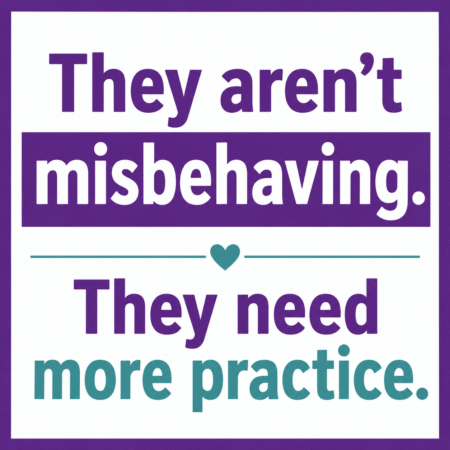
They aren’t trying to misbehave. They just haven’t learned the expectation yet. Strong classroom routine and procedures are really the foundation of effective classroom management.
First Grade Classroom Routines And Procedures Help Improve Student Behavior
One of the biggest classroom management mistakes teachers make is thinking every behavior needs a consequence. But many times, the behavior is actually a missing routine.
- The student interrupting your small group might not know what to do when they get stuck.
- The student wandering during center time might not understand the center expectations.
- The student blurting during your lesson might not know the routine for sharing ideas during carpet time.
Before assuming it’s a behavior problem, ask yourself: Have I taught the routine? Because when kids know exactly what to do, you prevent so many problems before they even begin.
How To Teach First Grade Classroom Routine And Procedures
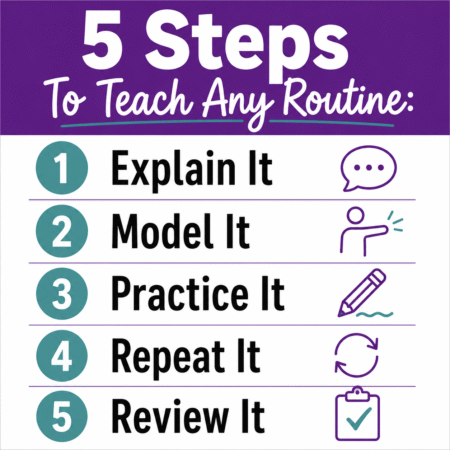
Teaching routines should start on the first day of school. But don’t worry, you don’t have to teach every single procedure in one day. Choose the most important routines first and then continue teaching routines throughout those first few weeks of school. Here are the five steps I used in my classroom.
Step 1: Explain The Classroom Routine
The first step is to explain exactly what you want students to do. Don’t just tell your class, “Listen during announcements.” Teach what that actually looks like. For example:
“When the morning announcements come on, we stop what we are doing, put materials down, fold our hands, and listen quietly.”
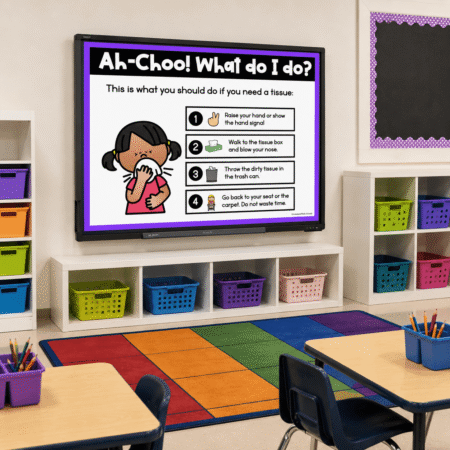
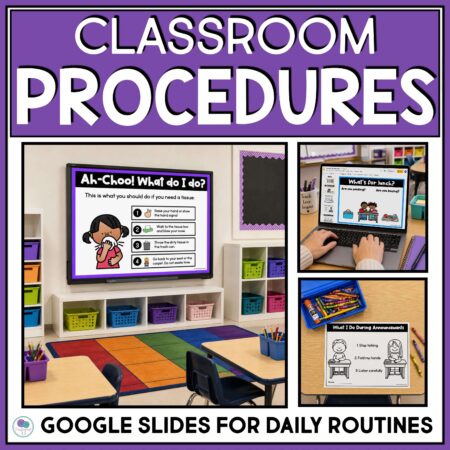
I always liked using slides like these, as visuals when teaching routines because they helped students understand exactly what was expected. You can use a slide, poster, or anchor chart to introduce the routine and review it throughout the year.
Step 2: Model The Routine
The next step is to actually show students what the routine looks like. You need to explicitly model the routine.
If you’re teaching students what to do during morning announcements, sit down and pretend you’re working. Then stop, put your materials down, fold your hands, and listen. When kids see exactly what you expect, they are much more likely to do it.
Step 3: Practice The Routine
This is the step that makes the biggest difference. Your students need to practice. After you model the routine, let your students try it themselves.
Have them pretend they’re working and then practice stopping and listening when announcements begin. Kids need the chance to actually do the routine before we expect them to remember it independently.
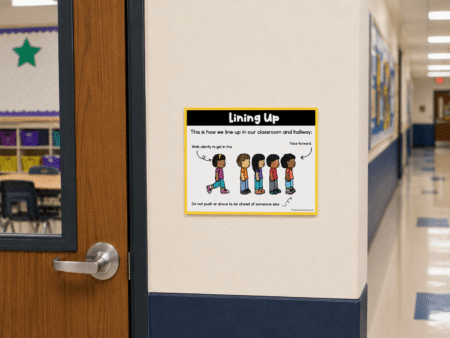
You can also hang small routines posters in the hallway or near the door as reminders of some of your classroom routines and procedures. Visuals like this can help kids remember the routines.
Step 4: Repeat The Routine
This is where many teachers make a mistake. They teach a routine once and think students should know it. But they’re little kids and they need repetition. If your students forget the routine the next day, they aren’t being bad. They need more practice.
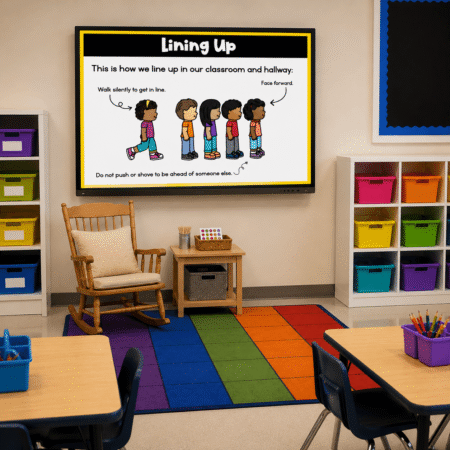
Before the routine happens, show them a quick reminder slide. “In a few minutes announcements will come on. Who remembers what we do when we hear them?” Those simple reminders help routines become habits.
Step 5: Review The Routine
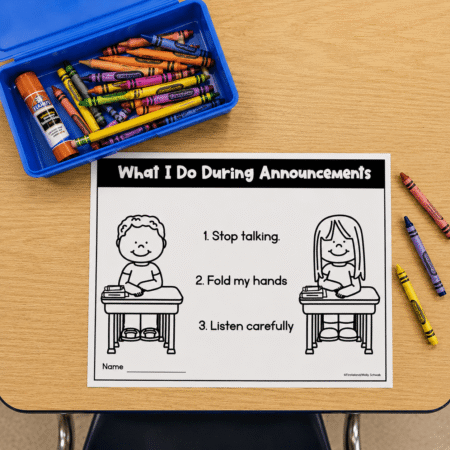
Even after students learn a routine, you’ll need to review it. After long weekends, holiday breaks, or anytime things start falling apart, go back and practice again. It’s never too late in the school year to reteach a classroom routine. If they aren’t doing it correctly, review, practice, and try again. If my students needed to be reminded of a classroom routine, they would often find a worksheet like this one on their desk for morning work. It was a good way to review.
Common Classroom Routine And Procedures To Teach
There are a lot of routines you’ll teach throughout the year, so having a classroom procedures checklist like this one, can help you keep track of everything. You can grab this freebie here.
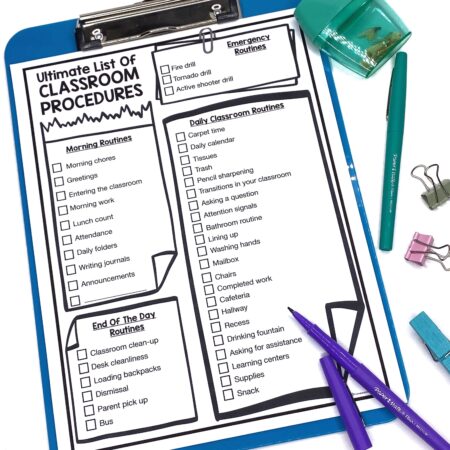
Here are some routines you may want to include.
Morning Routines
Your morning routine sets the tone for the whole day.
Teach students:
- how to enter the classroom
- where to put their belongings
- how to turn things in
- what to do for morning work
- how to complete lunch count and attendance
Daily Classroom Routines
These are the routines your students use all day long.
Teach procedures for:
- coming to the carpet
- asking questions
- getting supplies
- using classroom materials
- working independently
- transitioning between activities
School Routines
Every elementary school has routines students need to learn.
Teach:
- hallway expectations
- lunch procedures
- recess rules
- specials expectations
- bathroom routines
End Of Day Routines
The end of the day can become chaotic without clear routines.
Teach:
- cleaning up
- packing backpacks
- organizing materials
- dismissal procedures
Classroom Routines And Procedures Checklist
Effective classroom management doesn’t happen by accident. It starts with clear expectations, lots of practice, and teaching routines one step at a time. The time you spend teaching classroom routine and procedures at the beginning of the year will save you so much time later.
If you’re ready to begin teaching your classroom routines and procedures, this resource has everything you need. These routines and procedures slides are the perfect way to teach classroom expectations from the very first day of school! With ready-to-use slides, posters, matching worksheets, and editable templates, you’ll have everything you need to teach and review classroom routines in your classroom. Click here to view this resource.
Looking for more center ideas? Get started here:

ABOUT THE AUTHOR
Hi, I’m Molly, the creative mind behind Firstieland. With over 35 years of experience in early childhood education, I’m your primary support for resources that will save you time and make learning feel like play. Learn more about my mission for Firstieland here.