Written by Molly Schwab, host of the Firstieland Podcast and YouTube channel
July 15, 2026
Wondering what the first day of school routines and procedures should be in first grade? After 35 years of teaching, I learned that the first day isn’t about jumping into reading and math. It’s about helping your students feel safe, teaching important routines and procedures, and showing them exactly how your classroom works.
If you spend the first day teaching expectations instead of rushing into academics, you’ll make classroom management so much easier for the rest of the year. Take a look at my exact first day plan, including the activities, books, worksheets, crafts, and classroom routines I used every year.
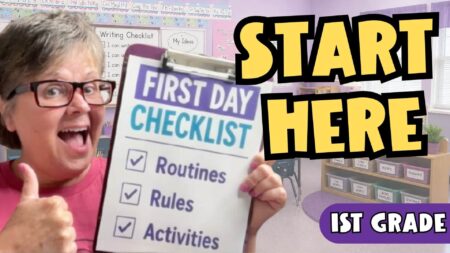
Start With Morning Arrival
One of the most important parts of the first day of school happens before students even sit down. Stand at the door and greet every child with a smile. Help them find their cubby, hang up their backpack, and make them feel welcome.
If your school doesn’t have a Meet the Teacher night, consider sending a postcard or welcome letter home before school starts with your picture on it. It helps students recognize you and feel more comfortable on the first day.
Routine #1: Morning Chores
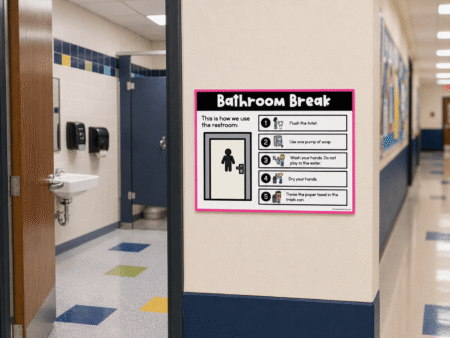
The very first routine my students learned was what I called their morning chores. When you teach a morning routine like this it will save you from answering the same questions every morning for the next several weeks.
Every morning the kids would:
- Hang up their backpack
- Put their daily folder in the basket
- Sign in for lunch
- Go to the restroom
- Wash their hands
Routine #2: Bathroom Procedures
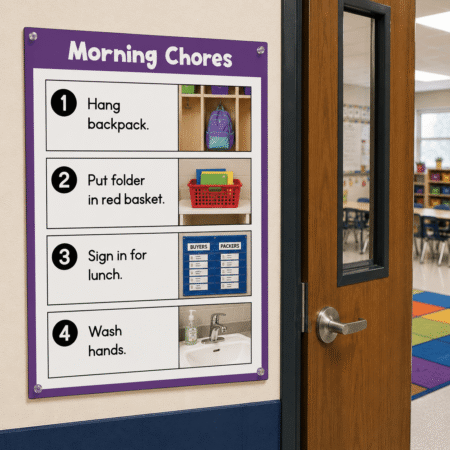
One of the very first routines you should teach are the bathroom procedures. Often times, one of the biggest worries kids have when they come to school is “What if I have to go to the bathroom?” When you teach this routine right away, it will alleviate a lot of their stress and anxiety.
I always took my entire class to the restroom first thing in the morning and walked them through every step.
We talked about:
- Flushing
- Washing hands
- Using one pump of soap
- Throwing paper towels away (in the trash can and not on the floor)
- Keeping the bathroom clean
- Respecting everyone’s privacy
It only took a few minutes, but it prevented so many problems later.
Routine #3: Carpet Time
When teaching your first day of school routines and procedures it’s important to remember carpet routine. You’ll spend a lot of the time teaching at the carpet in first grade and you want your students to behave appropriately while at the carpet.
Students should learn:
- Where to sit
- How to walk to the carpet
- How to raise their hand
- How to listen while others are talking
Since so much teaching happens on the carpet, it’s one of the most important procedures you’ll teach all year.

Routine #4: Morning Meeting and Calendar
Once everyone understood our carpet expectations, we moved into our morning meeting. This is a great place to build your classroom community and so I always added this to our first day of school routines and procedures.
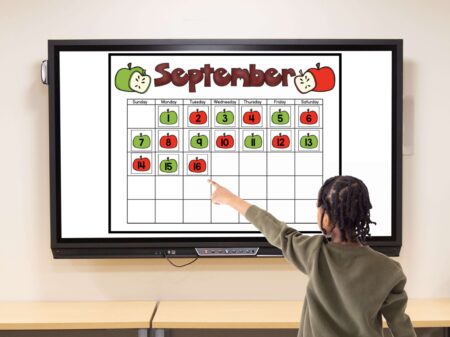
We sang our good morning song, completed our calendar routine, and spent a few minutes getting to know each other.
A simple beach ball introduction game is a great first day of school activity for grade 1 because every child gets a chance to participate without feeling overwhelmed. We would sit in a circle and roll the beach ball back and forth until each child had a turn. They would tell their name and one thing they were looking forward to this school year
Read First Day Jitters
One of my favorite books for the first day of first grade is First Day Jitters. It’s a cute story that reminds students that everyone feels nervous on the first day, even teachers!
After reading the story, we talked about our feelings and created a class graph showing how everyone felt about coming to school. Then students completed a simple writing activity and worksheet by drawing a picture of their feelings and circling the matching emotion. You can read more about our first day of school activities here.

Routine #5 – Recess Rules
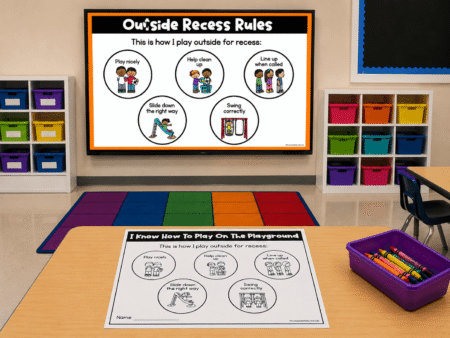
By mid-morning, everyone needed a break. It’s important to remember that kids need time to build up their stamina to sit and work for long periods of time. They need lots of breaks on the first day of school. So a mid morning recess break fit in perfectly and it gave me the chance to teach the kids our recess expectations.
We practiced:
- Playground rules
- Lining up
- Listening for the whistle
- Putting equipment away
Teaching these procedures before students started playing made recess much smoother.
Routine #6 – Getting A Drink
Even something as simple as getting a drink needs a routine. When we came back in from recess, this was a good opportunity to teach kids our drinking fountain routine.
We practiced lining up, taking a quick drink, and walking back to class. Small routines like this save a surprising amount of instructional time throughout the year.
Routine #7 – Lunch Procedures
After we came in from our morning recess, we did a few activities to go with the book First Day Jitters. You can read more about those here. Before we knew it, it was almost time for lunch. It’s a good idea to practice your lunch routine with your class before you actually go to lunch. That way you have only your class and can practice every step in a calm way.
Before lunch, we practiced every step. Students learned:
- How to get their lunch box
- How to walk through the lunch line
- Where to carry their tray
- Where to sit
- How to clean up
Practicing before the real lunch period made students much more confident and made our lunch time to much smoother.
Routine #8 – Introduce Book Boxes
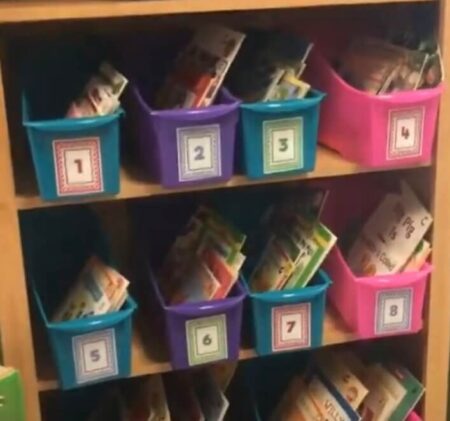
One thing I always introduced on the first day was our book boxes. We did quiet reading every day after recess and so I starting introducing this routine on the first day of school. Prior to school starting, I filled a book box for every student with simple books to read. On the first day of school I gave each student their book box.
Then we practiced reading independently for just one minute. Over time, we slowly built our reading stamina until students could read quietly while I worked with small groups. This became one of the best routines in my classroom.
Routine #9 – Packing Up
As the day draws to a close, the next first day of school routine and procedure you ‘ll want to teach is packing up. This can become a very chaotic time of day without a routine in place.
Teach your students how to:
- Check their mailbox for papers
- Put papers into their folder
- Pack their backpack
- Put away their supply box and clean up any scraps of paper on the floor.
Routine #10 – Dismissal
Your first day of school routines and procedures wouldn’t be complete without teaching students your dismissal routine. Like packing up, this can be a confusing time for kids, especially at the beginning of the year. The last thing you want is for any child to miss their bus so this is am important routine to review before the end of the day.
Teach students how to:
- Line up for buses
- Wait for the name to be called if they are being picked up by a parent
- Walk out to the buses and get on the correct bus
- Wait queitly in line

Bonus Routine
Here’s one final routine, and this one is for you. After your students leave, spend about 10 minutes getting ready for tomorrow. Straighten your desk and lay out tomorrow’s materials. Clean up any messes in the classroom.
Trust me, you’ll be so glad you did when you walk into your classroom the next morning.
If you’re ready to get started teaching routines, these routines and procedures slides are the perfect way to teach classroom expectations from the very first day of school! With ready-to-use slides, posters, matching worksheets, and editable templates, you’ll have everything you need to teach and review classroom routines in your classroom.
Click here to take a closer look.

Looking for more help with routines and procedures? Click here:


ABOUT THE AUTHOR
Hi, I’m Molly, the creative mind behind Firstieland. With over 35 years of experience in early childhood education, I’m your primary support for resources that will save you time and make learning feel like play. Learn more about my mission for Firstieland here.