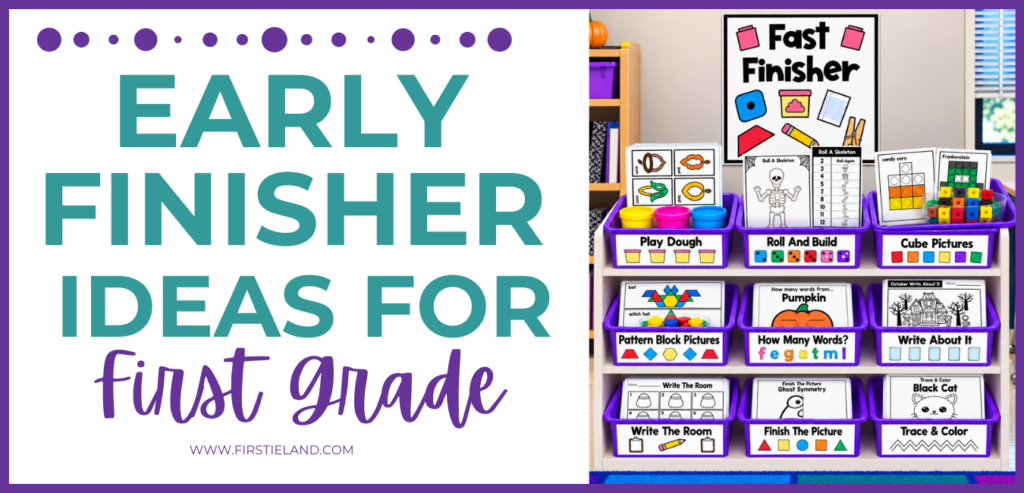
Have you ever had students working quietly when someone calls out, “I’m done!” Suddenly, quiet work time is filled with interruptions as others finish. One of your first grade or kindergarten classroom management strategies should include teaching kids what to do when they finish early.
Early finisher activities are short, independent tasks students can choose after completing their assigned work. For kindergarten and first grade, choices might include playdough task cards, pattern block pictures, tracing sheets, simple puzzles, and writing activities. A successful fast finisher routine teaches students how to check their work, choose an available activity, use it quietly, and put everything away.
During my 35 years of teaching, I tried both busy bags and activity bins. Eventually, I found that a clearly labeled shelf with familiar, hands-on activities worked best for me. Below, I’m sharing those activities and the routine I used:
Why Early Finishers Need a Classroom Routine
The problem isn’t that kids are finishing early, because everyone works at a different pace. The problem is that they need to know exactly what they’re allowed to do when they finish if the rest of the class is still working.
Having a plan for your early finishers should be part of your first grade or kindergarten classroom management plan. It gives students a next step during quiet work time. Early finisher activities are a classroom management tool that supports positive behavior by making student choices clear before off-task behaviors begin.
One of the reasons this is important is because teachers are often working with another student or teaching small groups, when the rest of the class is working independently. When your students are working quietly, questions and interruptions stop the flow. Clear expectations on what to do it they finish early, give young children a way to keep working independently while you help someone else.
Setting Up Your Fast Finisher Area
Start With Simple Busy Bags
For a few years, I used small zippered pencil pouches for my early finisher activities. I filled them with little toys and things I found at the Dollar Tree.One bag had a few LEGO bricks and little LEGO people. Another had a little can of playdough with a few cookie cutters. Some bags had little puzzles inside.
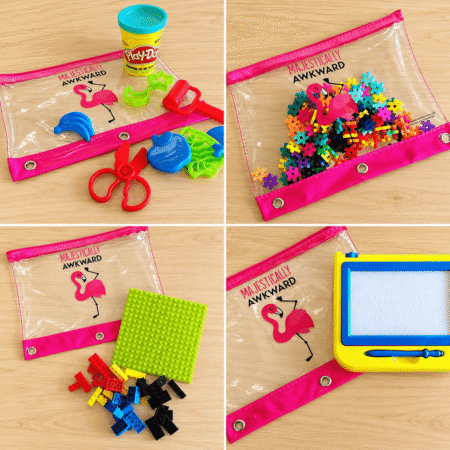
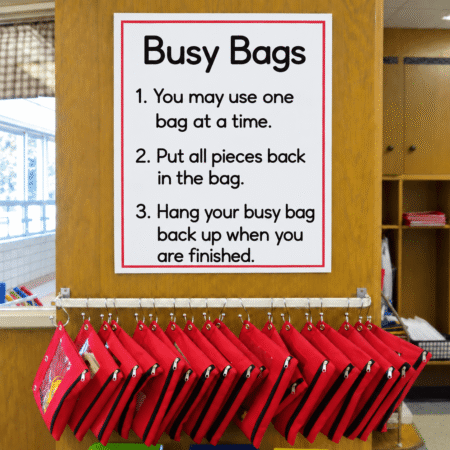
I had a variety of bags hanging on hooks on the wall. Students could take a bag, use the materials, and return it. Busy bags are a simple way to start without needing a lot of classroom space.
Organize Activities in Labeled Bins
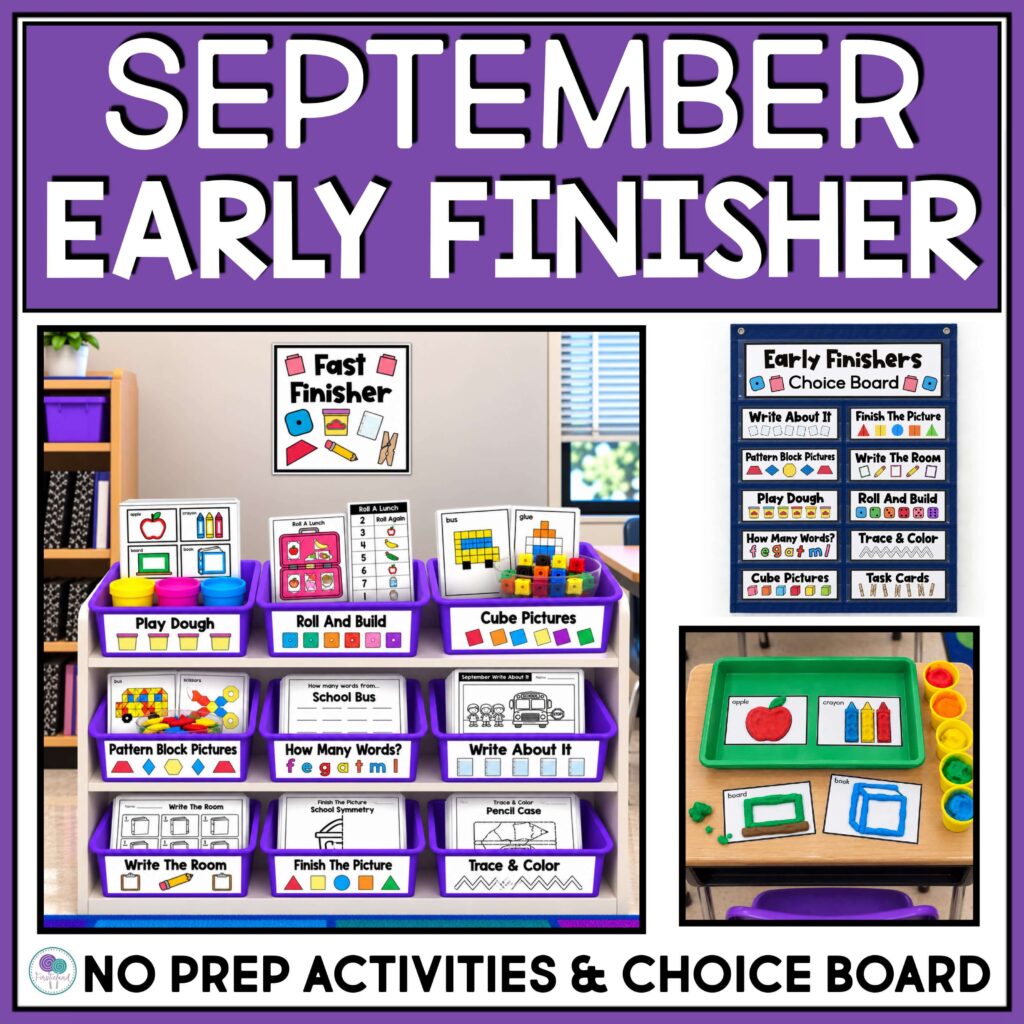
Eventually, I found that having a fast finisher shelf with activities in bins worked best for me. I usually had nine or ten choices, and everything was hands-on in some way. I wanted engaging activities that kids would want to do while other students finished their work. But they also needed to be simple enough to complete independently, take about five to ten minutes, and be easy to clean up.
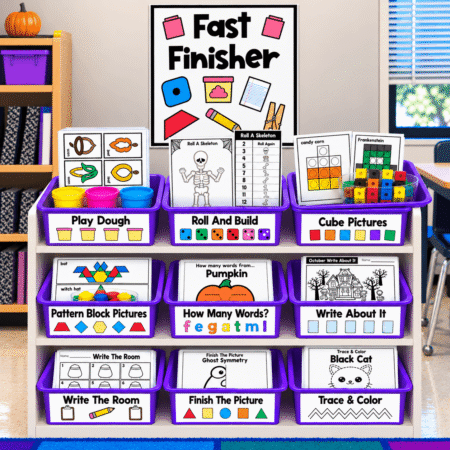
Each early finisher activity had its own clearly labeled bin. Kids knew what they could choose and exactly where to put things back. That kept the shelf neat and made cleanup quick.
A picture label or choice board can give kindergarten students a visual reminder of their options. A visual schedule can show the order: finish your work, have teacher check your work, choose a fast finisher activity, and clean up. Keep your fast finisher poster near the materials so students can refer to the routine without asking you every single day.
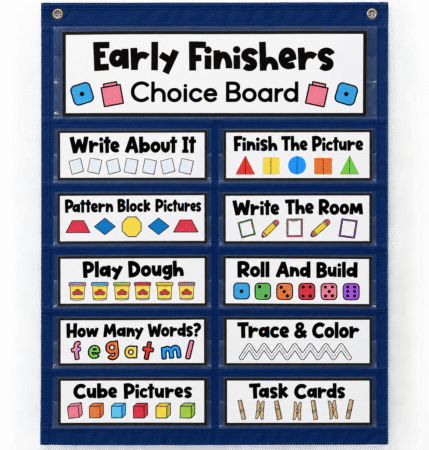
Hands-On Early Finisher Activities for Kindergarten and First Grade
1. Tracing Sheets
Tracing sheets gave students fine motor practice. These printable worksheets were easy to take back to their seats and work on quietly. Choose educational worksheets that practice familiar skills so children can start without help. Keep pencils or crayons available so choosing an activity doesn’t become a search for supplies.
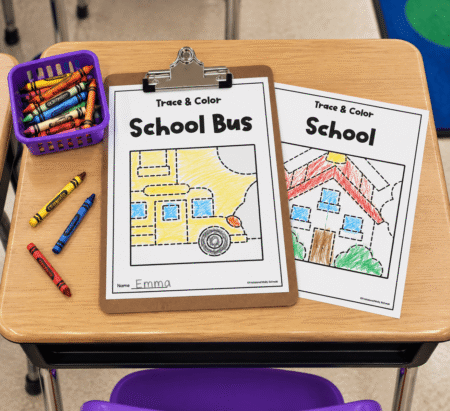
2. Finish the Picture Sheets
These finish the picture pages had part of a picture, like half of a pumpkin. Kids tried to finish the pumpkin picture and color it. They were like symmetry pictures, giving students a creative task with a clear starting point.
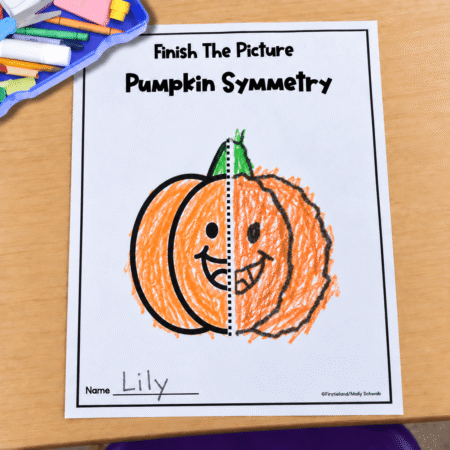
3. Seasonal Play Dough Task Cards
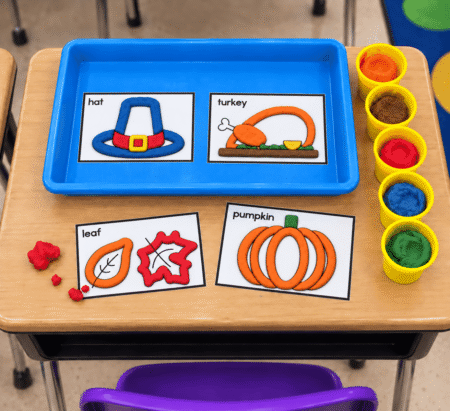
I included seasonal playdough task cards and a few cans of playdough. Students tried to recreate the pictures on the cards. This gave kids something to make with their hands using engaging materials.
4. Pattern Block and Unifix Cube Pictures
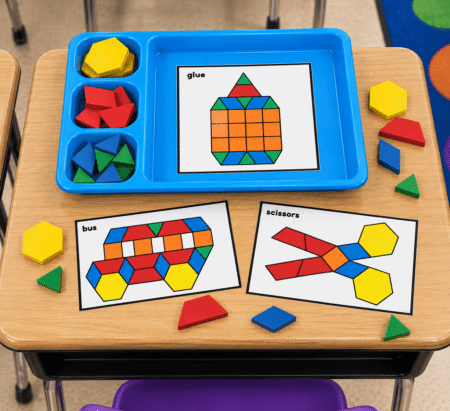
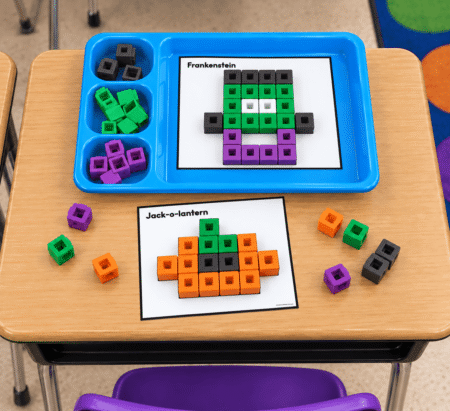
Our math activities included pattern block pictures and Unifix cube pictures. Students used actual manipulatives to recreate the designs. These early finisher tasks gave them a simple goal without needing a new explanation each time.
5. Literacy Activities
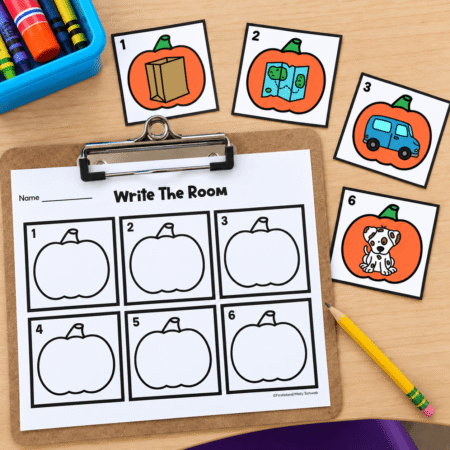
We also had literacy choices like write the room and making words. Our write the room activities were usually phonics picture cards hidden around theroom. Students had to find the cards, sound out the word and write it on the matching worksheet. These activities were differentiated for strugging, on level and advanced students – ensuring that everyone had an appropriate activity for their level.
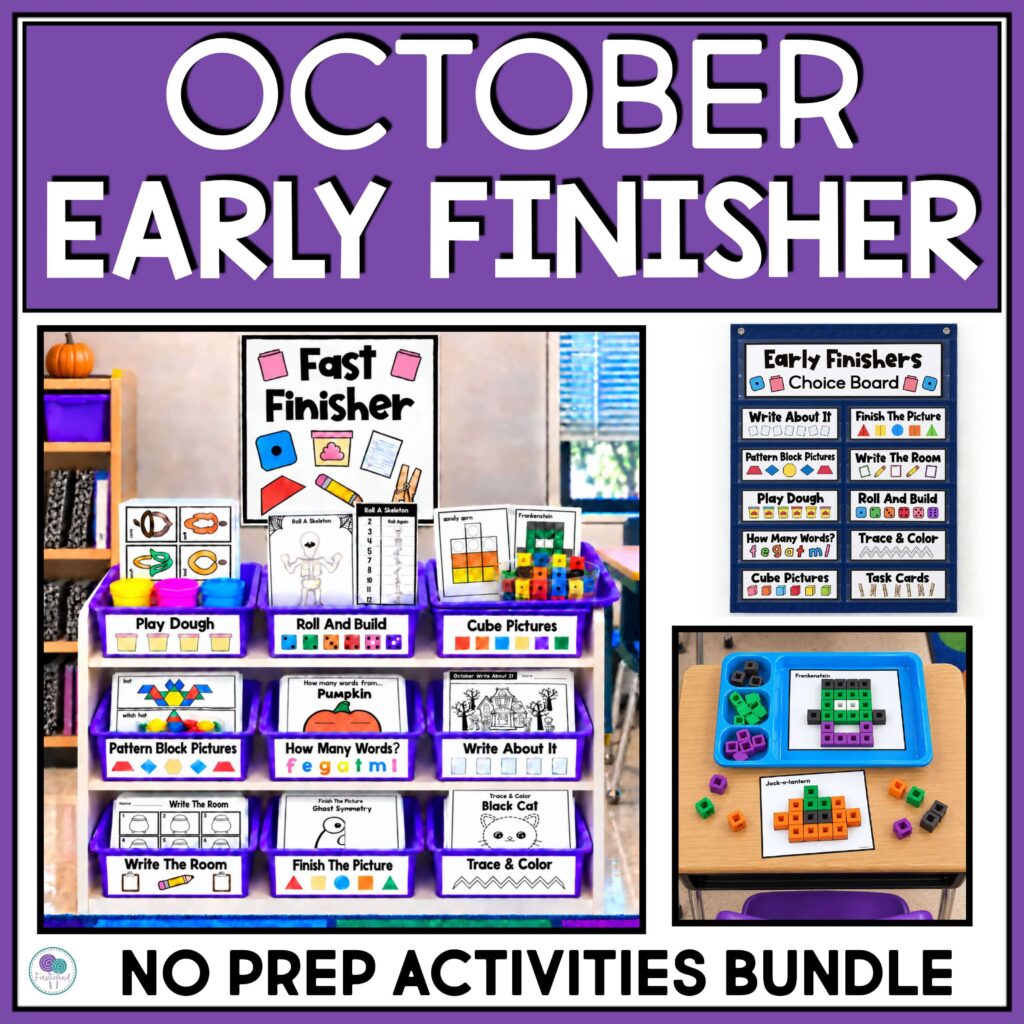
We also had making words activities. In October, students could see how many words they could make using letters from words like pumpkin or Frankenstein. Match the activities to your grade level so students can use them independently.
6. Task Cards
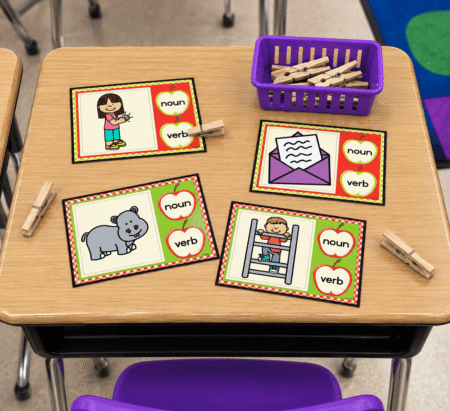
Task cards are perfect for your fast finisher area because they are quick, easy clean up and usually need no explanation for students. I had a variety of task cards that I would change out each month for reading, grammar, math and even social studies skills.
7. Math Activities
I also liked including a simple math game like this roll a skeleton game. It was a fast activity, where kids could practice simple addition, while also building something fun like a skeleton. I had different “Roll A…” games for each month so the object they were building changed, but the task stayed the same each month.
For first grade students, these choices can offer extra practice with familiar skills. For kindergarten students, choose activities they’ve already practiced together before placing them on the shelf. If you prefer fast finisher packets, keep them short and offer hands-on choices alongside them.
Changing The Early Finisher Themes
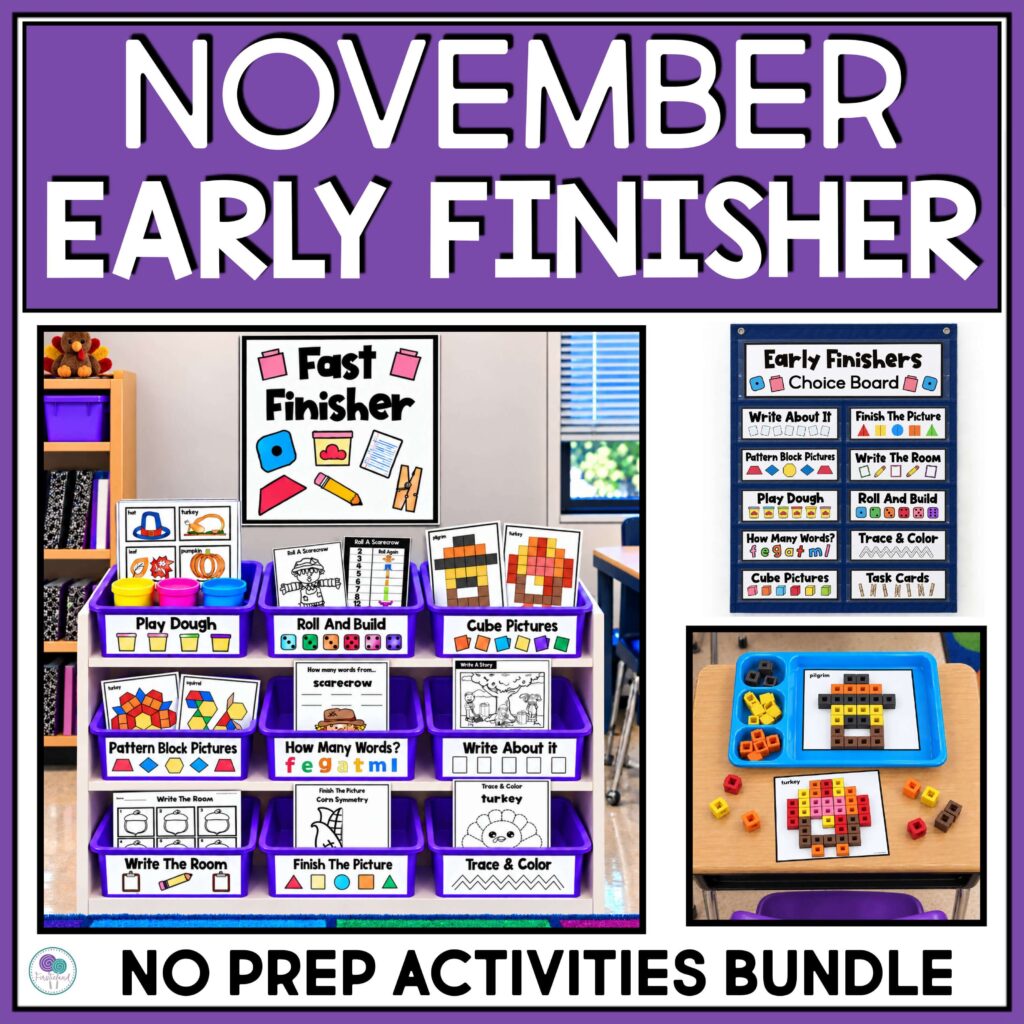
I changed out the materials at our early finisher area once a month to keep things interesting. But the activities themselves stayed the same, so kids didn’t have to learn a whole new set of directions every month. For example, they might use Halloween playdough cards in October and Thanksgiving playdough cards in November. The theme changed, but they already knew the routine.
This is a great way to refresh fun activities without spending a lot of time reteaching. Kindergarten teachers and first grade teachers can keep familiar teaching methods and swap seasonal materials throughout the school year.
Early Finisher Routines & Procedures
Before you open your fast finisher area, teach students exactly how to use it. Like everything else in your room, teaching expectations ahead of time can prevent problems later.
1. Show Students The Area
Begin by showing your students your fast finisher area and explaining each of the activities. Students should know exactly how to do each activity before allowing students to use the materials.
2. Teach Students What “Finished” Looks Like
Explain to students that they can’t rush through their work and do a poor job just to get to the fast finisher area. In my room, kids had to show me their work first. That didn’t mean I stopped what I was doing to grade it. They brought their paper over and held it up so I could glance at it.
If I was satisfied, they put it in the turn-in bin or their mailbox, depending on the assignment. Then they could choose an early finisher activity. If their work needed more attention, they went back to their table.
Before any independent work, show your class what “finished” looks like. For example, if you are having your kids do a writing activity, you might expect two sentences with capitals, spaces, and periods, plus a picture. Put an example of this type of writing on the board so students can check their own work to make sure they have everything needed before turning it in.
3. Decide Where Students Will Work
Decide ahead of time where you want student to do their early finisher activities, You could have them return to their own seats or if that feels too distracting, choose the carpet or another quiet spot. In my classroom, kids took their activities back to their tables.
Explain your expectations for voices, materials, and movement. Practice the first time so students know what to do. Model how to carry a bin past a table group without disturbing classmates. During carpet time or circle time, demonstrate the steps for the entire class. A daily routine becomes useful when kids understand each step.
4. Practice Putting Materials Away
Teach students that these activities are meant to be quick. They won’t get extra time to finish when you say it’s time to clean up. They need to be able to clean up quickly and put their materials away, without taking too much time.
In my room, early finisher worksheet activities went straight into students’ mailboxes. They could finish them at home or during free time later. I didn’t grade them or look them over. They were fun activities for the time while other kids were still working.
Playdough, Unifix cubes, and other materials went back into the correct tub. Practice cleanup as carefully as choosing an activity. Explain that cleanup happens even if children want to keep building. They need to understand that fast finisher activities are just that – fast.
Troubleshooting Your Early Finisher Routine
When you’re dealing with little kids, you always need to think ahead about what could go wrong. Teach your expectations before any problems occur.
What if the activity a student wants is unavailable? Teach kids to choose something else. If all the playdough cards are being used, they need another good choice from the shelf.
What if students finish their activity before cleanup? Decide whether they can choose another activity, continue with their materials, or turn their paper over and draw. Have a plan because this will happen occasionally.
What if students rush through their assigned work? Return to your example of completed work. Keep the expectation focused on the assignment rather than how quickly someone finishes. Specific positive feedback can help: “I like how Billy checked his sentences before choosing his activity.”
Use the Activities Beyond Quiet Work Time
An early finisher area can do double duty. I sometimes opened mine for morning work or indoor recess without extra preparation. You can introduce the routine at the beginning of the year or whenever your class needs a clearer plan for finishing early. During the first week of school, introduce a few choices instead of opening every bin on the first day of school. In the early weeks of kindergarten and first grade, model repeatedly. After spring break, review expectations if students need a reminder. Keep the materials organized, the directions familiar, and cleanup predictable.
Early finisher activities support first grade and kindergarten classroom management by answering that familiar question: “I’m done! What can I do now?” The activities on your early finisher shelf gives kids choices, but the routine teaches them how to use those choices independently.
Offer positive reinforcement as kids are learning to use the materials – “You put every cube back where it belongs.” Recognizing a specific behavior can go a long way toward building a positive classroom culture. These little things support good behavior and positive relationships while showing students what the routine looks like.
Ready to get started with a fast finisher shelf in your classroom. Head over here to see my monthly early finisher activities – with more months to come! Choose a few activities to begin today, teach the routine carefully, and improve your classroom management with a fast finisher routine.
Looking for more classroom management strategies? Head over to this post to learn more:


Hi, I’m Molly, the creative mind behind Firstieland. With over 35 years of experience in early childhood education, I’m your primary support for resources that will save you time and make learning feel like play. Learn more about my mission for Firstieland here.