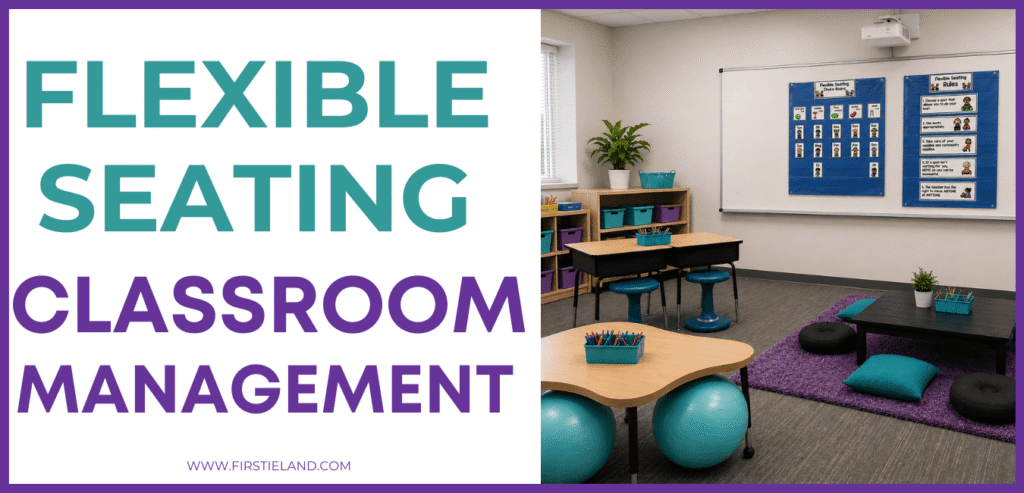
Flexible seating classroom management has become one of the hottest topics among elementary teachers. If you've been spending any time on Pinterest or Instagram lately, you've probably seen all kinds of beautiful flexible seating classrooms. Maybe you've even wondered if it's something you should try in your own classroom. Does it really improve behavior? Or is it just another trend? After using flexible seating in my first-grade classroom for several years, I have some thoughts.
In this post, I'll share what worked, what didn't, and whether I would do it again. If you're thinking about creating a flexible seating classroom, I hope my experience will help you decide if it's the right fit for your students, your teaching style, and your classroom management.

What Is a Flexible Seating Classroom?
A flexible seating classroom simply means giving students choices about where they learn best instead of requiring everyone to sit in the exact same type of seat every day. Instead of rows of desks or identical traditional seating, students have a variety of seating options. Some children may choose a regular chair at a table. Others may prefer wobble stools, yoga balls, bean bags, floor cushions, a balance ball, scoop chairs, or even a low table where they can sit comfortably on the floor.
The idea isn't that every child sits on a yoga ball all day long. It's about creating a learning environment where students can choose a seat that helps them stay focused and do their best work.
There are certainly a wide variety of seating options available today. But here's something I learned very quickly – flexible seating isn't really about the furniture. It's about giving students choices of where they will sit for the best learning experience, while still maintaining a classroom environment with clear expectations.
Why I Decided to Try Flexible Seating
I decided to try flexible seating for several reasons, but honestly, the biggest reason was classroom management. It seemed like every school year I had more students who simply couldn't sit still.
They were constantly wiggling in their chairs. They wanted to stand up or tip back in their chairs and they were always moving. I felt like I spent half my day saying things like: “Sit down.” “Don't tip your chair.” “You're going to fall.”
One day I was sitting in a professional development meeting before the beginning of the year, and something really stood out to me. None of the teachers wanted to be there. We all had classrooms to finish setting up and a million different things on our minds. As I looked around the room, teachers were whispering to each other, doodling in notebooks, checking their phones, getting up for coffee, and finding reasons to walk to the restroom. Anything except paying attention.
And suddenly it hit me. If a room full of adults struggles to sit in one place all day, why do we expect six-year-olds to do it? That moment completely changed the way I looked at classroom seating. When kids are wiggly in your room, it doesn't mean they hate school and it doesn't mean you're a boring teacher. Sometimes kids simply need to move.
Instead of constantly correcting their behavior, I started wondering if maybe I should change the classroom environment instead and that's when I decided to take the leap into the world of flexible seating. I wasn't sure it would work, though. In fact, I had three big fears before I ever removed a single table from my classroom.
Fear #1: How Would I Manage Flexible Seating In The Classroom?
I thought kids would fight over the seats. This was one of my biggest concerns. I had a couple of yoga balls, a few wobble stools, and several different seating options, but I definitely didn't have enough for every child to sit in the “cool” seats every day and I was convinced there would be arguments every morning. Instead, the exact opposite happened.
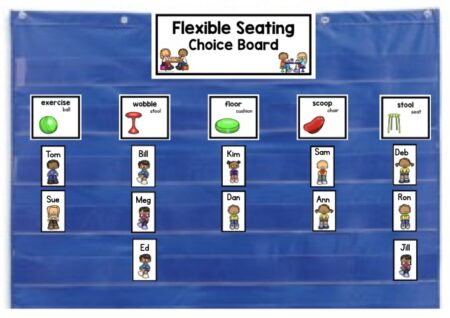
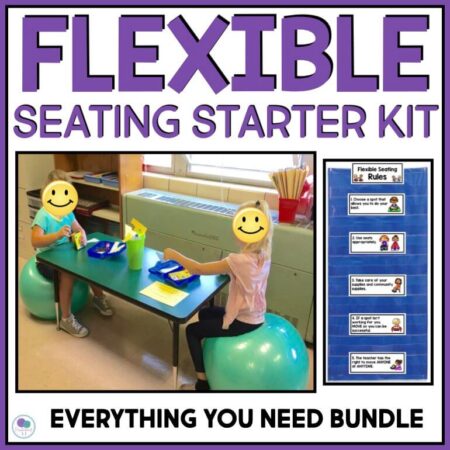
On the first day of school, every student had an assigned seat. I wanted everyone to have a home base while I explained how flexible seating worked. After we talked about our flexible seating arrangements, I introduced our flexible seating pocket chart. Every morning, students would place their name beside the new seat they wanted for that day.
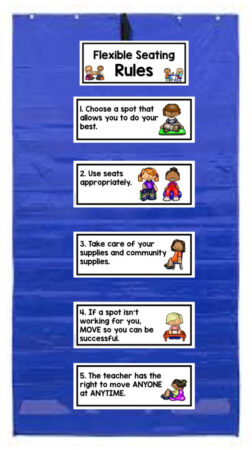
We also established a very clear list of flexible seating rules. Students had to choose a seat where they could do their best work. They had to use the classroom furniture appropriately. They were responsible for taking care of their own supplies and if a seat wasn't working, they could move to a better location. Most importantly, everyone knew I had the final say. Those clear guidelines made a huge difference.
At the end of each school day during the first week, we met together on the carpet and talked about their seating choices. I'd ask questions like:
- “Was that a good seat for you today?”
- “Were you able to stay on task?”
- “What would you change tomorrow?”
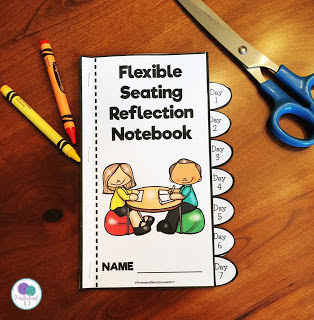
Then everyone completed a simple reflection page in their flexible seating notebook. That little routine completely changed the way students thought about classroom seating. Instead of trying to get the “best” seat, they started looking for the seat where they learned best. That was a huge shift.
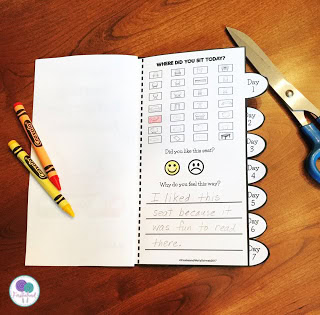
One of the biggest surprises was that students naturally started rotating through the different seating options. Some days they chose a regular chair and other days they picked wobble stools or floor cushions. Sometimes they preferred sitting at a low table with a group of students.
As the school year went on, kids worked with different groups of students almost every day and that meant new friendships developed all year long. Instead of cliques forming, my kids got to know everyone in the classroom and it actually created a stronger classroom community than I had experienced in many traditional classrooms. And that was something I never expected.
Fear #2: I Thought Students Would Feel Punished Sitting Alone
My second fear was that students who sat alone would feel like they were being punished. There were several places around my classroom where only one student could sit. In a lot of traditional classrooms, moving a child to a desk by themselves is usually a consequence for poor behavior and I worried that those individual seats would automatically feel negative.
Once again, I was completely wrong. Our kids arrived over about a thirty-minute period each morning, so they didn't all come into the classroom at once. The first kids through the door had their pick of every flexible seat in the room. I assumed they would immediately grab the yoga balls, wobble stools, or scoop chairs but instead, many of them chose to sit by themselves.
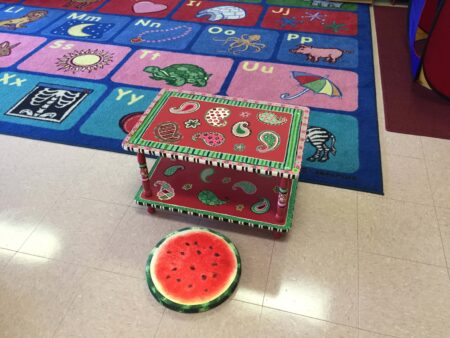
I couldn't believe it. It wasn't always the quiet students either. Sometimes it was the outgoing kids who simply wanted their own space for a little while before the classroom filled up. That was really eye-opening for me. It reminded me that adults enjoy quiet spaces too. Sometimes we want to work with a group, and other times we simply want to focus by ourselves. Why wouldn't children feel the same way?
Giving students different seating options meant they could choose what worked best for them that particular day. Sometimes they wanted group work. Sometimes they wanted independent work and sometimes they preferred a regular desk by themselves.
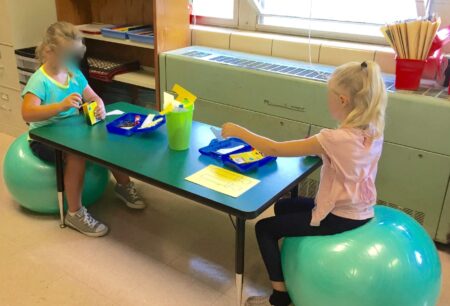
Another unexpected benefit was how much easier classroom management became. If a student was having difficulty staying focused, I didn't have to make a big production out of moving them. I could simply say something like, “Why don't you switch with Jason today?” Because everyone used every type of seat throughout the school year, moving to another location never felt like punishment. It simply felt like finding a better place to learn. That small change made a huge difference.
Instead of students feeling embarrassed, they understood that everyone sometimes needed a different learning environment. It wasn't about being the “bad kid.” It was about finding the right seat and I think that's an important distinction.
Fear #3: Is Flexible Seating Affordable?
My final fear had nothing to do with behavior. It had everything to do with my wallet. Every time I looked online, I saw gorgeous flexible seating classrooms filled with expensive classroom furniture and all different types of seating like wobble stools, balance balls, scoop chairs and more. I honestly thought I'd have to spend hundreds or even thousands of dollars to do flexible seating in my classroom.
Thankfully, that wasn't true. I ended up creating what I would call a modified flexible seating classroom. My goal wasn't to replace every piece of furniture. In fact I didn't want to get rid of all my traditional desks or chairs. Instead, I wanted kids to have choices of where they would sit each day and places where they would learn at their best.
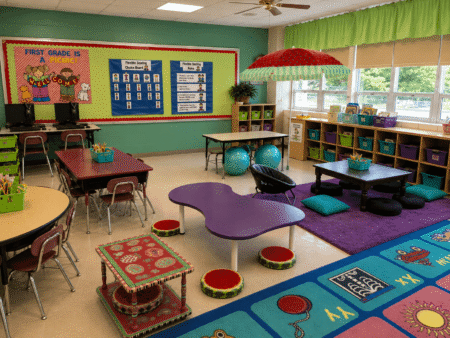
I removed some of my larger tables but kept several regular desk chairs and traditional desks. I added a couple of yoga balls and a few wobble stools. I had a low table where kids could comfortably sit on the floor with cushions. One thing that was important to me was that every child had a flat surface for writing. And I didn't really want kids sprawled over the floor all day long.
There were certainly times when we did crafts, arts activities or projects on the floor, but for most academic work I still preferred students to have a table or desk of some sort. That's one of the things I want teachers to remember. You don't have to completely transform your classroom design overnight. Small changes can make a huge difference.
In terms of cost, I got a lot of stuff at garage sales or the storage closet at school. I scrounged around my house and found a comfy chair and a table. We cut the legs down on the table so kids could sit on the floor. I bought some Yoga balls at Five Below for $5. I also did a Donor Choose Project for some wobble stools and so when I added everything together my total cost was about $40.
So you definitely don't have to spend a fortune to create a flexible seating classroom. There are practical ways teachers can build a wonderful classroom setup over time.
Classroom Management Benefits Of Flexible Seating
Looking back, the biggest surprise wasn't the furniture. It was the classroom management benefits. I honestly didn't expect flexible seating to improve so many different parts of our classroom. First, students got along better because they worked with different groups of students every day so they naturally built friendships with everyone.
Second, students started making better choices. Instead of me constantly telling them where to sit, they learned to evaluate their own learning. After completing their flexible seating reflection notebook for the first week, they started thinking things like, “I couldn't concentrate over there yesterday.” or “I think I'll try a different seat today.” That's exactly what I wanted. Rather than me managing every little decision, students learned to manage themselves.
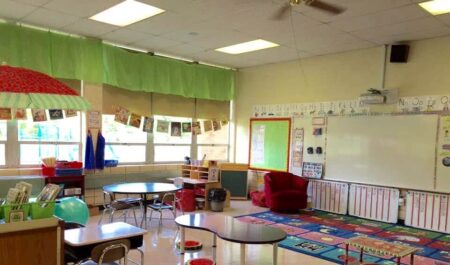
Another benefit of flexible seating was for those students who constantly needed sensory input. Some kids simply learn better when they can move. Giving them access to wobble stools, exercise balls, or other flexible seats meant they could get the movement they needed without becoming a distraction to everyone else. Instead of correcting behavior all day long, I found myself preventing many behavior problems before they ever started. That was probably one of the biggest classroom management wins of the entire experience.
The final surprise was how much more independent my students became. Because they chose a new seat each morning, they also became responsible for gathering their own supplies, putting materials away correctly, cleaning up after themselves, and keeping track of where everything belonged. Whether it was notebooks, scissors, crayons, or classroom materials stored on a mobile cart, students quickly learned that moving to a new seat also meant taking responsibility for their own things.
It all worked together. The flexible seating arrangements encouraged independence and the routines supported the flexible seating. And the students grew because of both.
Final Thoughts
Looking back, I'm really glad I took the chance on flexible seating. Was it perfect? No. there were certainly things I adjusted along the way but overall, it was one of the best classroom changes I ever made. It encourages independence and helped kids become more responsible. It really helped us build a better classroom community and kids just seemed happier.
If you want to try the flexible seating system I used in my classroom, you can take a look at the Flexible Seating Starter Kit here.
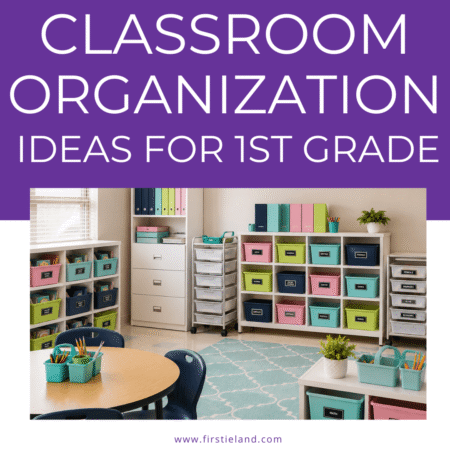
Looking for more ideas? Check out these Easy Classroom Organization Ideas For First Grade:

ABOUT THE AUTHOR
Hi, I'm Molly, the creative mind behind Firstieland. With over 35 years of experience in early childhood education, I'm your primary support for resources that will save you time and make learning feel like play. Learn more about my mission for Firstieland here.