Animal habitats for kids in first grade

Click Play to Listen

Episode 32

Teaching Animal Habitats in First Grade: A Fun Project-Based Science Unit

Looking for animal habitats activities that help you fit science into your day? This project-based learning unit is perfect for kindergarten and first grade teachers who want hands-on learning that also integrates writing. With simple materials, engaging activities for kids, and meaningful projects, teaching animal habitats can be fun and memorable.

If you’ve ever felt stuck trying to squeeze science into an already packed schedule, you’re not alone. Many teachers don’t have a strong science curriculum and still need to teach standards, assess learning, and somehow make it all engaging. That’s why I always loved teaching animal habitats as a project based learning unit. It allows you to combine science, writing, crafts, and hands-on activities into one cohesive plan.

Why Teach Animal Habitats Through Projects?

Animal habitats are a perfect fit for early elementary standards. Students learn that animals have basic needs and that those needs are met in their environment. When kids explore animal homes through research, writing, and building, the learning sticks because they’re actively involved the entire time.

Instead of teaching science and writing separately, this unit combines them, which actually saves time and helps students stay focused and engaged.
Animal habitats for kids in first grade

Getting Started With Animal Habitats

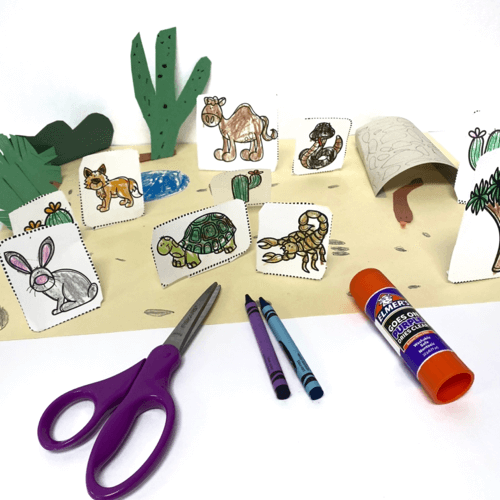
I always start by introducing what a habitat is and exploring different types together as a class. We create a large anchor chart and list common habitats such as the forest, desert, ocean, wetland, rainforest, and arctic. We talk about the climate, plants, and animals that live in each one.

To build background knowledge, we use:

  • Nonfiction books found through Scholastic or Epic Books online
  • Short videos found on YouTube about different animal habitats
  • Class discussions
  • A simple sorting activity where students match animals to their habitats

This early exposure gives students confidence before they begin their own research.
Research and Writing Made Simple

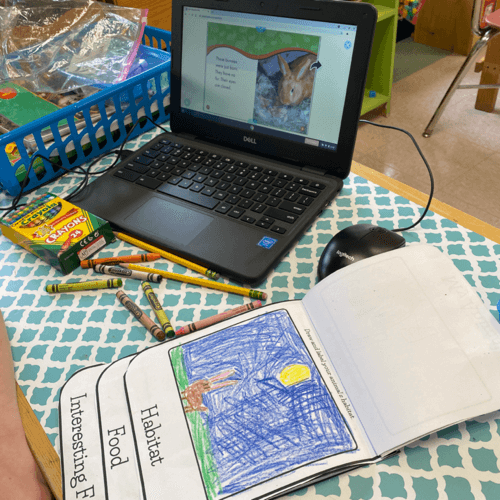
Once students understand animal habitats, they choose an animal to learn more about. You can let them browse nonfiction books, choose from a class list, or use online libraries like Epic Books. After learning about their animal, students complete a graphic organizer to organize their ideas.

From there, they create a simple writing project. In first grade, I loved using a short flip book or worksheet where students wrote:

  • The animal’s name
  • Its habitat
  • What it eats
  • A few interesting facts

Illustrations are always included because drawing helps students process and remember what they’ve learned.

Animal habitats for kids in first grade

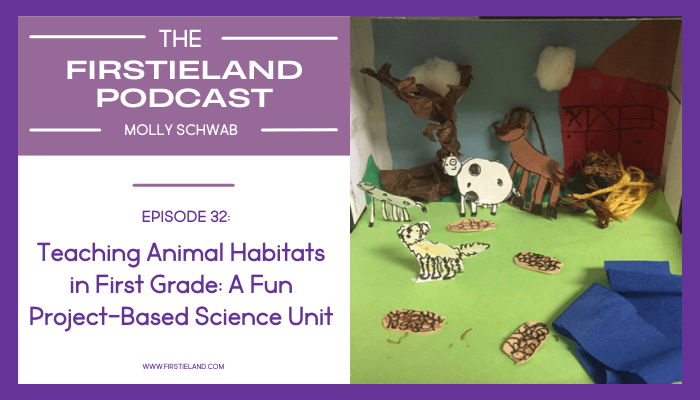
Shoebox Habitat Dioramas

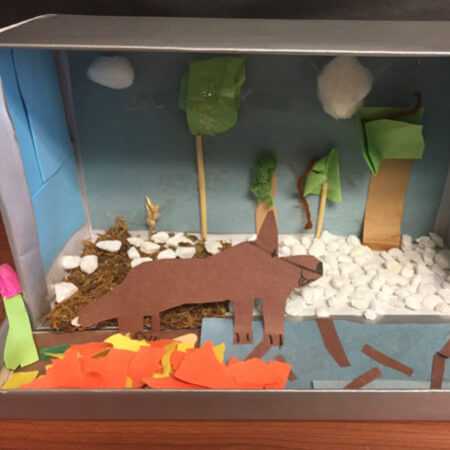
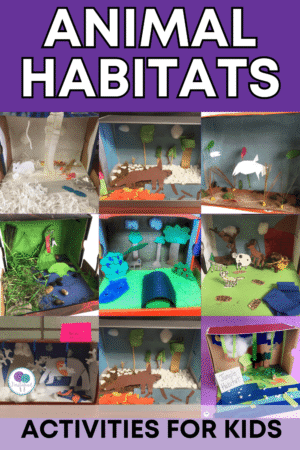
The highlight of this unit is building an animal habitat diorama using a shoebox. This turns learning into a creative craft that kids absolutely love.

Students bring in a shoebox and use donated materials like cotton balls, foil, rocks, twigs, paper, and fake grass. You can organize supplies by habitat to make choosing materials easier. Then students build their animal’s home, showing what they’ve learned about the environment.

This project is:

  • Hands-on and engaging
  • A great assessment tool
  • Perfect for project based learning

Afterward, students share their shoebox habitats with the class and explain their animal homes using what they learned from their research and writing.
Animal habitats for kids in first grade

Why This Unit Works

Teaching animal habitats this way helps students:

  • Understand science concepts at a deeper level
  • Practice writing in a meaningful way
  • Stay engaged through hands-on activities
  • Learn through creativity instead of worksheets alone

And for teachers, it means you’re covering multiple standards without adding extra lessons to your day.

WATCH ON YOUTUBE
In This Episode, You’ll Learn:

✔️ How to teach animal habitats in kindergarten and first grade
✔️ Simple project based learning strategies that actually save time
✔️ How to combine science and writing into one unit
✔️ Easy animal habitat activities for kids
✔️ How to use a shoebox diorama as a fun assessment
✔️ Ways to teach animal homes with crafts, sorting activities, and writing

Resources Mentioned In This Episode

Animal Habitats TPT Unit –https://firstieland.com/habitat

Related Blog Posts / Podcast Episodes

Blog Post – Animal Habitats

Connect with Molly:

Follow on Instagram: @firstieland
Follow on Facebook: Firstieland

Save This Podcast For Later!

Take a minute to save these ideas to your favorite Pinterest board so you can remember them later!
Animal habitats for kids in first grade

More About The Firstieland Podcast

Hosted by Molly Schwab, a retired K-1 teacher with over 30 years of classroom experience, The Firstieland Podcast For Early Elementary Teachers gives kindergarten and first grade teachers practical, real-world tips to make teaching easier and more fun. From classroom management to picture book ideas, each episode is designed to help you teach smarter, not harder.

Each week, Molly shares practical tips, strategies, and ideas to help kindergarten and first grade teachers feel confident, organized, and ready to create a joyful classroom where learning feels like play.

Tune in on your favorite podcast platform: Apple, Amazon, Spotify, and more! If you’re loving the podcast, please rate, review, and follow!

Click to View Transcript

[00:00:00]
Hey friends, welcome back to the Firstieland Podcast. I’m your host, Molly Schwab. You know, I hear from teachers all the time who say there’s just not enough time to fit everything into your day. When do you have time to teach science, social studies, or even writing?

So today, I thought I’d share some tips on how you can do that using units of study. Specifically, today we’re going to talk about how you can combine science and writing by teaching kids about animal habitats. So let’s get started.

Hey teacher friends, are you ready to use read alouds more intentionally, but you’re not sure where to start? I’ve got you covered. Join my free Winter Read Aloud Challenge, a four-week experience with simple weekly ideas, mini podcast episodes every Monday morning, fun freebies, book suggestions, and a supportive Facebook group with weekly giveaways.

Sign up at firstieland.com/challenge. The fun begins January 5th, so sign up [00:01:00] today and make read alouds the easiest part of your day.

I don’t know how it is where you teach, but I taught for 35 years in the same district, and we never had a science curriculum. Can you believe that? I remember at one point we had some sort of science books, but they were ancient. And when Ohio redid all of the standards, I think that was around 2018 or 2019, my school district just never got us a curriculum.

But we were still expected to teach science and give a grade on the report card. I mean, it’s crazy. So over the years, I had to learn how to develop my own curriculum that aligned with the standards in science and social studies, because we didn’t have a curriculum for either one.

And honestly, we had a very weak writing curriculum too. Our reading series touched on writing, but the lessons were honestly pretty lame. So I had to figure out a way to teach these subjects with no real curriculum. Nice, huh? I know how many of you are in that same boat.

What I learned was that when I [00:02:00] created units around either a science or social studies topic, I could combine that with writing and sort of kill two birds with one stone. Plus, I found that I actually had more time to teach those subjects when I combined them like that.

One of the units we did every year was about animal habitats. I would either teach this unit in the fall or in the winter. I liked doing it in the fall because we could talk about the things animals do to get ready for winter and hibernation. But sometimes I taught it in the winter because that seemed like a great time to learn about polar animals and how those animals adapt to the cold.

One of our science standards in first grade talks about how living things have basic needs to survive, and that those needs are met in the environment where they live. So an animal habitats unit is perfect for that standard.

To begin our unit, we would simply learn what a habitat is and explore some of the different habitats for animals. We usually made a [00:03:00] big anchor chart where we listed habitats like the desert, ocean, forest, wetland, arctic, and rainforest. I think those were the six we focused on. Then we filled in the different qualities of each habitat and some of the animals that live there.

I always used Epic Books to help teach the kids about habitats because there are lots of great nonfiction books on there that are perfect for first grade. They give just enough information without overwhelming kids or being over their heads. Sometimes we would watch short YouTube videos on the different habitats too.

You can find lots of short videos on YouTube, maybe five minutes long, that show the different habitats and are perfect for little kids. You used to be able to save videos into playlists, but YouTube doesn’t allow that anymore. All you have to do is search “animal habitats for kids,” and they’ll all come up.

Another thing we used to do, especially if I taught the unit in the fall, was take a trip to the zoo. I liked going at the [00:04:00] start of the unit because the kids could see real, live animals, which helped them a lot when they started their animal research.

We have the Cleveland Zoo very close to us, which is huge, and most places have some kind of zoo nearby. But of course, if that isn’t possible for you, you can always use online videos that show animals in their native habitats.

Once we had a good background on the different habitats and the animals that live there, I let each student choose an animal they wanted to learn more about. I had a whole stack of nonfiction Scholastic books about different animals. I spread the books out on a table and let the kids look through them and choose their animal.

Sometimes I paired students up to work together on their research. And if you don’t have books like that, you can always make a big list of animals on the board and let students choose from that list.

Then I set the kids up on Epic Books [00:05:00] online and made little libraries of different animals. The kids could log in and read more about their animal there. One of the best things about Epic is that many of the books read aloud to students, which is great for struggling readers.

After students learned about their animal, they filled out a simple graphic organizer to record what they learned. This helped them organize their thoughts before writing.

Then they put it all together into a report. We used a simple flip book where students wrote the name of their animal, its habitat, what it eats, and a couple of interesting facts. The flip book was very simple, perfect for first grade, and included space for illustrations on each page.

The flip books, anchor charts, and everything I’m talking about here are part of my Animal Habitats resource on TPT. You can take a closer look at it at firstieland.com/habitat, and I’ll also put a link in the show notes.

The final—and most exciting—part of the unit was when students built their animal habitats. They absolutely loved this part, and I did too, because it gave them a chance to be creative and really show what they learned about their animal and its habitat.

Each student brought in a shoebox from home. I always kept a few extras on hand just in case. I also sent home a list of materials parents could donate, things like cotton balls, fake snow, aluminum foil, fake flowers and grass, tiny rocks, and twigs—basically items people might already have in their craft stashes.

I usually received lots of donations, and then I organized the materials into trays by habitat. For example, all the white materials like cotton balls, aluminum foil, and fake snow [00:07:00] went into one tray for arctic habitats.

On the day students built their habitats, they “shopped” for materials and went to town creating. I showed them photos of shoebox habitats from previous years to give them some inspiration, and then they got to work.

It was very hands-on and a little messy—but all the best activities are. It usually took about an hour to complete. When they were finished, students shared their habitats with the class and talked about their animal and where it lives.

It was a great project-based learning unit. The kids loved it, and we were able to fit science and writing into our week. We spent about 30 minutes a day on the unit for a week, then made the habitats on Friday, which took a little extra time.

So that’s how you do it. When you combine subjects like science or social studies with writing, you can fit more into your day and teach those subjects in a hands-on way that kids enjoy—and remember—because they’re so engaged.

I also wrote a blog post about this unit that shows everything we did, including photos of the finished shoebox habitats. If you want to take a closer look, you can head to firstieland.com/animalhabitats. I’ll put that link in the show notes along with everything else I mentioned today.

I hope this episode helped you think of ways to integrate subjects, streamline your lessons, and make more room for science and social studies in your day.

Alright, that’s it for today, friends. Don’t forget about the Winter Read Aloud Challenge—it’s going on all month, and it’s not [00:09:00] too late to join. You can find more information in the show notes.

Until next week, remember to make learning feel like play. I’ll see you soon.

Thanks so much for tuning in. I hope you’re walking away with tips you can use right away. Be sure to hit the follow or subscribe button so you never miss an episode. And if you’re enjoying the podcast, I’d love it if you left a review.

You can find the show notes and links for everything mentioned in this episode at firstieland.com.
I’ll see you next week on Firstieland.

Related Podcasts

All search results