Written by Molly Schwab, host of the Firstieland Podcast and YouTube channel
October 28, 2026
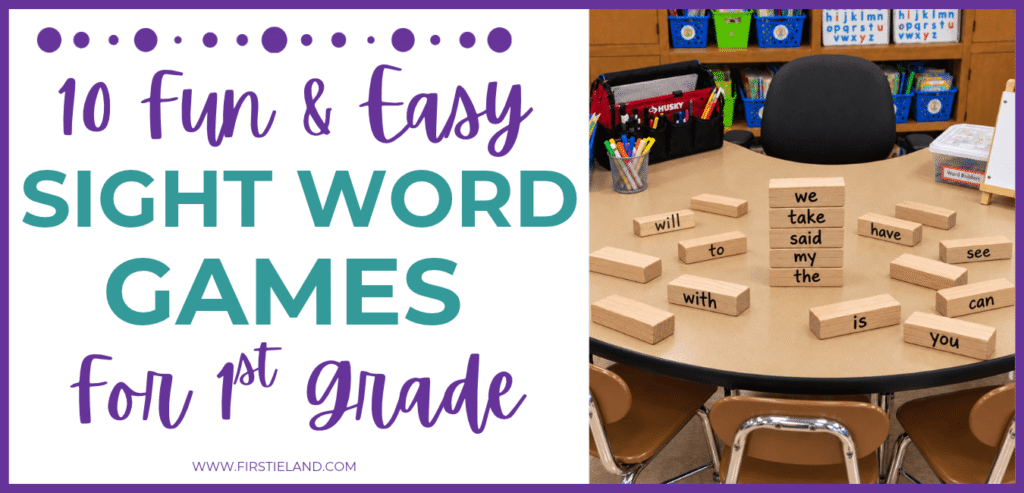
1st grade sight word games can make practicing sight word recognition something your kids actually look forward to! There are lots of fun games for learning sight words, including Lucky Penny, Swat the Sight Word, Word Wars, Mix It Fix It, Go Fish, and Sight Word Jenga. These new sight word games give early readers practice reading and spelling high-frequency words using simple materials you may already have in your classroom.
I taught first grade for 35 years, and we played lots of games during small groups, whole group instruction, and centers. Some needed nothing more than sight word cards while others used things I already had in my classroom, like magnetic letters, popsicle sticks, and dry erase boards. In this post, I’m sharing 10 fun sight word games you can add to your lesson plans and use in your classroom tomorrow. These are simple ways to give first graders more practice reading and spelling their 1st grade sight words while making learning feel like play.
Before You Play: Teaching Sight Words
Before you begin playing sight word games it’s important to teach each word to your students by breaking the word apart and teaching them how to sound out the word. Kids need to understand how the sounds work in each of your first grade sight words. Often, new sight words will have phonics patterns that you may not have taught to your class yet, which is one of the reasons they are sometimes difficult for kids.
For instance, one of the first sight words usually taught in first grade is the word “the”. This word can be difficult for kids because it begins with the th digraph (which usually isn’t taught until later in they year) and has an “e” that doesn’t follow the normal rule. When you have sight words like this, you must break them apart and show the kids the phonics patterns that follow the rules and the parts of the word that they must learn by heart.
It’s ok to teach blends, digraphs and other phonics patterns out of order when they appear in a new word. It will actually make learning those sounds much easier when you have formal lessons on those skills later in the year. Once your students are familiar with the sight word, then you can introduce games which can help them read the words more fluently.
Start with a few words the first time you play, teach the directions, and add new words as students become comfortable.
1. Lucky Penny
This first game is super simple. It’s called Lucky Penny, and it’s perfect to use in your small groups.
Lay your sight word cards on the table in front of the kids. Have them turn around or cover their eyes, and hide a penny under one card. Kids take turns reading the sight words and looking to see if a penny is hidden underneath. If they read the word correctly and find the penny, they get to keep it.
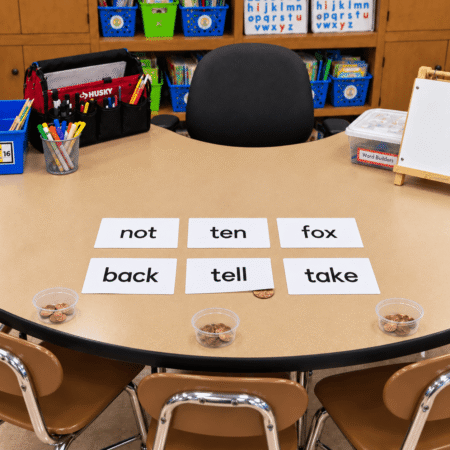
To make it even more fun, give each kid a little container to save their pennies in. Maybe once a month, let them shop for little trinkets, like mini erasers or stickers. Switch out the cards as you introduce new words, and you have a familiar game ready to go.
2. Read It Write It Word Jar
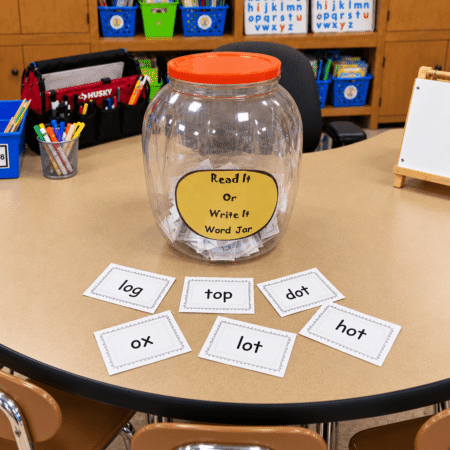
Read It Write It Word Jar is a fun sight word game to play during whole group instruction at the carpet. In my classroom we had daily word study slides, and and each slide included a game. One of our favorite sight word games wasRead It Write It Word Jar. We had a big jar filled with our sight words. We added our new words every week, and the jar just kept filling up over the year.
To play the game, the kids passed the jar around the circle, picked a word, and read it. If they could read it, they passed the jar to the next kid. If they couldn’t, they had to write the word three times on the slide on the board. Reading and writing the word was a good way to help kids remember the word. It was a quick, fun game my kids looked forward to every week.
3. Swat the Sight Word
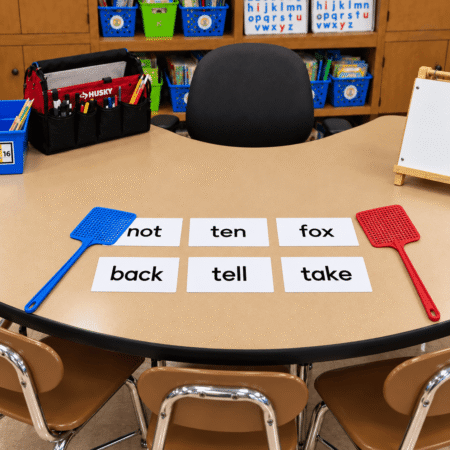
You can play Swat the Sight Word in small group or whole group. All you need are sight word flashcards and two fly swatters. Scatter your cards out in the center of the table or carpet and give two kids fly swatters. Call out a sight word. The first one to swat the correct word gets a point. Whoever swats the most correct sight words is the winner.
Show young students how to tap the cards gently before you begin and start with a small selection of words so children can find them without feeling overwhelmed. As they become familiar with the game you can add more cards. It’s a simple sight word identification game that gives you a chance to notice which words need more practice.
4. Word Wars
My kids loved this one! For Word Wars, everybody gets a small dry erase board, marker, and eraser. You call out the word, and the kids write it correctly on their boards and hold them up. The fun is seeing who can hold up their board the fastest, but they have to spell it correctly. If they don’t, they try again.
This spelling game lets everyone respond instead of waiting for one child to answer. You can quickly look across the boards and see who has the letters in the correct order or who needs more practice. Word Wars is fun because it’s fast and the kids love to try to be the first one to hold up their board. It really helps to build their sight word fluency.
But, if someone needs help, show the word, talk through its spelling, and let them try again. The correct answers matter more than speed.

5. Mix It Fix It
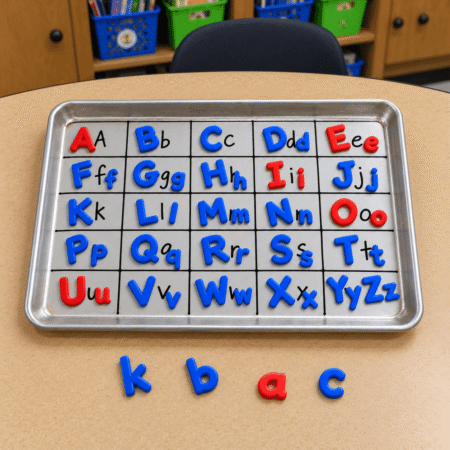
Mix It Fix It is a word-building game we played in small group using magnetic letters. In my classroom, I kept my letter sets on magnetic cookie sheets, and I had enough sets for each student in small group to have one.
To begin, hold the sight word in front of the group and have them read it. Then have them spell it with magnetic letters. Next, hide the sight word and tell them to mix the letters up and fix it so the word is spelled correctly. We usually mixed and fixed a word two or three times. Have students read the finished word each time, too.
Practicing spelling can help with reading, too. A review of 53 studies by Graham and Santangelo found that spelling instruction improved both spelling and reading skills. That’s why I like including games where kids build and write words along with reading them.
6. Boom Cards
Boom Cards are online games that are similar to digital task cards. We played them during whole group, or I added them to our tablets for centers or small group. The kids really enjoyed them because it was a different way for them to practice their words.
I liked using Boom Cards in small group because I could assign different cards to students in the same game. As they played, I could watch and if I noticed them struggling I could step in right there and do a mini lesson to help that student. I also loved them because each student had an account and I could keep track of their scores and even use Boom Cards for assessments.
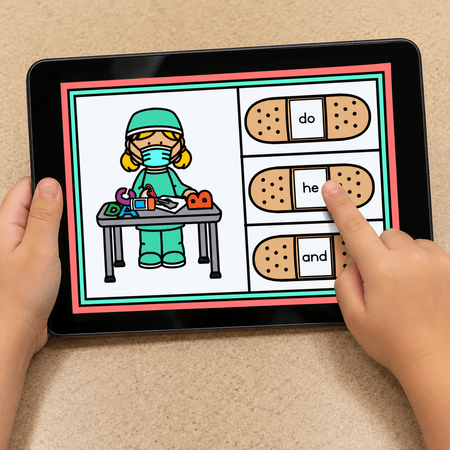
One sight word game we used was Sight Word Surgery. Kids listened to a word read aloud and then chose the word or built it. The games were self-checking, so kids got feedback and could try again.
In another game, they had to drag letter tiles to build the word.
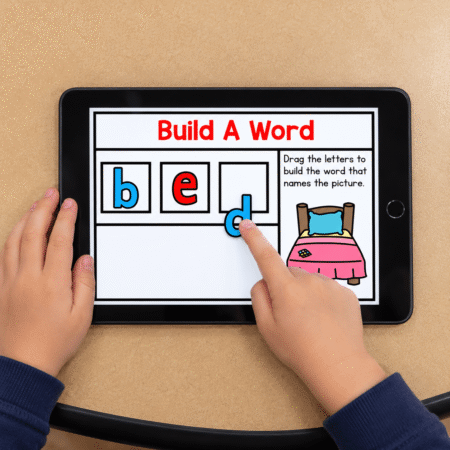
Boom Cards gave us an effective way to practice sight words. I loved that I could choose an interactive game for the words or reading skills we were working on, and kids could practice at their own pace. Click here to see all of the Boom Card we used in my classroom.
7. Sight Word Hopscotch
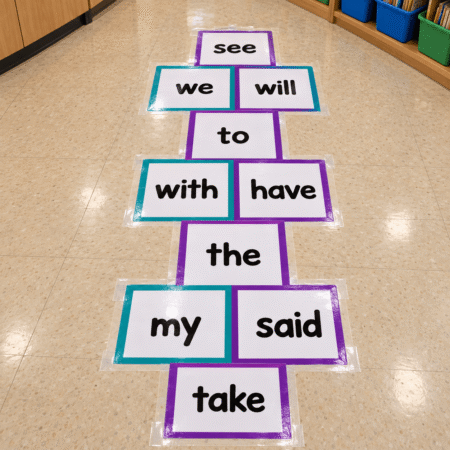
Sight Word Hopscotch gets kids up and moving! For this one, make a hopscotch board on your floor. I made a big one out of butcher paper, laminated it, and taped it to our floor. Then I taped our new sight words onto the hopscotch squares.
The kids had to read the word before they could jump on the square and the object was to read all the words and get to the end of the hopscotch. Once the board is made, it’s easy to change the words without making a whole new game. My kids loved this one because it got them out of their seats.
8. Sight Word Boom
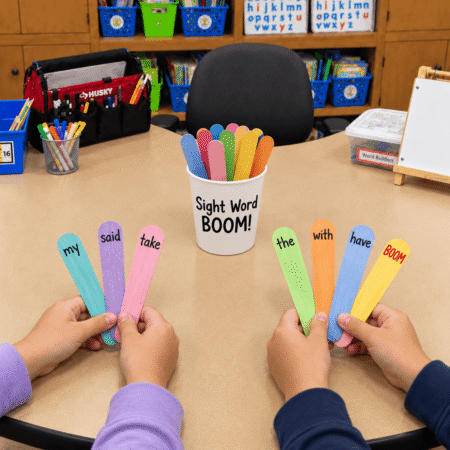
For Sight Word Boom, write your sight words on popsicle sticks and put them in a cup. Write BOOM on a couple of sticks, too.
Each kid takes a turn pulling a stick and reading the word. If they can read it, they keep the stick. But if they pull a BOOM stick, they put all their sticks back in the cup. The person with the most sticks at the end wins.
Before you play, be sure to put the written ends down inside the cup so nobody can peek before choosing a stick. Decide when the game will end before you begin, such as when your center timer rings. You can use the same sticks again and again and just keep adding new words each week. It’s lots of fun because nobody knows when that next BOOM stick will show up!
9. Sight Word Go Fish
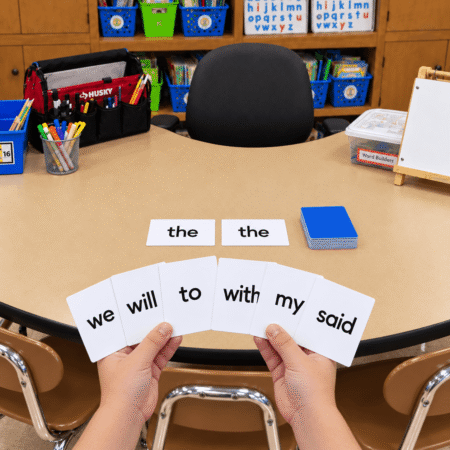
Go Fish is played like the regular card game, but the cards have sight words on them. To play the game, make two cards for each word using index cards.Shuffle them and pass out six cards to each child. Put the remaining cards facedown in the middle.
Kids take turns asking someone if they have the word they need. If they do, the child gets to make a match and lay it on the table. If they don’t, they go fish and take a card from the pile. The first person to make all their matches wins.
This sight word matching game gives children a reason to read the words in their hands. You can also reuse the cards for memory match, giving you another activity with the same materials.
10. Sight Word Jenga
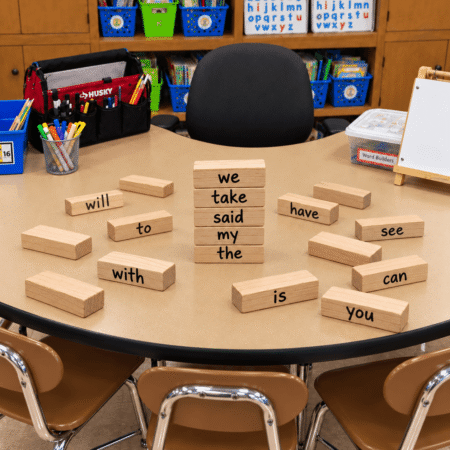
Sight Word Jenga is a good one for small group or centers. To play this sight word game, take an old Jenga game and write sight words on each block with permanent marker.
Kids can play two ways: Play regular Jenga, by pulling a block without making the tower fall and reading the word on that block. Another way to play is to put all the blocks word-side down on the table. Kids pull a block, read the word, and stack it on the tower. For this version, they simply stack one block on top of another to see how high they can build it before it falls.
They love this one because eventually the tower comes crashing down, and you know they love that! Keep the blocks together in a basket so this activity is ready when you need it.
Make Learning Sight Words Feel Like Play
You don’t have to introduce all 10 games at once. Choose one, teach the routine, and use familiar words before adding more. These fun activities give you simple ways to revisit words throughout the week.
Before your next sight word game, check these five things:
- I’ve picked a game that fits my group.
- The words match what my students are learning.
- All cards and supplies are ready.
- Students know the rules and how to take turns.
- Students know how to clean up when we’re done.
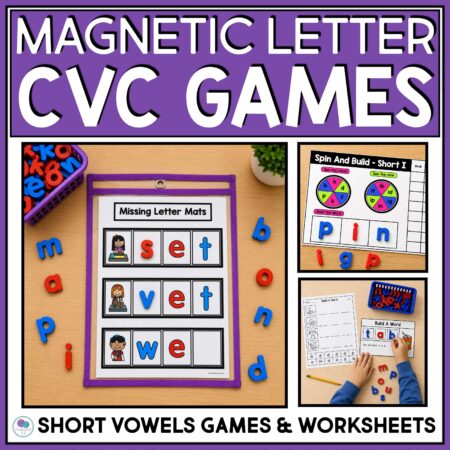
Looking for simple no prep games for your word work activities? Blending CVC Words has never been easier with these hands-on magnetic letter literacy games and worksheets for short vowels. These CVC word games with pictures make independent practice and small group work fun & easy for PreK-1st grade. Just print, grab magnetic letters, and watch your students build and read, CVC words with confidence! Take a closer look at them here.

Hi, I’m Molly, the creative mind behind Firstieland. With over 35 years of experience in early childhood education, I’m your primary support for resources that will save you time and make learning feel like play. Learn more about my mission for Firstieland here.