If you’ve ever stood in front of a noisy classroom thinking, “How am I ever gonna get these kids to quiet down?” you are definitely not alone! Knowing how to quiet a noisy classroom can make a huge difference when the noise level goes from perfectly fine to completely out of control in a matter of seconds.
As teachers, we’ve all gotten into a situation where our class suddenly just seems too loud. Maybe everyone is cleaning up after centers, getting ready for the next activity, lining up for lunch, or working together at their tables. Before you know it, the whole class is talking and you can barely get anyone’s attention.
One of the worst things you can do is try to shout or yell over your students. That usually just adds more noise to an already noisy classroom. The good news is there are lots of simple classroom management strategies you can use to get students’ attention without constantly raising your voice or saying “Shhh!” all day long. After three decades in the classroom, I’ve learned a few tricks that really work. Here are some of my favorites.
1. Use Silence to Get Students’ Attention
It might seem strange, but sometimes the best way to quiet a noisy classroom is to get quieter yourself. We’ve all heard of the teacher “look,” right? Standing at the front of the class, completely still and simply looking at your students can be a very effective way to get their attention. You don’t have to say anything.
Usually, a few listening kids will notice you first. Then a friend notices that you’re waiting and starts whispering, “Shhh!” Pretty soon, the whole class begins to quiet down.
Another easy way to use silence is to lower your voice. Instead of trying to talk over the noise, speak very quietly, almost in a whisper. You might say, “If you can hear me, please take out your math book and fold your hands.” The children who hear you will start following the direction. Other students will notice what’s happening and begin doing the same thing. Before long, you have everyone’s attention without ever raising your voice.
Proximity is another one of my favorite non-verbal cues. If you have one table or small group that is getting too loud, simply walk over and stand beside them. Often, your presence is enough to remind them to lower their voices.
These simple non-verbal ways of getting student attention can be powerful tools because you aren’t adding even more sound to the room.
2. Try Quick Classroom Attention Getters
Another great way to quiet a noisy class is to have a few classroom attention getters ready to use. An attention getter is simply a pre-planned signal that tells your students, “Stop what you’re doing and pay attention to me.”

Call backs are especially fun with primary kids because the teacher says one phrase and the students respond with another. For example:
- Teacher: “1, 2, 3, eyes on me!” Students: “1, 2, eyes on you!”
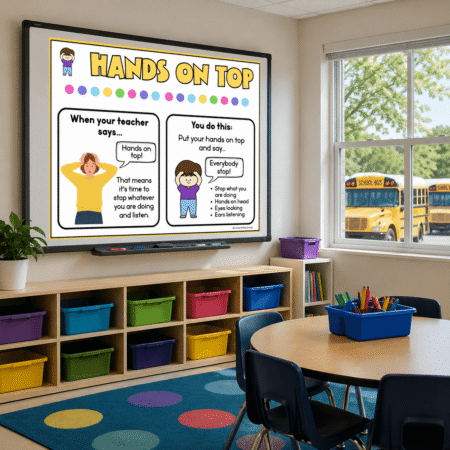
- Teacher: “Hands on top!” Students: “Everybody stop!”
- Teacher: “Hocus pocus!” Students: “Everybody focus!”
- Teacher: “Class, class!” Students: “Yes, yes!”
You can find all kinds of fun call and response ideas, including Peanut Butter and Jelly, Macaroni and Cheese, Holy Moly, Shark Bait and lots more. You definitely don’t need to use every fun call you find. Pick a few response phrases you like and switch them up during the school year.
Another quick attention getter is a countdown. Start at five and count backward to one, making your voice quieter and quieter as you go. This is perfect when students are putting away supplies or getting ready for the next activity. By the time you reach one, everyone should be ready to listen.
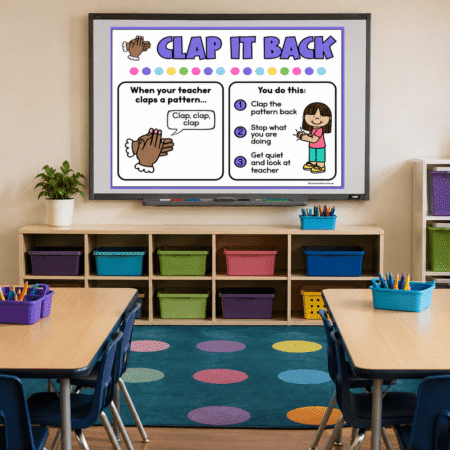
You can also simply say, “Give me five,” and hold up your hand. The students hold up their hands too and get quiet. This is one of those hand signals that works especially well when you need silence quickly. The nice thing about classroom attention getters is that you can choose different types for different activities. You might have one you use during whole group lessons and another for centers or transitions.
3. Use Visual and Auditory Cues
You don’t always have to use your voice to get children’s attention. Sometimes a visual cue or sound works even better. I used to play quiet music when my class was working on something at their tables. My students knew that when the quiet music was playing, they were supposed to be silently working.
I also kept a music box on my desk. When it was time to clean up, I would wind the music box. The kids knew that when the music finished, they should be ready.MYou could do something similar with the soothing sound of a wind chime, chime or another simple musical instrument. The important thing is that students recognize the sound and know what it means.
Visual cues work well too. One very common technique is simply flicking the classroom lights. That sudden change usually gets some curious looks and can quickly get the attention of your students.
An online volume monitor is another fun option. I liked the Bouncy Balls volume monitor. When the classroom noise level gets too high, the balls begin bouncing around like crazy. Kids love trying to keep those balls from bouncing, so it becomes a playful way to encourage them to lower their voices.
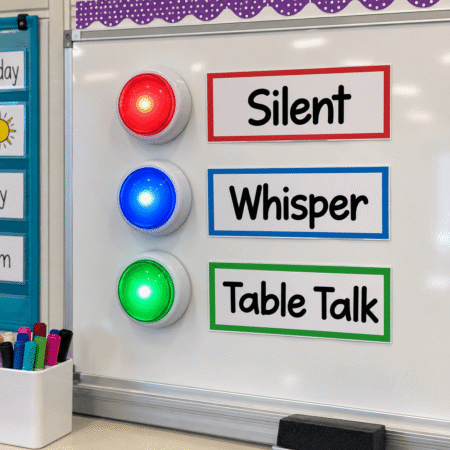
Wireless colored tap lights are another option. Put them in a designated area on your board and give each color a meaning. Maybe red means silent, blue means whisper and green means students can talk quietly at their table. Visual and auditory cues are great because they can eventually become background signals students recognize without you having to repeat yourself on a daily basis.
4. Make Noisy Transitions Into a Game
Transitions tend to be one of the biggest tipping points for classroom noise. Kids are moving around, putting things away, getting materials and talking to their friends. That’s when the noise level can climb really fast. Instead of constantly reminding everyone to be quiet, turn the transition into a new game.

One of my favorites was Beat the Clock. Set a timer on your board and give the class a simple task. You might say, “Let’s see if you can clean up your table and get to the carpet before the timer goes off!” Online Stopwatch has lots of fun timers. My class always loved the dynamite timer and tried to finish before it blew up.
Another easy way to make transitions fun is with table points. Give your students a direction such as, “Which table can get their crayons put away, supply boxes closed and hands folded in their laps?” The first table that is ready can earn a point.
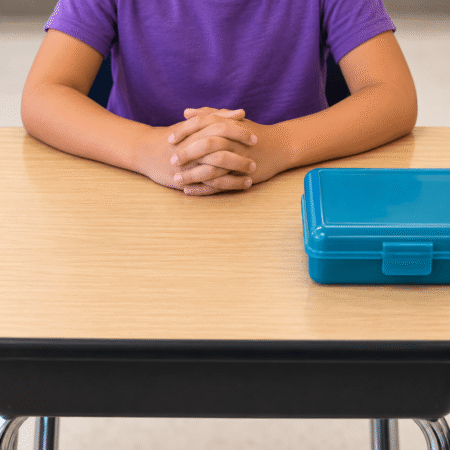
For lining up, I liked the Countdown Train. Pretend you’re the conductor and say, “All aboard!” Then count down from 10 to 1 and tell your students the train is leaving the station when you get to one. Anytime you can make something feel like a game, younger students are often much more willing to go along with it. Instead of you nagging them to hurry up and get quiet, they’re trying to beat the challenge.
5. Have Special Tricks for the Hallway and Carpet
The hallway and carpet are two other places where young children can get noisy very quickly. One simple hallway trick is to tell your students to put a bubble in their mouth before leaving the classroom. Challenge them to see who can get all the way to the cafeteria without bursting their bubble.
Another fun idea is Marshmallow Toes. Tell your students you have a magic wand that makes their toes soft like marshmallows. Their job is to walk so quietly that you can’t even hear their feet behind you.
Mystery Walker is another great classroom management strategy for the hallway. Choose one student in your head before leaving the classroom. Nobody knows who the Mystery Walker is. When you return, reveal the student’s name. If that student walked quietly and followed directions, they earn a little reward or the teacher’s positive attention. You can use the same idea during whole group or carpet time with a Mystery Student.
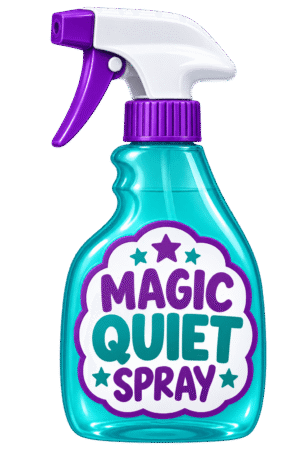
And then there was one of my students’ favorites: Magic Quiet Spray. I kept a little spray bottle of water next to my chair. Sometimes when we sat down at the carpet, I told the kids they were going to get the Magic Quiet Spray. I would tell them the spray would help them focus and sit quietly during our lesson. They loved getting that little spritz of water! It was silly, but that was the whole point. When you make being quiet fun, kids are more apt to do it and enjoy it.
Choose the Classroom Management Strategies That Work for You
There are so many great ideas for getting a noisy classroom under control, but you definitely don’t need to use all of them. Choose a few classroom attention getters, hand signals, non-verbal cues and transition tricks that feel natural for you and your grade level. See what works best with your particular group of students.
And remember that something that works perfectly at the beginning of the year may eventually start to become background noise. If your favorite attention-getter suddenly stops working, it doesn’t necessarily mean you’re doing anything wrong. Sometimes kids have simply heard it so many times that they stop noticing it. That’s a good time to introduce a new call, visual cue or game.
The goal isn’t to have a classroom that is completely silent all day. Kids need opportunities to talk, laugh, work with partners and participate in group activities. Talking is part of the learning process, and it’s also an important part of developing social skills. But there are also times during the school day when you need the whole class to stop, listen and hear an important message. Having several quick attention grabbers ready to go makes those moments a whole lot easier.
Attention Getter Slides
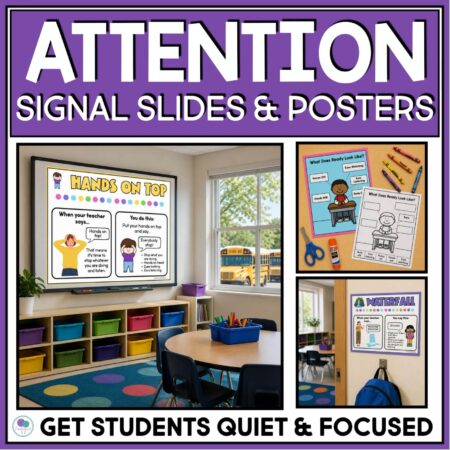
If you’re tired of talking over your students, repeating directions, or waiting for everyone to get quiet, my Attention Getter Slides & Posters can help! They include fun callbacks, silent signals, and attention getters you can use throughout the school year.
Use the Google Slides to introduce different attention getters to your class and the matching posters as reminders. When one signal starts to become background noise, simply switch things up and try a new one.
Click here to take a closer look.
Looking for more ideas? Read: Classroom Behavior Expectations for Kids Who Won’t Stop Talking

Hi, I'm Molly, the creative mind behind Firstieland. With over 35 years of experience in early childhood education, I'm your primary support for resources that will save you time and make learning feel like play. Learn more about my mission for Firstieland here.