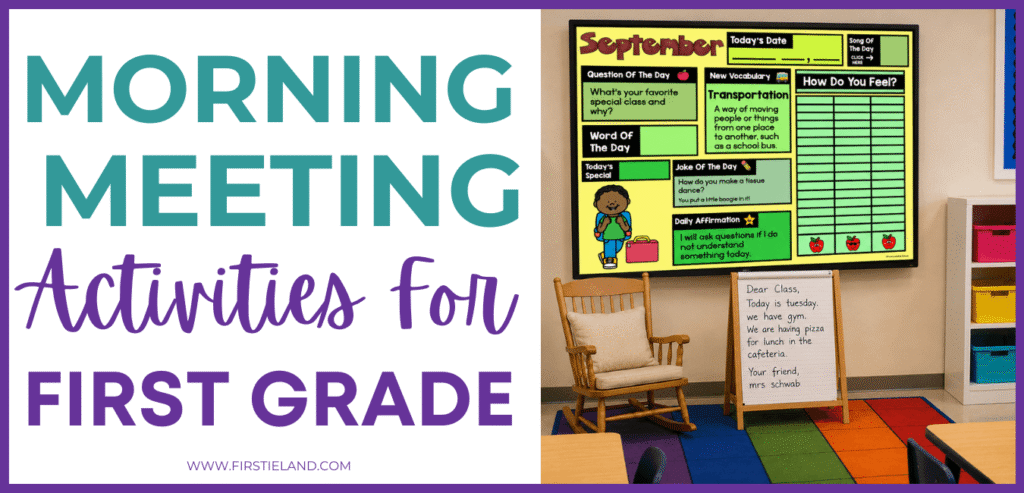
Did you know that morning meeting activities in first grade can build a stronger classroom community, practice academics, and even make your entire school day run smoother? And you can do it in just 15 minutes a day! After three decades of teaching, I found five things that made morning meeting time one of the most valuable parts of our day.
Morning meeting is a great way to make sure every child felt seen, give kids opportunities to practice important social skills, review academic skills, and start your school day on the right foot. And the best part is that morning meeting doesn’t have to take much time or require complicated lesson plans.
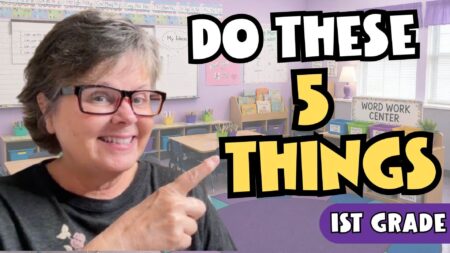
4 Parts Of Morning Meeting
A traditional classroom morning meeting usually has four components: greeting, sharing, some type of activity, and a morning message. But in my first grade classroom, I added one more – calendar time – because it was the perfect way to squeeze in tons of 1st grade math practice every day.
Here are the five things I included in our morning meeting and how you can use them with your own first grade students.
1. Begin With a Morning Meeting Greeting
The purpose of the morning meeting greeting is basically to make sure that every child in your room feels seen, acknowledged, and part of the group. For the greeting portion of our day, we always started with a good morning song. It was a couple of minutes long and was just the perfect way to begin our day because the kids knew that once we sang that welcome song, school had started. We would stand in a circle, sing the song, and then greet each other.
There are lots of different ways to do daily greetings, and they can get more creative as the school year goes on. But no matter which greeting you use, the most important thing to remember is to call each student by name.
This is one of the simplest ways you’re building a positive classroom community. Every child feels seen, and when kids greet each other each day, they’re learning each other’s names and speaking to different kids. They really start to make friends with each other just from this simple little activity. Learning to look at someone, say their name, listen when they speak, and respond appropriately also helps children practice social-emotional skills, public speaking, and how to be a good friend.
Keep Greetings Simple at the Beginning of the Year
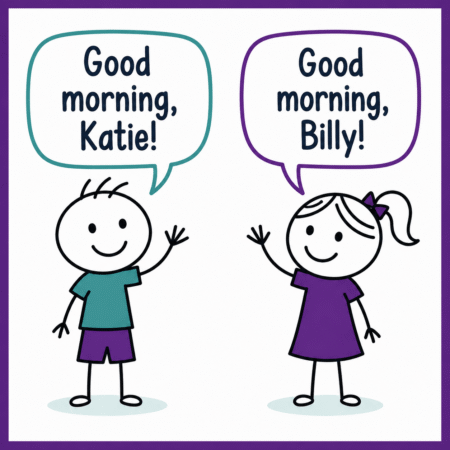
At the beginning of the year, your greeting doesn’t need to be elaborate. In fact, I think simple is better with young students who are still learning names, routines, and expectations. One greeting can be as easy as turning to the person next to you and saying, “Good morning, Billy!” Billy responds, “Good morning, Katie!” Very simple!
Another simple way to greet each other is with a high five or fist bump. Students can stand in a circle, and you begin by giving the person to your r ight a high five and saying, “Good morning, Susie.”That child greets you back, turns to the next person, and continues the greeting around the circle. This literally should take about one minute, but it’s a fantastic way to begin your day.
As students become comfortable with this morning meeting routine, you can introduce different greetings throughout the year. You might eventually add a fun fact, movement, a silly voice, or other creative ideas to keep your greetings fresh. The goal isn’t to find the fanciest greeting. The goal is connection, and your song and morning greeting should only take about three minutes.
2. Give Students Time to Share
Sharing is where the kids get to actually add something to the meeting themselves. And if you know six-year-olds, this can take up a lot of time if you let it! I personally didn’t do sharing every single day. I would do either sharing or one of our morning meeting activities, which helped keep our morning meeting time short and to the point.
One traditional sharing activity is show and tell. Again, if you’ve ever done show and tell, you know this can go on forever, so instead of having the whole class share, you can let three or four kids share each day. You might even make Friday your show-and-tell day or choose a few students to share on different days throughout the week. This keeps it manageable and gives everyone a chance to participate without using up your entire morning.
Another easy option is a question of the day. Pose a check-in question or share prompt to the group and call on maybe three students to answer. You could ask what they did over the weekend, what they’re looking forward to that day, or what their favorite thing is to do at recess. You can also use would-you-rather questions, a riddle of the day, or topics for turn and talk.
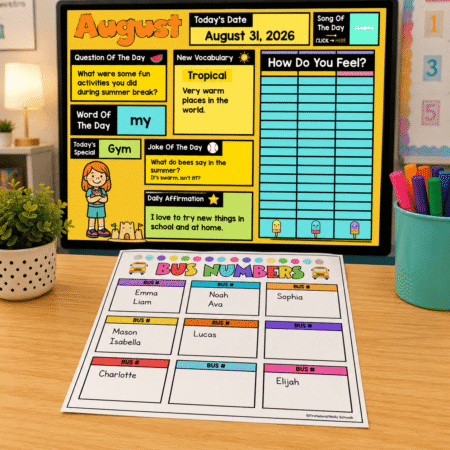
If you want more children participating without taking up the entire morning, have them briefly turn to a partner or break into smaller teams or small groups. You could even write a question on the board and have children put sticky notes with their answers underneath it as part of their morning work before the meeting begins.
There are so many different things you can do during sharing time. You can also use this time to recognize special events, celebrate a student of the day, share good news, or give someone a positive note.
Sharing Helps Build Classroom Community
During sharing time, kids are really getting to know each other. They’re figuring out who they like, who they want to play with, and who they have things in common with. So even though it seems simple, it’s really valuable time. When you’re building community and encouraging friendships, you’re also working to improve your classroom management.
When kids like each other and feel like they belong to the same group, you’re less likely to have as much fighting, tattling, and arguing. You’re also teaching children how to listen when someone else is speaking, wait for a turn, ask appropriate questions, and speak in front of others.
These are important social skills that your students will use throughout the school year. For older students, sharing questions can even incorporate more critical thinking, so you can easily adjust this part of your morning meeting for any grade level.
3. Add Quick Morning Meeting Activities
The third area of morning meeting is an activity. Activity time should feel fun, be a little more hands-on, or get kids up and moving. I did not do an activity every day. I might have done sharing one day and then the next day an activity, just to keep our morning meeting short and to the point.
There are tons of fun morning meeting games you can use here. You might do a brain break on YouTube, a two-minute dance party, a little yoga, or another quick movement activity to increase student engagement. It’s a fun way to get kids moving before they settle into the rest of their morning. It also gives them a chance to laugh and have a little fun together as a class.
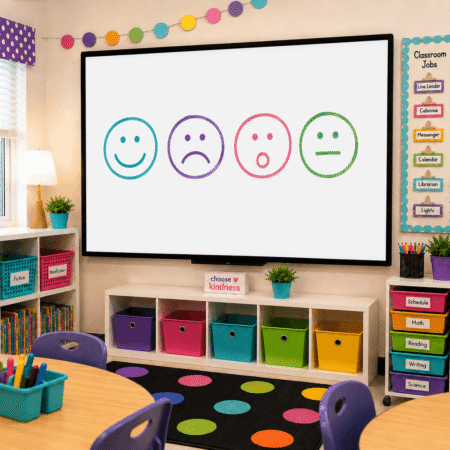
You can also use this time for a feelings check-in. Put four simple faces on the board—maybe happy, sad, worried, and excited—and give all the kids a dry erase board and marker. Have students draw how they’re feeling and then show their boards if they’re comfortable. It’s a simple way to check in with your class without turning morning meeting into a long discussion.
Sneak Academic Skills Into Your Morning Meeting Activities
Your morning meeting activities don’t have to be just one more thing to do. They can be academic too! One of our favorite games was Word Wars. To play, give all the kids a dry erase board and marker and say a spelling word, CVC word, sight word, or whatever type of word you’re working on.
Students write it as fast as they can, spelled correctly, and hold up their boards. It was a super-fast fun game, but it was a great way to practice sight words or spelling. You can also play the exact same game with math facts, so we loved both Math Wars and Word Wars.
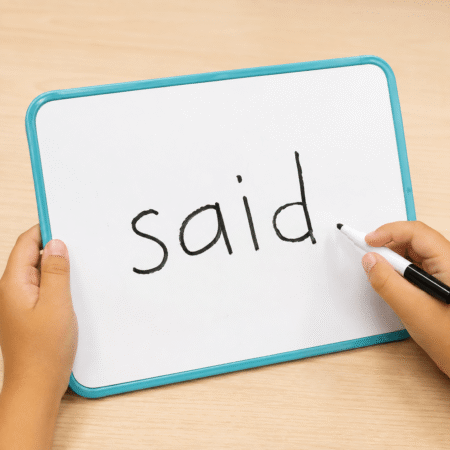
A simple game like this gives you the best of both worlds. Kids think they’re playing one of the best games of the morning, but you’re sneaking in important academic skills at the same time. Your class activity could even connect to something you're already teaching in your lesson plans. Morning meeting is the perfect time for a quick review because you already have everyone together.
The important thing is to keep it short. Choose something you can do in literally two or three minutes and move on, because a great game doesn’t have to take 20 minutes for kids to have much fun.
4. Use Your Morning Message to Practice Academic Skills
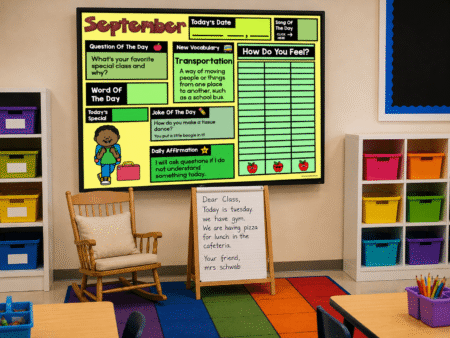
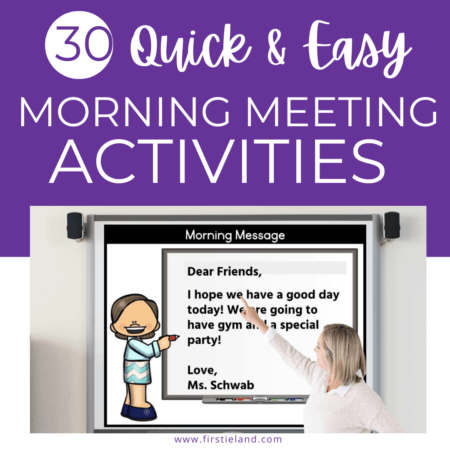
The fourth part of morning meeting is your morning message. Your message will vary from day to day and can get a little more complicated as the year progresses. It’s literally a message that you write to the kids each day. In the beginning, it’s just a simple way to tell the kids what’s happening that day.
You might write something like this:
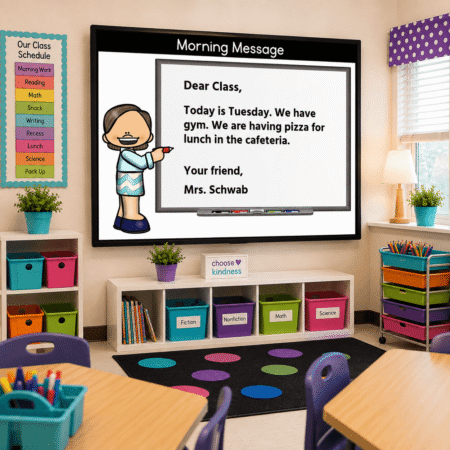
As time goes on, this becomes a super valuable part of your day because you can use your message to reinforce different skills you’re learning in class. This is where you can get really creative with your morning message ideas.
When writing the message, purposely make mistakes and see if the kids can spot them. You might forget a capital letter, forget to leave spaces between words, misspell sight words, or leave off punctuation. Then have kids come up and highlight the mistake and fix it. I used to have what we called Boo Boo Tape, which was white correction tape made by Post-it. We would cover the mistake in the message, and then I would have the kids write it correctly. Suddenly your morning message becomes a little word work lesson!
It’s very quick, but you get a lot of bang for your buck out of that little message. And that’s really the key to your classroom morning meeting…find ways to make those 15 minutes work for you. Your morning message can reinforce phonics, grammar, punctuation, sight words, vocabulary, math, or whatever else your students need. You don’t have to turn it into a full lesson, so keep it quick and focus on one or two skills at a time.
5. Add Calendar Time to Your Morning Meeting
Finally, I added one more part to our morning meeting, our daily calendar time. This was something we did every day without fail, and I would never give it up. We could review so many math skills during calendar, and it was totally worth it. We had a digital calendar, but you could also set this up on a bulletin board in your room.
We did a monthly pattern on the actual calendar, and the patterns got harder and harder as the year went on. We learned the days of the week and sang our months-of-the-year song at the start of each new month.
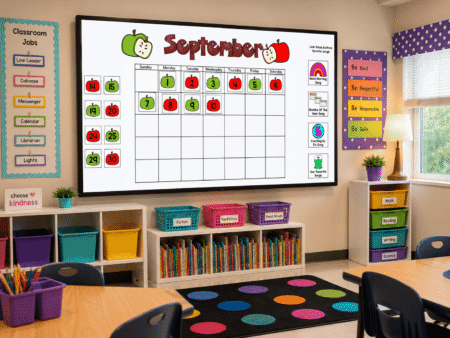
We counted our days in school and learned place value with that number. We talked about the weather and dressed the weather bear each day.
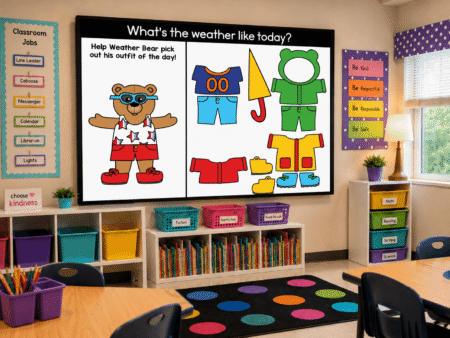
We also learned our shape of the week and counted money. There were just so many 1st grade math skills we could review during this short part of our day.
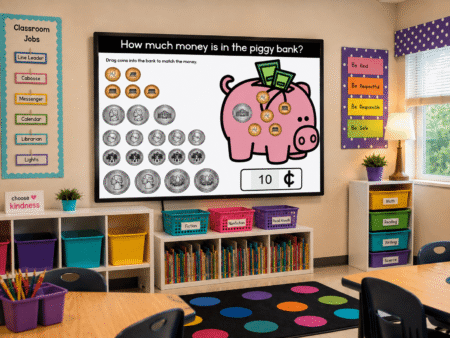
But we didn’t do every single one of those things every day. We would always do the calendar and count how many days we had been in school, and then we might add one other part of the calendar each day. That’s important because your morning meeting shouldn’t feel like another hour-long block that you have to squeeze into your schedule. The goal is to make your time count.
Make Morning Meeting Easier With Ready-to-Go Slides
If you're using Google Slides or other digital resources, these ready-to-go slides can make your morning meeting even easier. We used daily morning meeting slides with our question of the day, a link to our good morning song, vocabulary, a joke of the day, and other activities already built in.
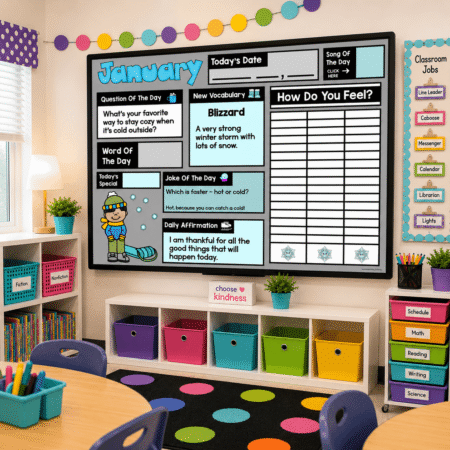
That meant I wasn’t searching for something new every morning or trying to come up with a new question at the last minute. Having everything together and ready to go was a good idea for keeping our morning routine simple and consistent.
You can even let a student leader help with different parts of the slides or calendar as students become more independent. It gives kids some ownership of their morning meeting while giving you one less thing to manage.
What Does a 15-Minute Morning Meeting Look Like?
So what does all of this actually look like during a real school morning? Here’s the schedule I recommend for keeping everything around 15 minutes.
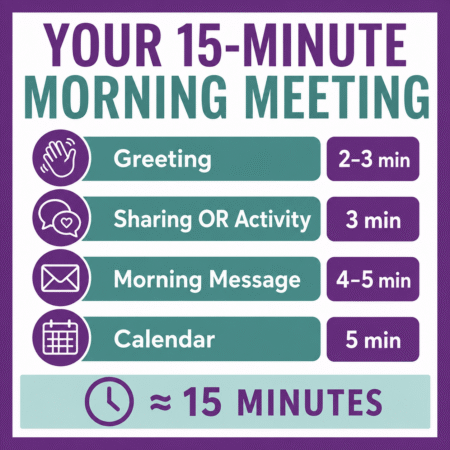
Some days are going to be longer or shorter, but it’s just a framework, not a stopwatch.
You also don’t need to cram every possible activity into those 15 minutes. Your goal is to create a predictable morning routine that welcomes your students, gives them opportunities to connect with one another, and helps you review important skills before moving on with the rest of the class day.
Make Morning Meeting Work for Your Classroom
Morning meeting doesn’t have to be complicated. You certainly don’t need to spend your planning period searching for new games. Choose a few things that work and repeat them because your kids actually like that predictability. Have a simple greeting, give students opportunities to share, mix in a fun game or quick academic review, write a morning message, and spend a few minutes on calendar. That’s it.
When you think about everything you're accomplishing in those 15 minutes – relationships, social-emotional skills, speaking and listening, academics, routines, and classroom management – morning meeting is a fantastic way to begin your day.
There’s another benefit too. Your morning meeting gives you a chance to see your students and check in with them before you jump into academics. You may notice that someone is unusually quiet, hear about something exciting that happened to a child, or see friendships forming that you didn’t notice before. Those little moments matter.
For me, morning meeting wasn’t something cute that we did before the “real” learning started. It was part of the real learning. It helped my first grade students learn how to be members of a classroom community while also giving us a great time to practice the skills we were learning throughout the day. And when your students feel connected to you and to one another, your entire classroom runs more smoothly.
That’s why those 15 minutes were one of the most valuable parts of our day. Start simple, make it consistent, and adjust it to fit your students’ needs. Morning meeting really is the perfect way to get your classroom started on the right foot every morning.
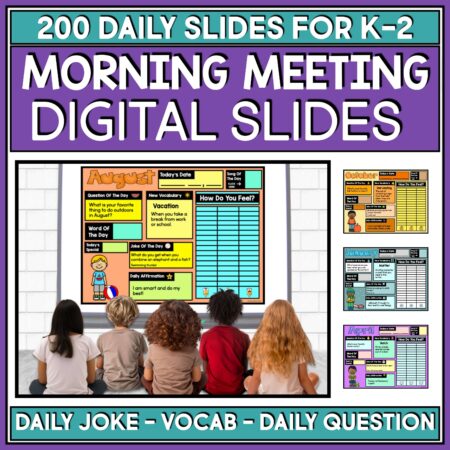
Ready to get started? If you love the idea of building a classroom community during daily circle time, but just don't have the time to plan it all, you'll love these Google slides. With one simple slide each day you'll have everything you need at your fingertips for a meaningful and educational start every day of the school year. Give your students a positive start to the day with this simple 15-minute daily routine!
Looking for more ideas for morning meeting? Take a look at this post:

Hi, I'm Molly, the creative mind behind Firstieland. With over 35 years of experience in early childhood education, I'm your primary support for resources that will save you time and make learning feel like play. Learn more about my mission for Firstieland here.